Choosing an exterior cladding material is one of the most consequential decisions you’ll make for your home. It sets the aesthetic tone, shapes how much time and money you’ll spend maintaining the building over its lifetime, and has real implications for energy performance, durability, and resale value. There’s no single right answer — every material involves trade-offs — but understanding those trade-offs clearly puts you in a much stronger position to make a choice you’ll be happy with for decades.
In this edition of Ask an Architect, we break down four of the most common and compelling exterior materials we work with: wood siding, Corten steel, stucco, and stone. For each, we cover the basics of what it is, how it performs, what it costs, and what keeping it in good shape actually requires.
Wood Siding
Wood siding is one of the oldest cladding materials in American residential construction, and it remains one of the most versatile. It can be shaped, painted, stained, charred, or modified into almost any aesthetic and it brings a warmth and texture that no manufactured product has been able to fully replicate.
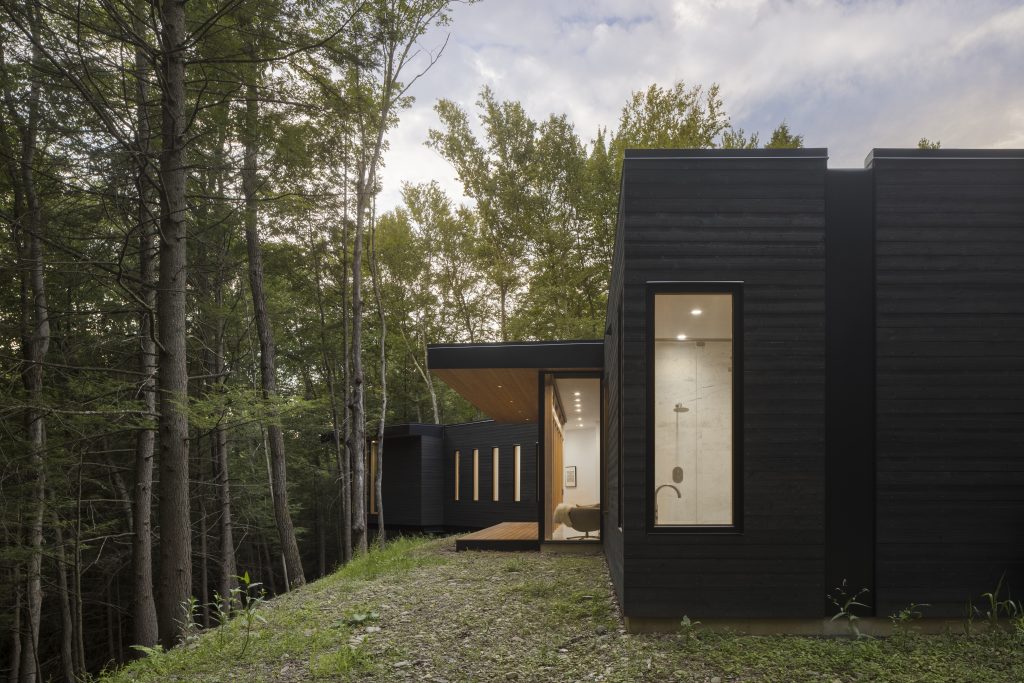
We love using wood for the exterior cladding of our homes. The primary benefit of wood can also be the tricky part about using it as a cladding material: It is a natural, living material, and it behaves like one. It moves with moisture and temperature, it weathers, and depending on the product used, it can require regular maintenance.
Painted & Stained Siding
Painting or staining siding is the most traditional finish for wood siding, but we’ve tended to move away from these methods due to required maintenance. Paint provides the most opaque coverage and the greatest range of color options; it also delivers the strongest moisture barrier when properly applied and maintained. Stain penetrates the wood fiber rather than forming a surface film, which means it can’t peel and generally requires less prep work when it comes time to recoat — but it’s more transparent and offers less UV and moisture protection on its own.
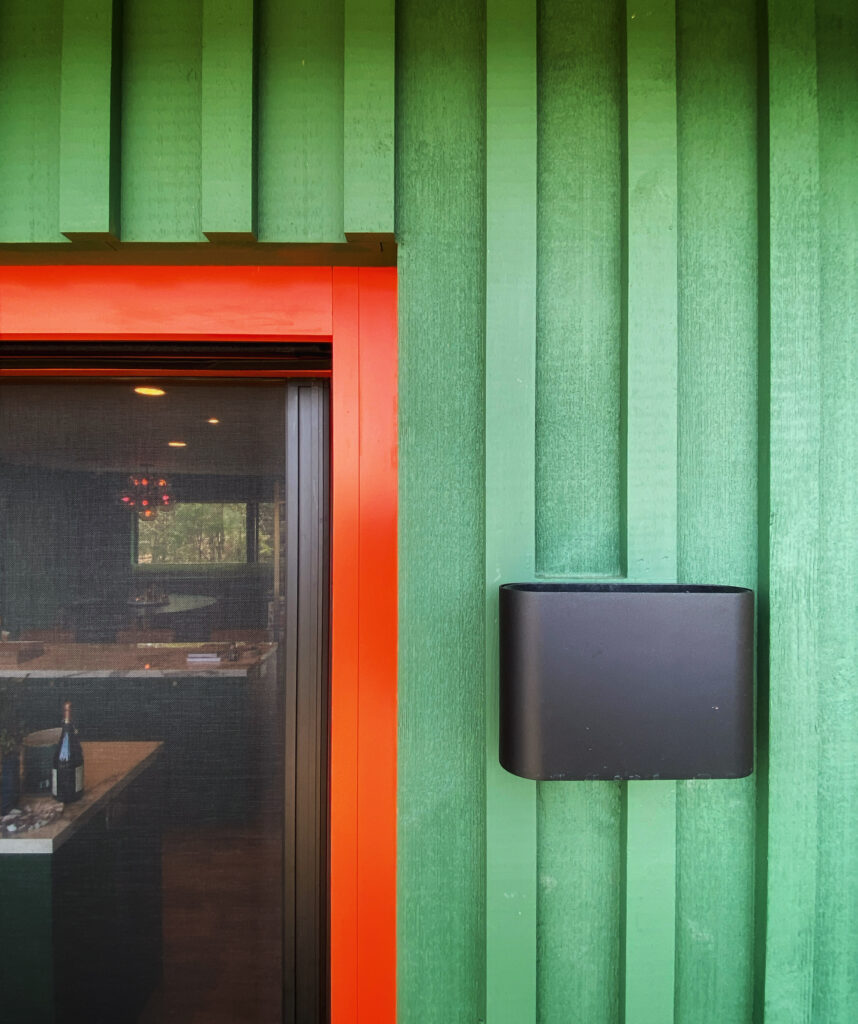
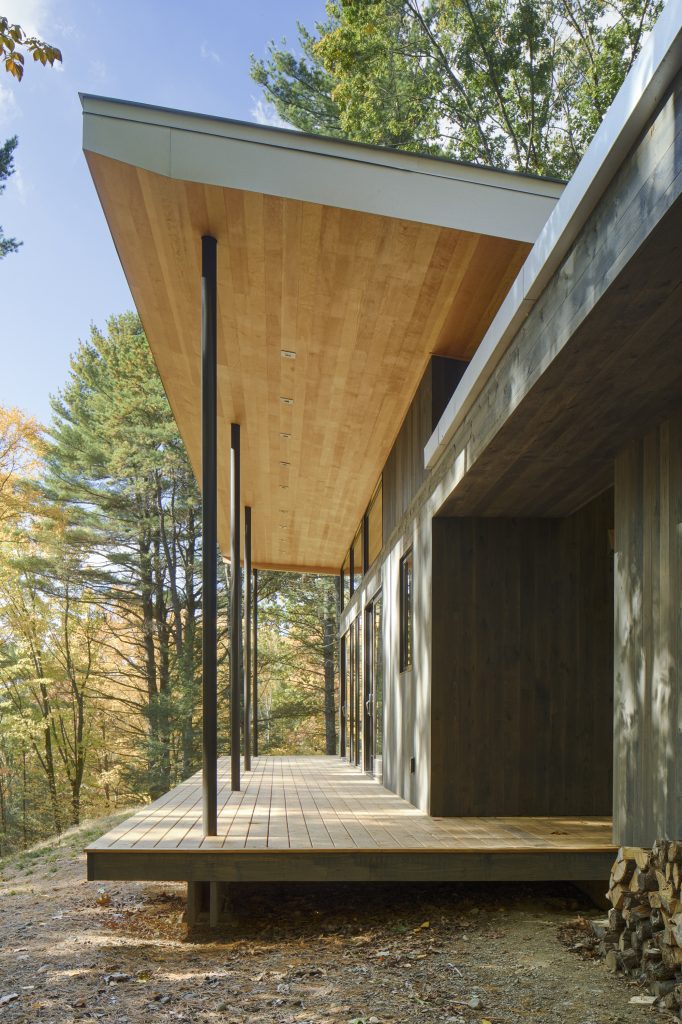
Painted or stained wood siding typically has the lowest upfront cost (depending on the base material selected), but will require regular ongoing maintenance. Woodland Pop House (left) chose a vivid green that we love for their board and batten siding, while Lantern House (right) used a light brown stain for the siding.
Cedar
Western red cedar is the premier choice for natural wood siding in North America, and for good reason: it has natural oils that resist decay and insects, it’s dimensionally stable (meaning it moves less with seasonal humidity changes than many species), and it ages beautifully. Left unfinished, cedar weathers to a silver-gray patina that many homeowners find highly appealing. With a clear sealer or semi-transparent stain, it retains its warm honey and amber tones for years. Even when we choose to use another product for the siding, we will often use cedar for decking or wood ceilings and soffits. Our first completed home, Creek House, used cedar to maximize longevity while creating a fun texture on the otherwise simple home.
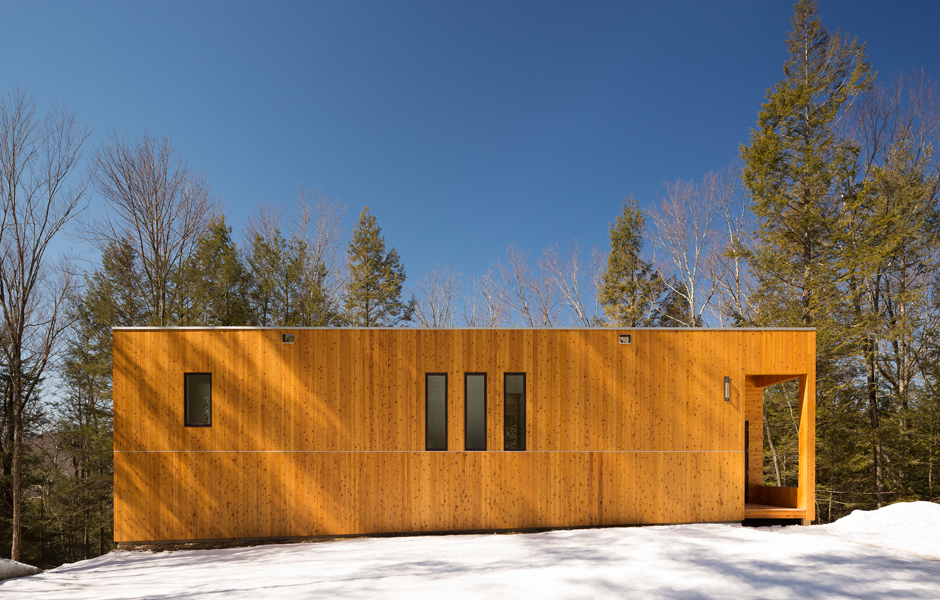
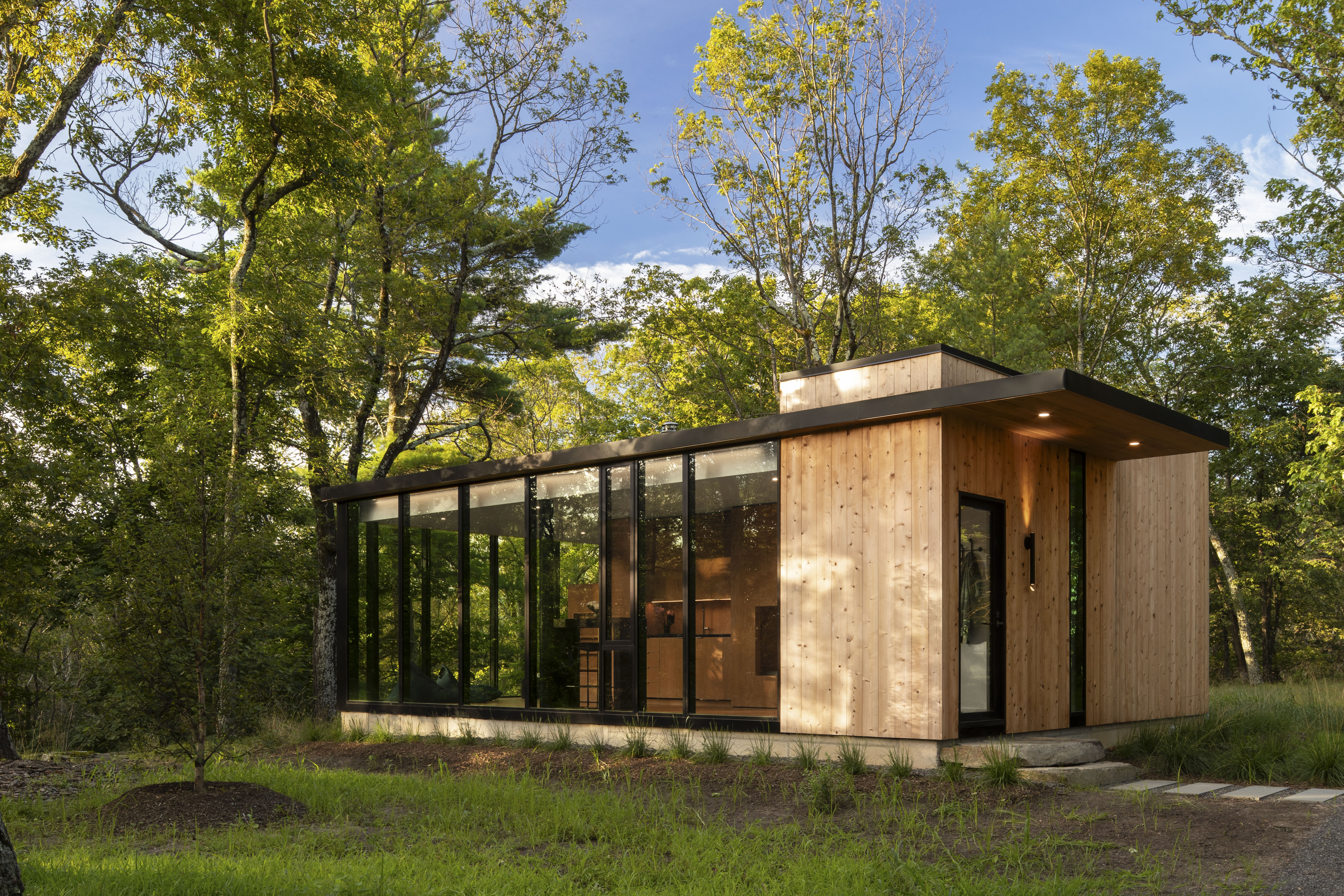
When allowed to weather without a stain or seal, cedar has minimal maintenance requirements beyond regular inspection for wear and tear. Cedar varies in cost depending on the grade specified – an STK (select tight knot) cedar can be two or three times less expensive than a clear cedar. Below, the VIA43 Bunkhouse showcases STK cedar that wraps around the private volume of the space.
Modified Wood
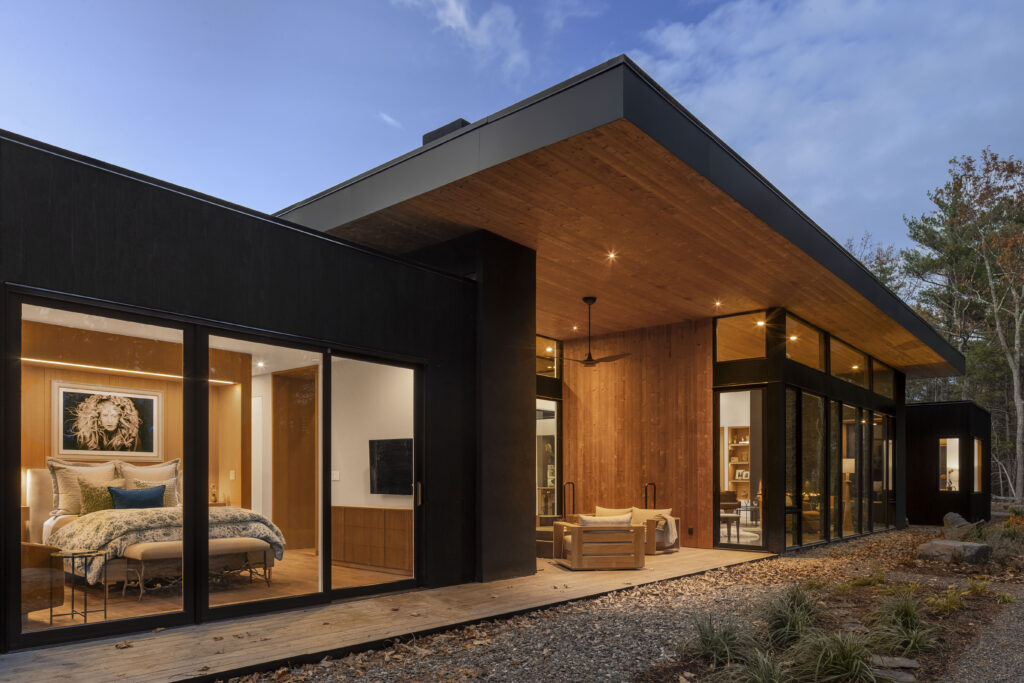
There are a few different ways that wood can be modified to increase performance. There are now a variety of products on the market that use chemical and thermal modification to fundamentally change the wood’s cellular structure: typically, sugars that rot-causing fungi feed on are eliminated, the wood becomes more dimensionally stable, and its natural color changes depending on the process used. Fermata, pictured below, used a thermally modified Lunawood for a small amount of siding, along with the decking, soffits and screening, and a shou sugi ban Kebony, which is a chemically modified product. At 8 Oaks, we used chemically modified stained Accoya for the beams and siding.
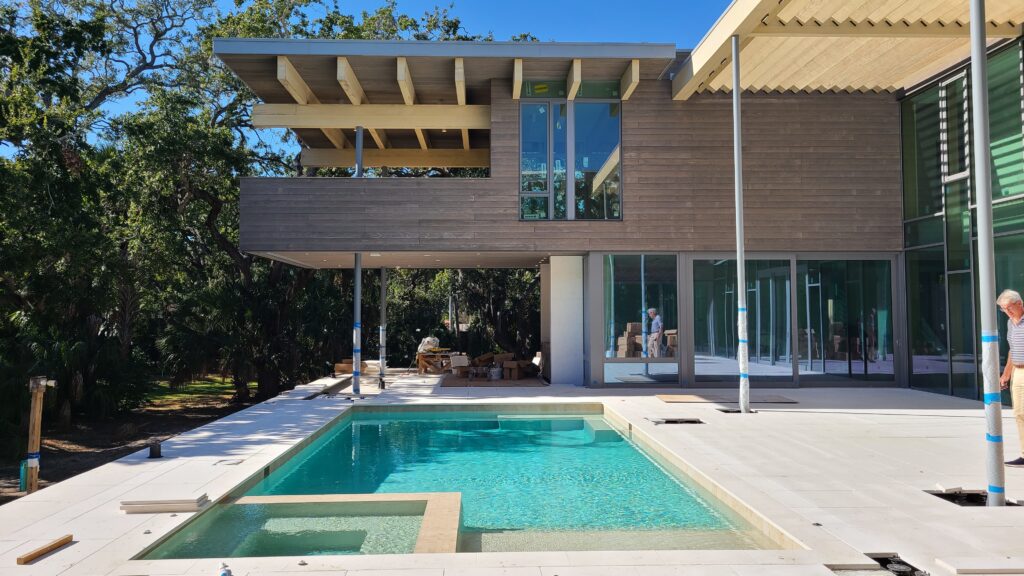
The result is a wood product that performs much more like hardwood or tropical species — without the sustainability concerns. On our projects, we’ve been using primarily thermally or chemically modified radiata pine, but other species of wood are also available. You can also stain or char modified products, which provides for a wider range of options when considering a modified product. The upfront costs of modified wood tend to be higher than or in line with cedar, but with the exception of staining the wood to retain the original color, the products require minimal maintenance. Most of the products also come with a warranty, typically ranging from 25 to 50 years.
Shou Sugi Ban
Shou sugi ban is an ancient Japanese technique of charring the surface of wood to carbonize and harden the outer layer. The charred surface is then wire-brushed and sealed, creating a siding material that is naturally resistant to fire, insects, rot, and UV degradation. The visual result is dramatic and distinctive: deeply textured, black or dark brown charcoal boards with a subtle iridescent quality that changes in different light. The range of shou sugi ban now available in the states is remarkable – we’ve used smooth black products, richly textured black siding, and also lightly “toasted” siding that has a beautiful brown tone. Tinkerbox and Cat Hill both have wonderful black toned shou sugi ban, while VIA43 showcases a version of the “toasted” siding. The shou sugi ban at Fermata is an excellent example of a rich black siding that also has a large amount of charred texture.
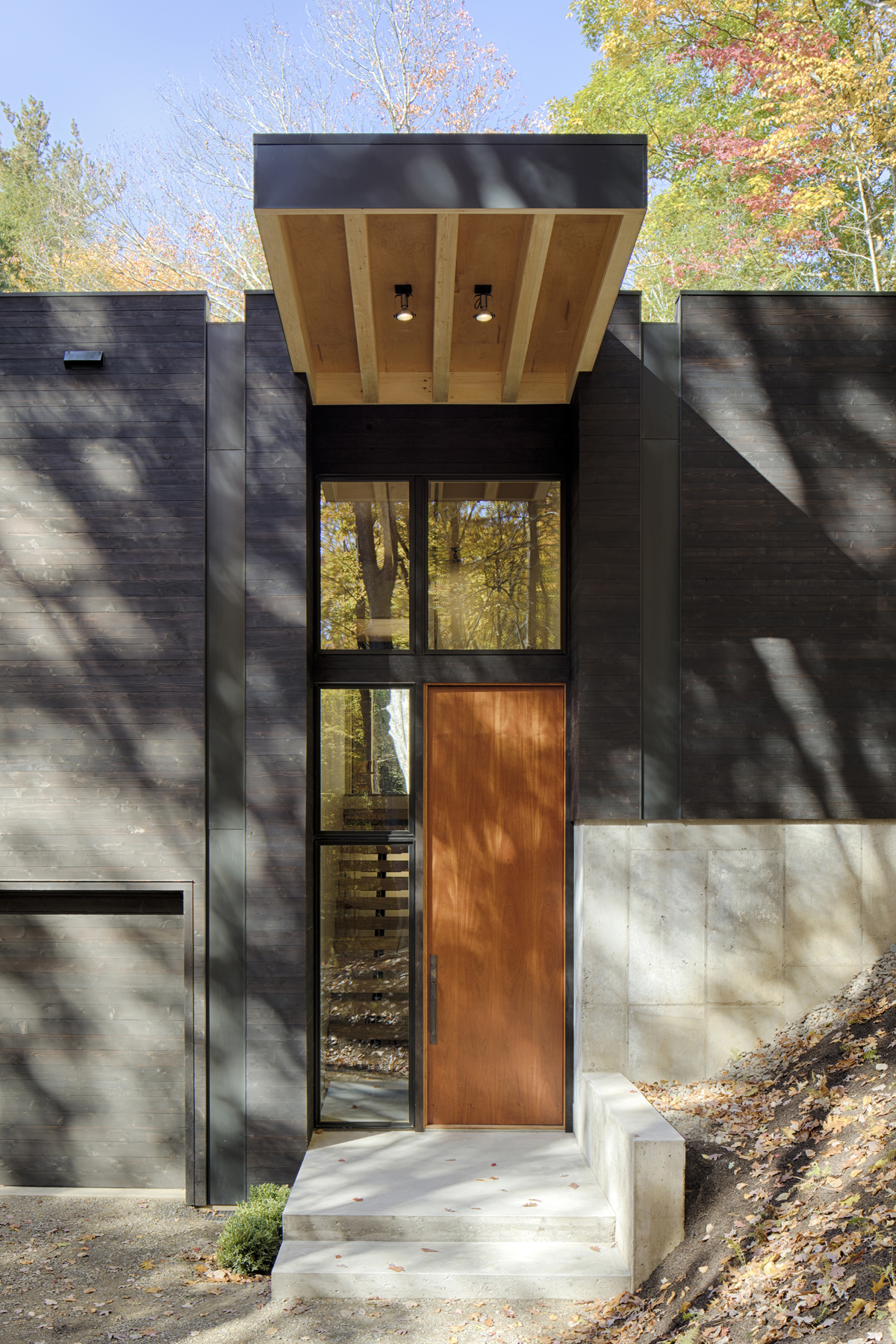
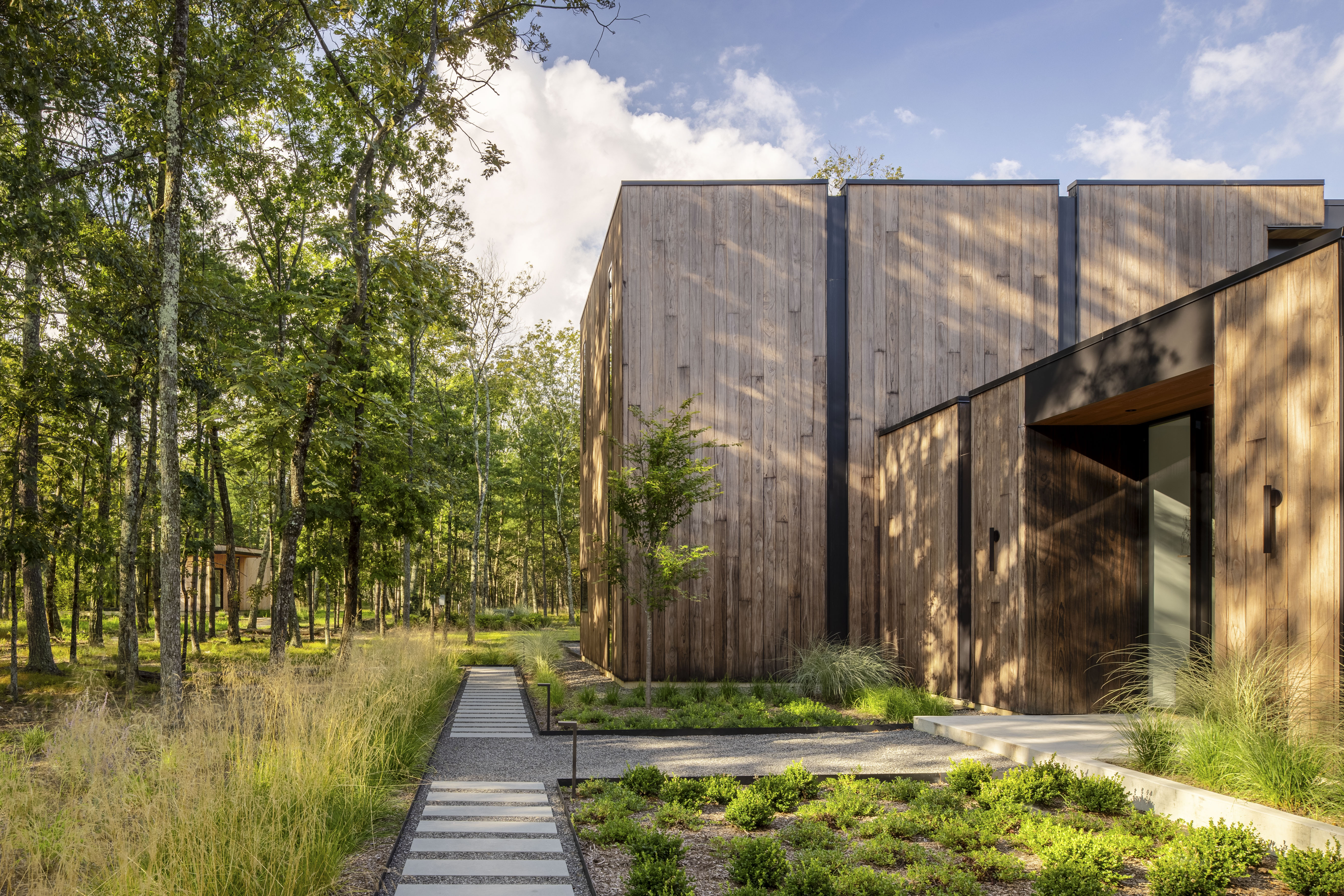
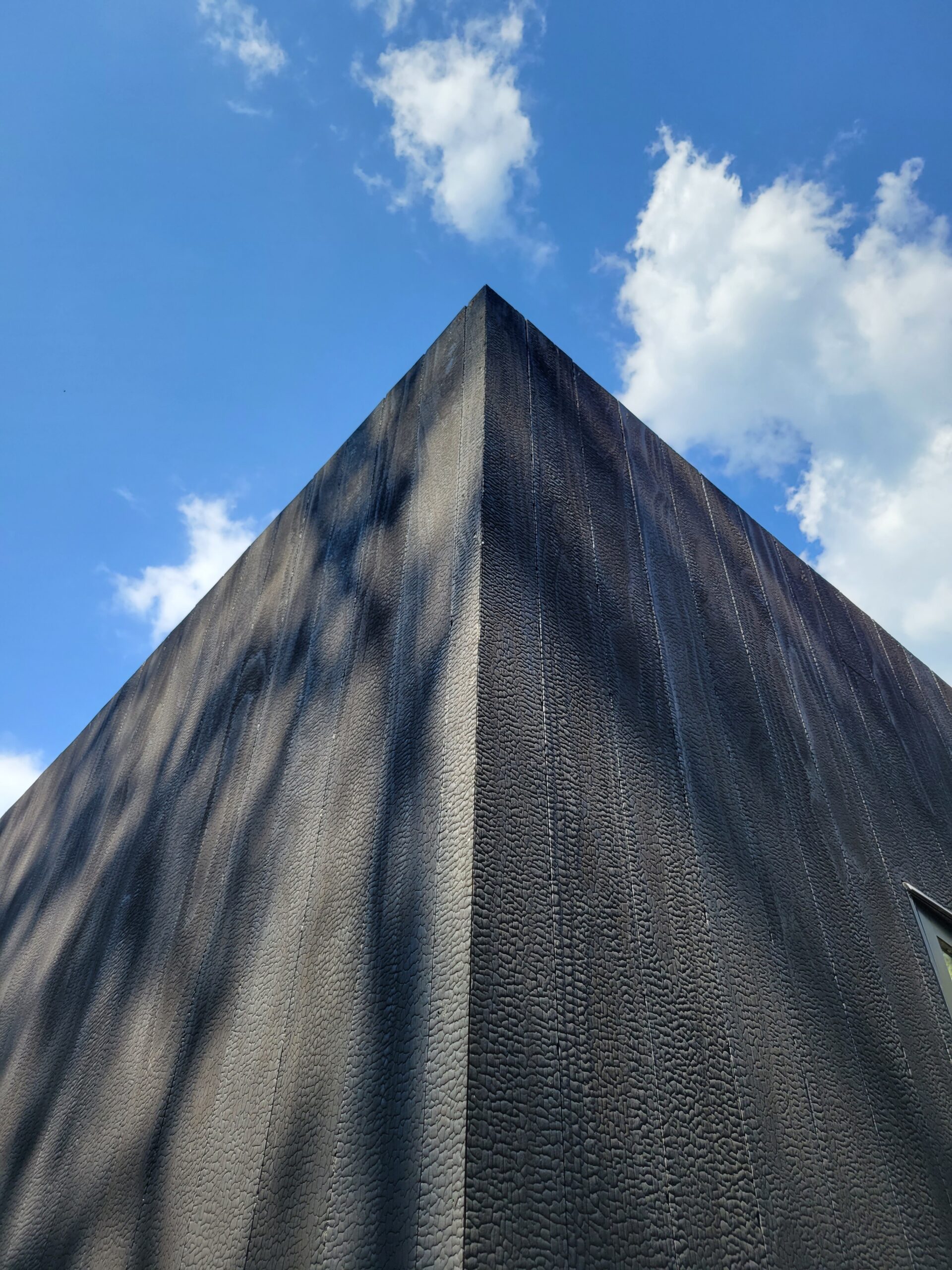
This technique can be used on cedar, but it can also be applied to modified woods (as is the case at VIA43 and Fermata), resulting in a remarkably resilient wood product. Depending on the product specified, there is virtually no maintenance – some vendors will recommend resealing with an oil every 5-10 years.
Corten Steel
Corten (weathering steel) is a family of steel alloys specifically formulated to form a stable, adherent rust patina when exposed to weather — rather than continuing to corrode like ordinary steel. The patina acts as a protective layer, preventing further corrosion and eliminating the need for painting or coating in most applications. Visually, the material develops deep, warm rust tones ranging from burnt orange to chocolate brow. We loved using this material for Bully Hill House – at the urging of our client – and would love to use it in the future!
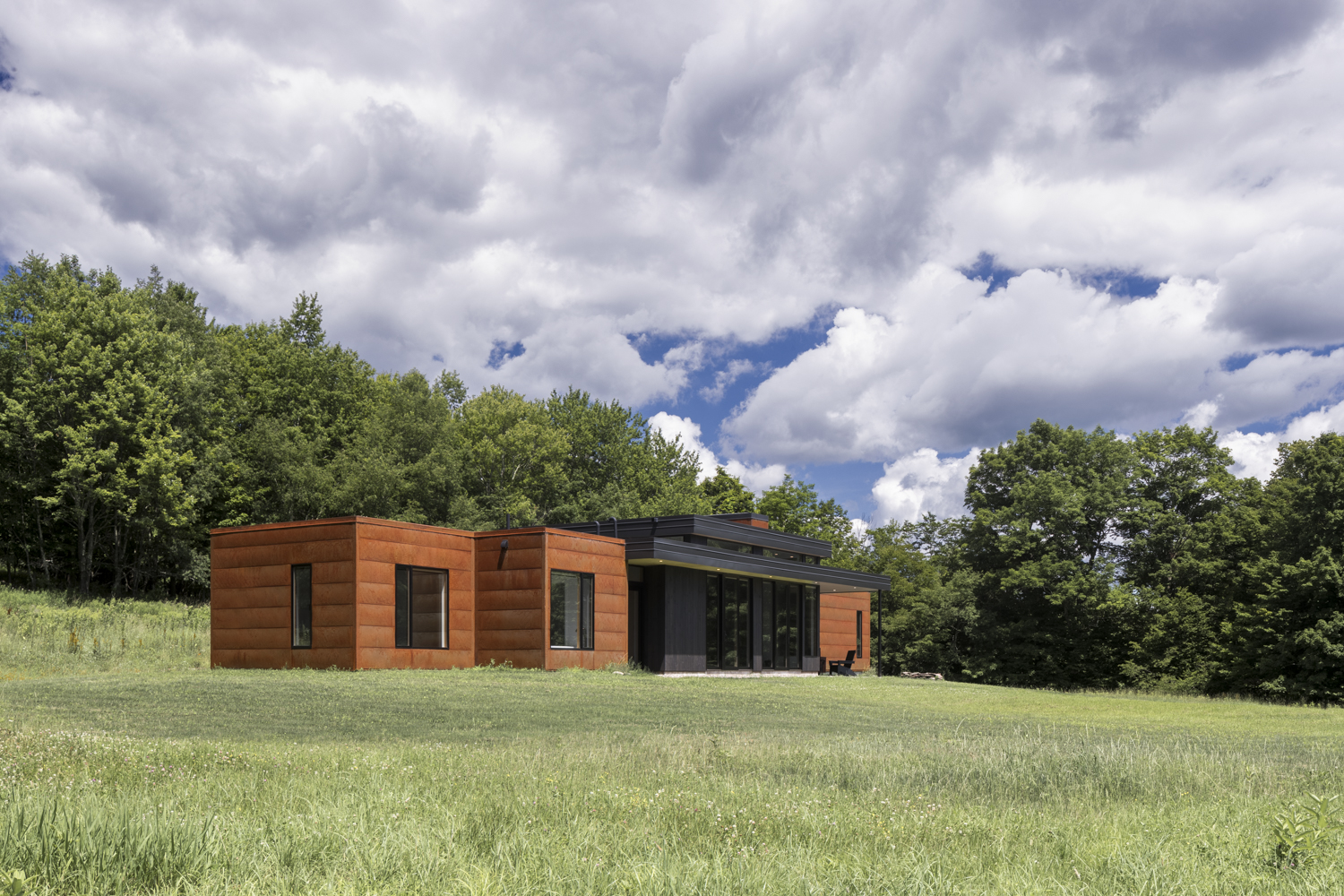
Corten was originally developed for industrial and infrastructure applications — coal hoppers, bridges, and highway structures. In contemporary architecture, it has become an appealing material for its industrial character, its remarkable durability, and its almost zero-maintenance proposition once fully patinated. The patina process can take between 1-3 years before it is complete, so some growing pains should be expected when using this material, and the upfront costs for material and install are typically higher than most wood siding.
Stucco
Stucco is a cement-based plaster finish applied in multiple coats over a substrate — traditionally metal lath over wood framing, or directly to masonry. In the United States, traditional three-coat stucco has been used for over a century. The last few decades have also seen widespread use of one-coat and EIFS (Exterior Insulation and Finish Systems) stucco.
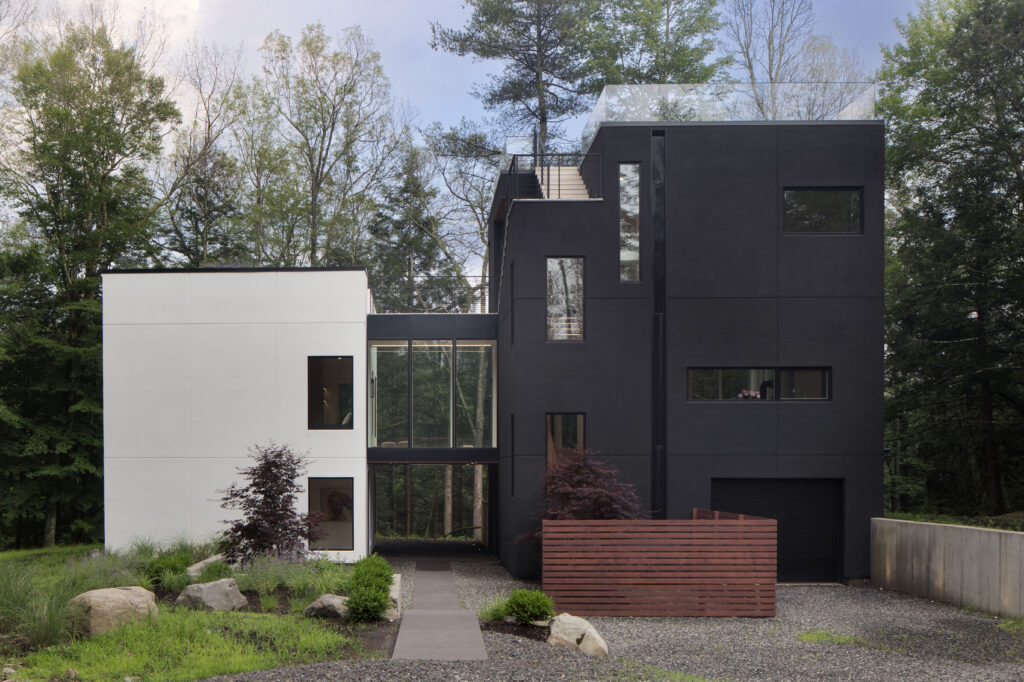
ClusterOne is our primary stucco project – we love the sharp contrast between the two stucco volumes! The benefit of stucco is in its adaptability: it can be applied smooth or textured, tinted to virtually any color, and shaped to follow complex curves and details. Stucco can be very low maintenance, but will need to be repainted every 10-15 years to maintain the finish color. Stucco is fairly labor intensive to install and in our Hudson Valley climate should be installed in the warmer months, but it can be a great way to create a solid, smooth volume.
Stone (Bluestone)
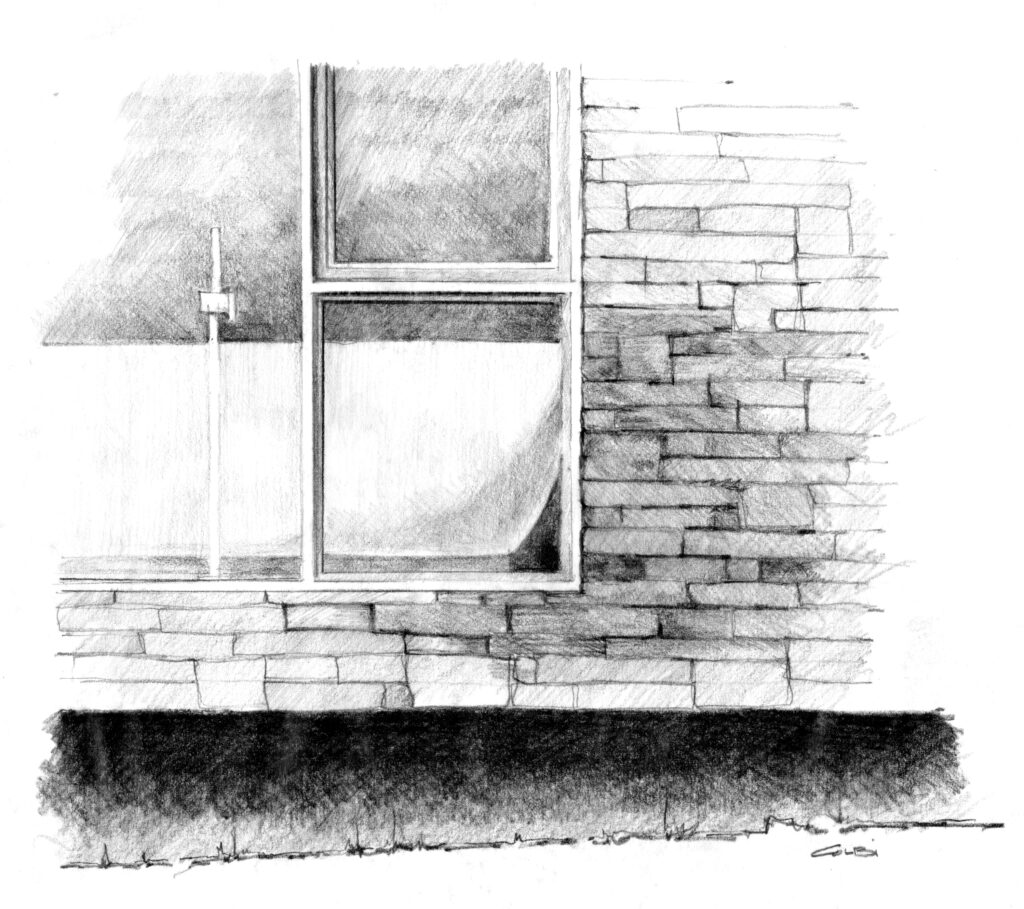
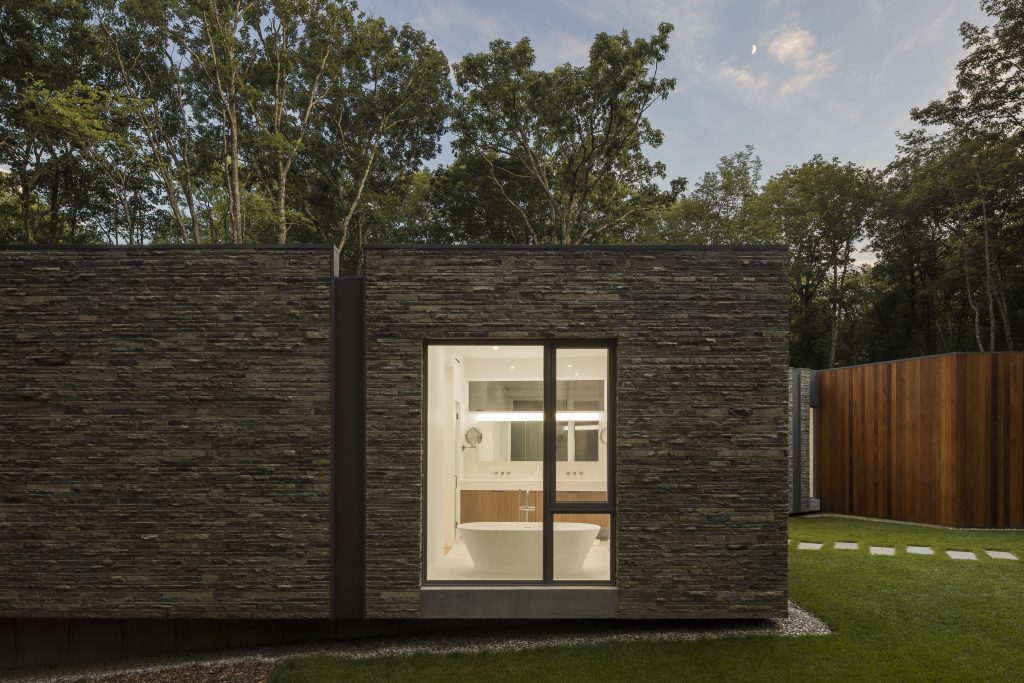
Natural stone is the most timeless exterior cladding material available — and in regions where local stone traditions are strong, it creates a wonderful echo to traditional residential buildings. We work primarily with bluestone, a dense sedimentary sandstone quarried throughout the Mid-Atlantic region that ranges in color from dark blue-gray to warm brown and earthy green, depending on the specific quarry and cut. We were lucky enough to use site sourced, hand chiseled stone for Tranquil Abiding’s distinctive floating pavilions.
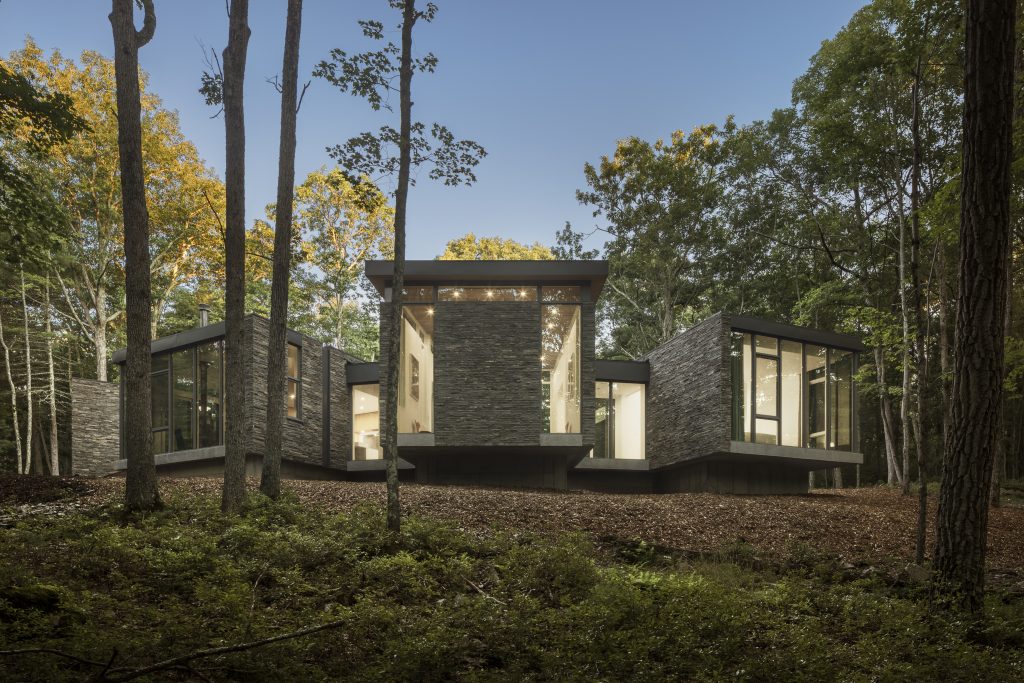
Bluestone’s combination of color, texture, and regional identity makes it a compelling choice for our Hudson Valley projects. It’s used both as full-thickness structural veneer and as thin-cut cladding panels, and it works very well for modern fireplaces or facades. Stone is obviously an extremely durable material and has virtually no maintenance requirements. The downside is that the material costs tend to be high, and quality, experienced masons can be hard to find. The work is time consuming and labor intensive, but results in a stunning aesthetic.
How to Choose?
Every project has a different context, and there is no universally correct choice. We’ve used all of the above materials on our projects and have loved each of them for different reasons. On any given project it tends to come down to client aesthetic preferences, maintenance priorities and budget. Our approach is to provide clients with a variety of options that could work for their project, while leaving the final decision up to them.
Have a question for our next Ask an Architect column? We’d love to hear from you.