When clients come to us with a property, we’re not just thinking about where the walls go. We’re thinking about how the house settles into the land, how the land reaches back toward the house, and what happens in the space inbetween. Landscape design isn’t a finishing touch for us — it’s part of the architecture from day one.
The Architecture Doesn’t Stop at the Door
One of the most common misconceptions we encounter is the idea that a home ends at its exterior walls. In reality, the best residential design treats the building and its surroundings as one continuous experience. A deck off the living room isn’t just a place to put a table and chairs — it’s an extension of the living room itself. The question we’re always asking is: as that deck dissolves into the landscape, what does that transition feel like?
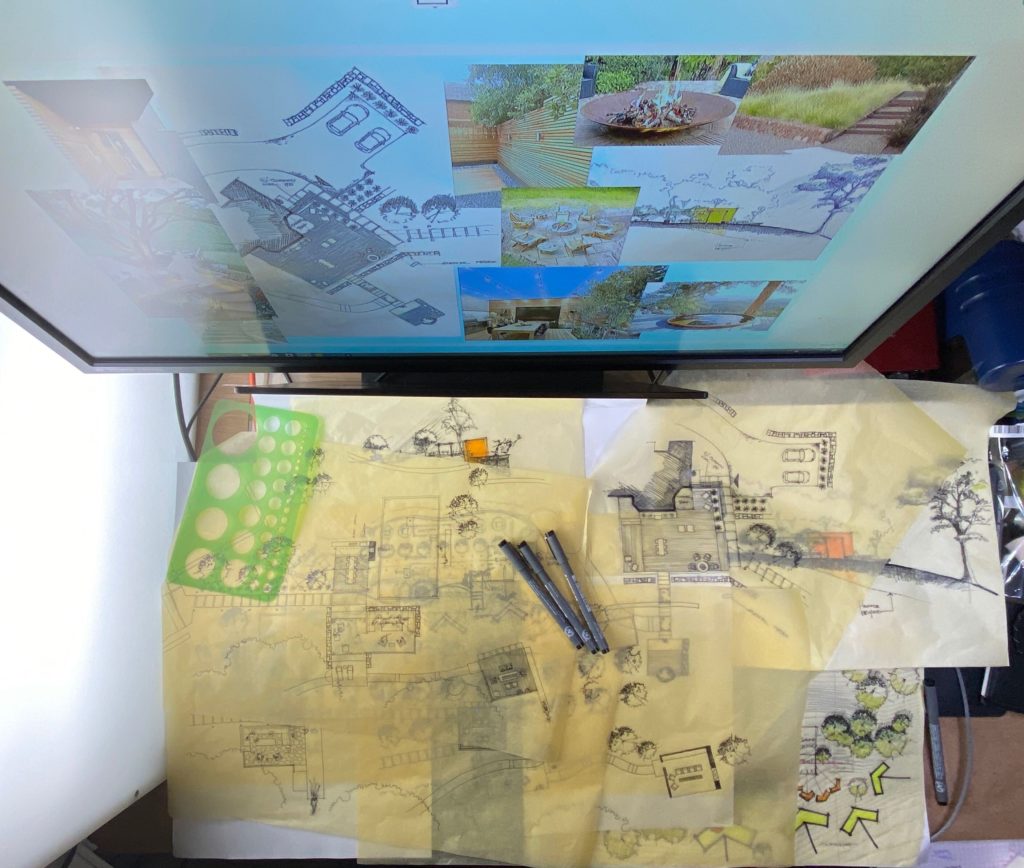
In the Hudson Valley, this relationship between house, hardscaping, and the natural world carries particular weight. The landscape here is never generic — creek banks and ridge lines, meadows and forest edges, and rock outcroppings that have been sitting in the same spot for ten thousand years are part of many of the sites that we work on. Thoughtful design honors that specificity and learns from it.
Starting with the Land
Every project begins with the land itself — before floor plans, before program. We’re looking for what the site is already telling us: a ridgeline that needs to be captured from a particular room, a beautiful tree we want in the sightline of daily life, or a view that only reveals itself from one precise point. At Fermata, we positioned the house to capture a favorite site feature from the main bathroom tub – a sloping knoll that rippled down to a terraced cliff.
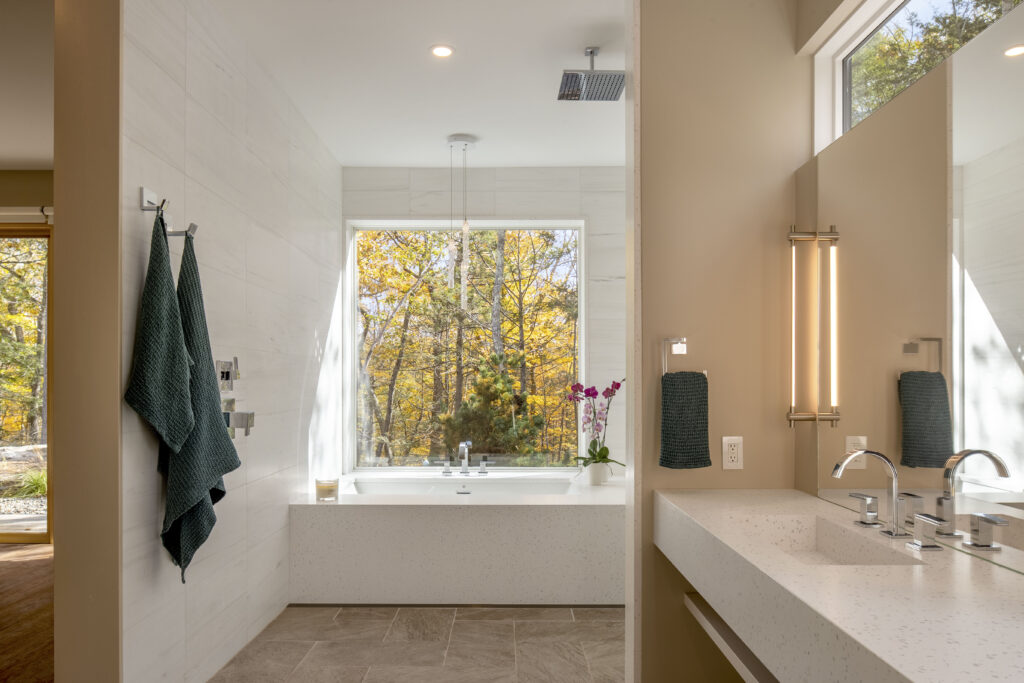
These early observations shape everything that follows: where the house opens, which rooms earn the best exposure, and how the exterior spaces are structured to carry those gifts outward.
The Firepit
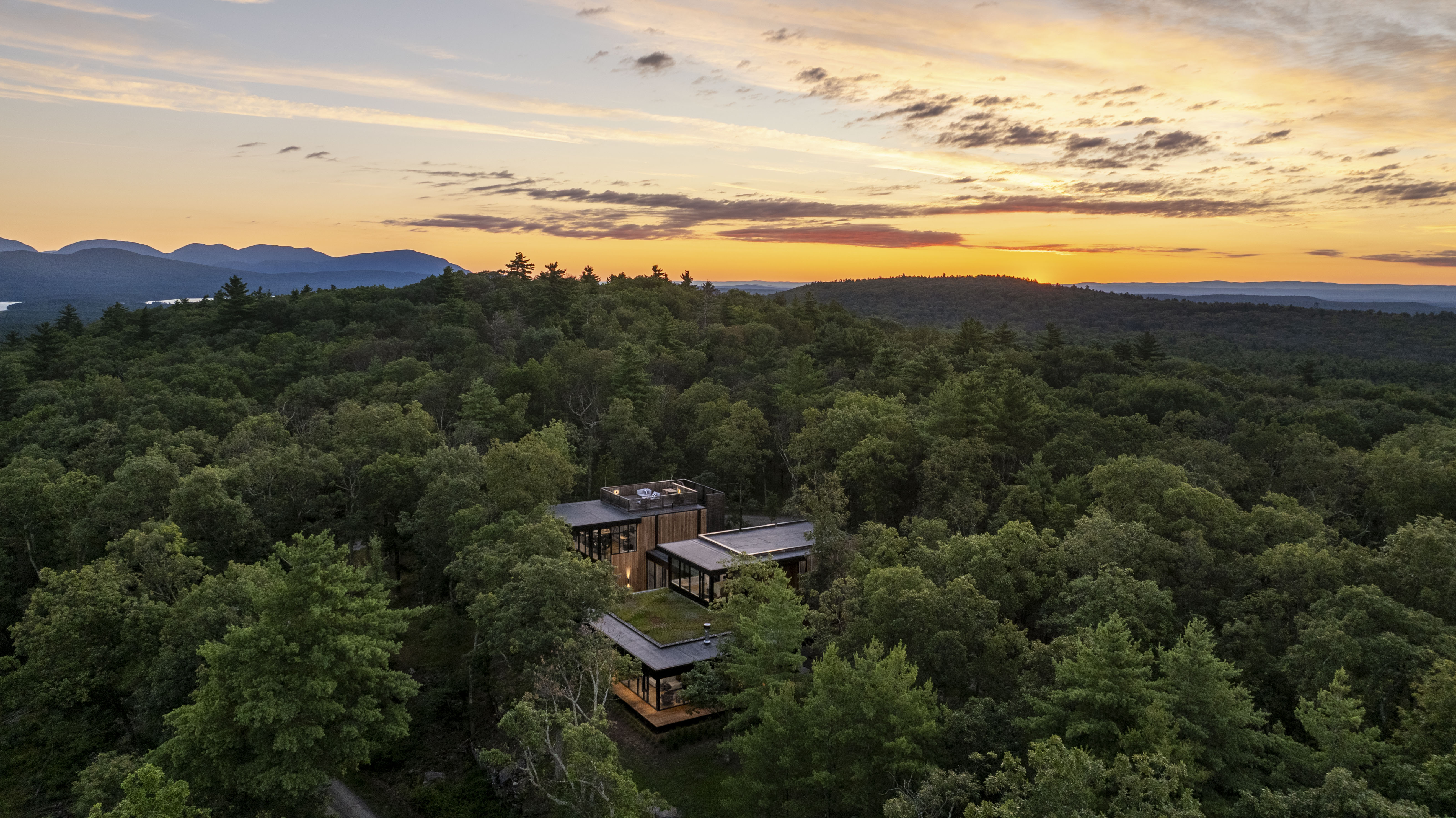
At VIA43, our studio’s home in Olivebridge, the entire siting strategy was set in motion by something we found on the property before a single line was drawn: an old stone firepit, positioned near a rock outcropping and oriented directly toward the western Catskill Mountains. It was the best seat on the property. We built the house around that fact.
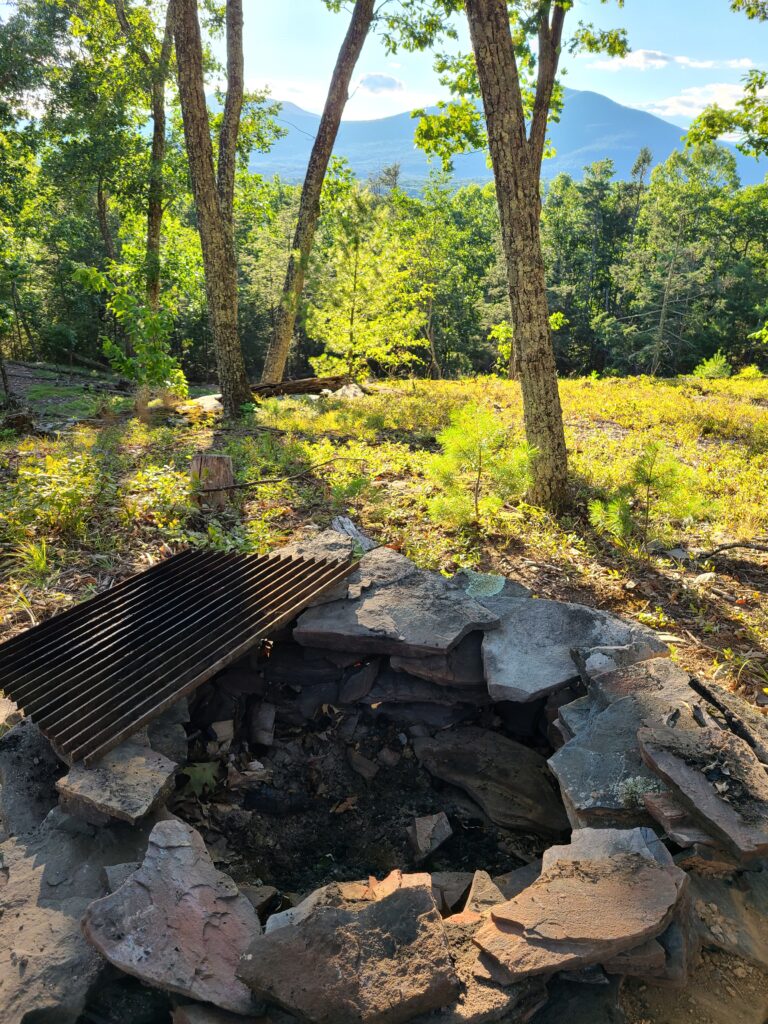
The firepit stayed exactly where it was. The house was planned in relationship to it — the guest bedroom oriented to look out toward it, the courtyard positioned so it could be seen through the glass gallery inside. The landscape around it was shaped to feel like an extension of the architecture: fruit trees, ornamental grasses, plantings that follow the rhythms of sun and shade. Sometimes the most powerful landscape move is recognizing what’s already there.
Occupiable vs. Just Beautiful: The Importance of Proximity
There’s a real temptation in landscape design to create things that look wonderful from the house — a garden at the meadow’s edge, a fire pit at the far end of the property — without asking whether the clients will actually use them. The honest answer is: if it’s too far away, they won’t. At least not consistently.
Outdoor spaces need to earn their distance, and the journey itself has to deliver.
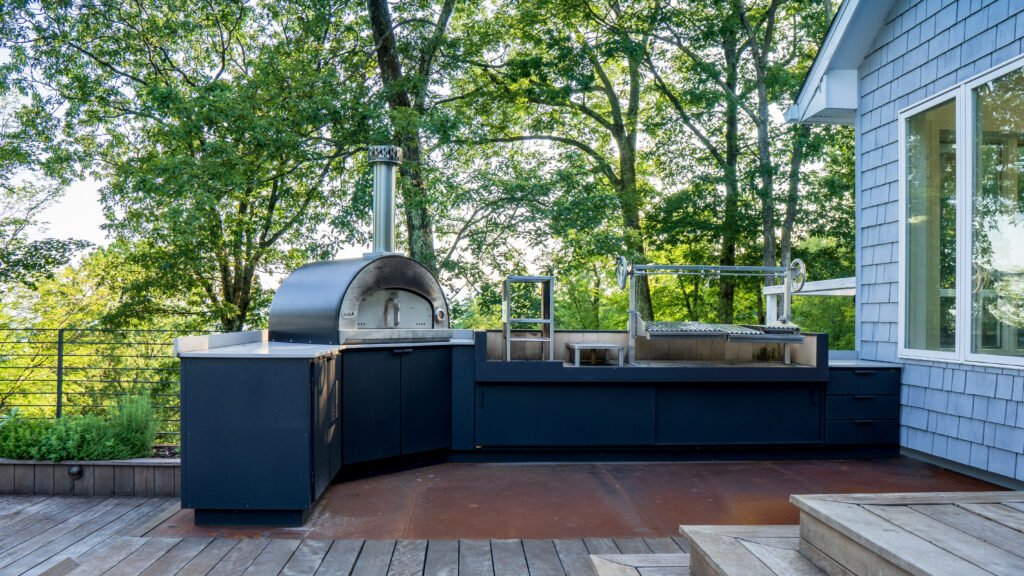
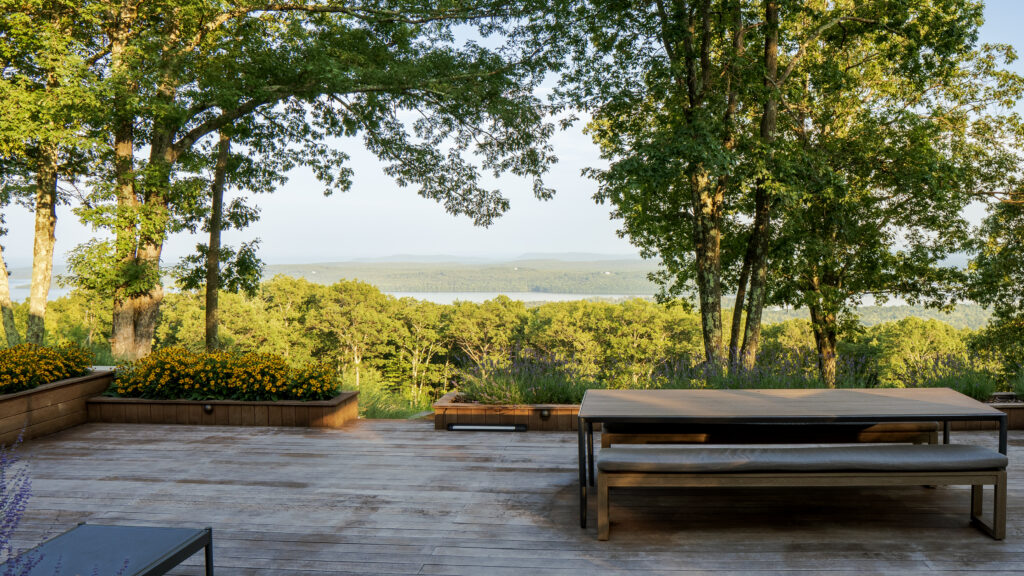
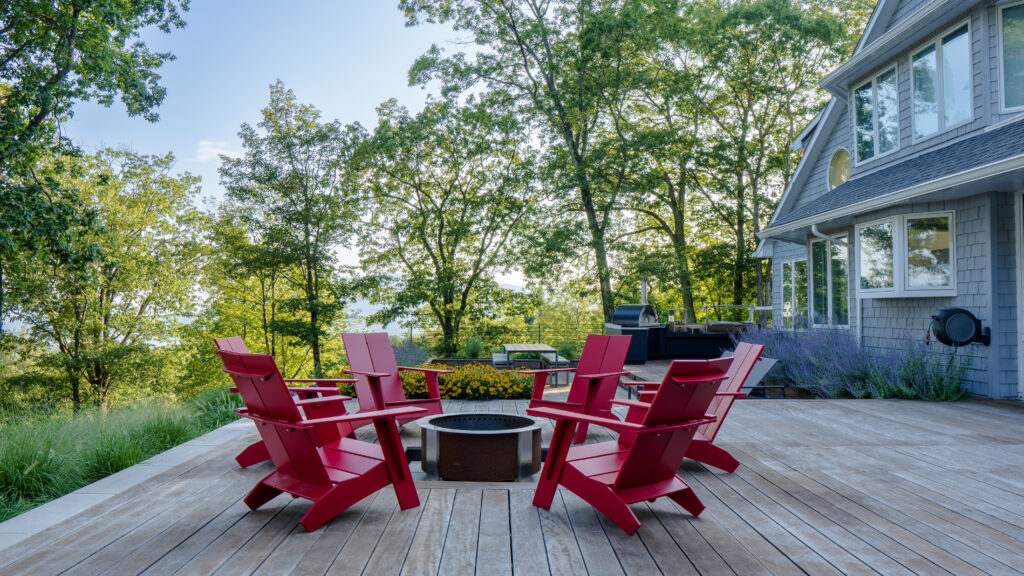
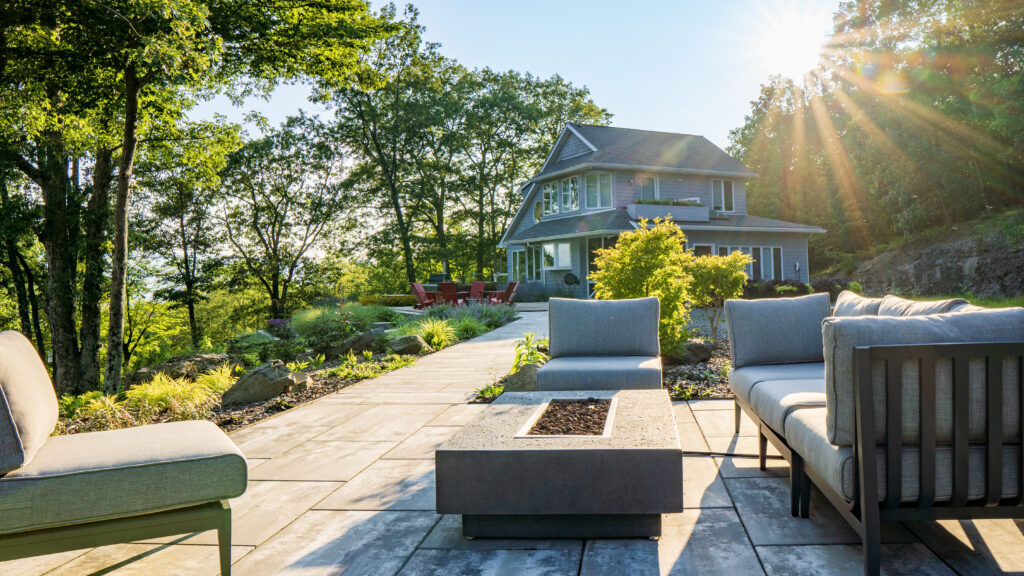
At Shokan Scapes, we designed a full sequence of outdoor spaces for a home perched above the Ashokan Reservoir. An outdoor kitchen with a pizza oven and Argentine grill anchors the first zone — close to the rear entry, functional, immediately usable. A few steps below, a dining table opens up the reservoir view alongside reclining chairs. Further along, a firepit deck invites a slower evening. A paved path continues to a quieter seating area with a different angle on the water. And at the base of the slope, a hot tub deck is designed to feel like a hidden oasis — separated from the activity of the main house, but connected to the same experience of the site. Each space is close enough to the last to feel reachable, and each step down the slope reveals something new.

Designing for use also means thinking carefully about when, not just where. Back at VIA43, the breakfast courtyard sits on the east side of the house. It catches the morning sun beautifully in fall and winter — precisely when you want to sit outside in direct light. By summer, the surrounding trees provide enough shade to make it equally pleasant in the heat. The question we’re always asking: which orientation gets the most use over the longest stretch of the year?
Hardscaping as Architecture
On sloping sites — and many Hudson Valley properties have significant grade changes — the challenge is connecting a house to land that’s moving in a different direction. Grading everything flat is one answer, but it often strips a site of its character.
At VIA43, a low retaining wall was the better answer. By extending the courtyard and building a wall to hold the slope, we created an occupiable outdoor space adjacent to the house and grounded the building in its site in a way the architecture alone couldn’t achieve. We didn’t sculpt every corner of the property. The goal was specific, useful, beautiful moments, and letting the rest of the land stay wild. That contrast between the cultivated and the untouched is part of what gives a house its sense of place.
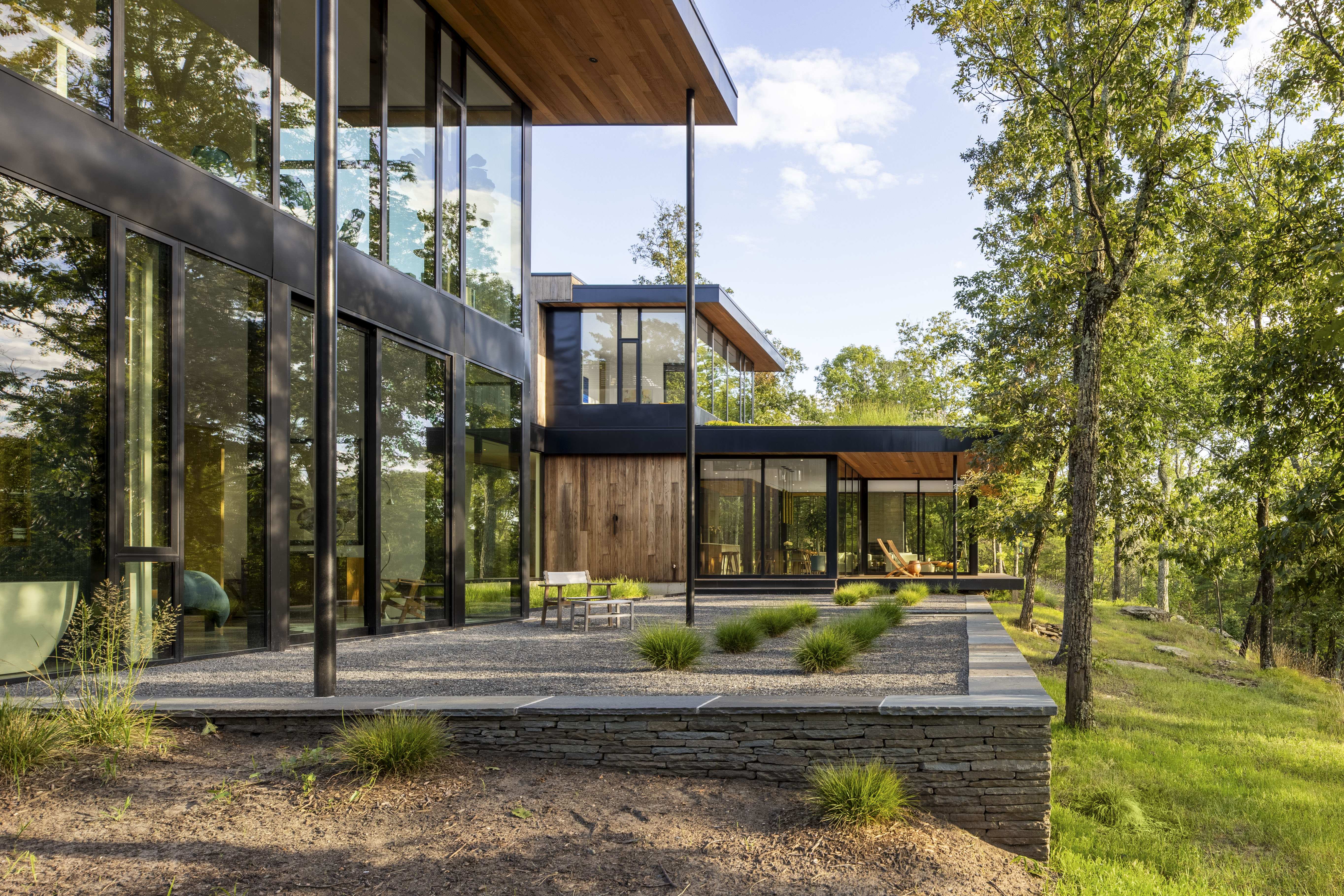
Grasses, Rocks, and the Art of Blurring the Edge
One of our favorite landscape tools is also the simplest: native grasses. They move in the wind, shift dramatically by season — green and lush in summer, amber and structural in winter — and they don’t require a hard edge.
This matters because the line where a building meets the ground is one of the hardest design problems in residential architecture. If that line is too sharp — foundation exposed, lawn starting abruptly — the house can look placed, rather than sited. Grasses soften that transition, as do rocks placed at the perimeter of the foundation, blurring the boundary between the built and the natural. At Art Fort in Kerhonkson — sitting on a gentle slope with views toward the Shawangunk Ridge — the house uses the site’s grade rather than fighting it, embedding itself in the landscape rather than arriving on top of it.
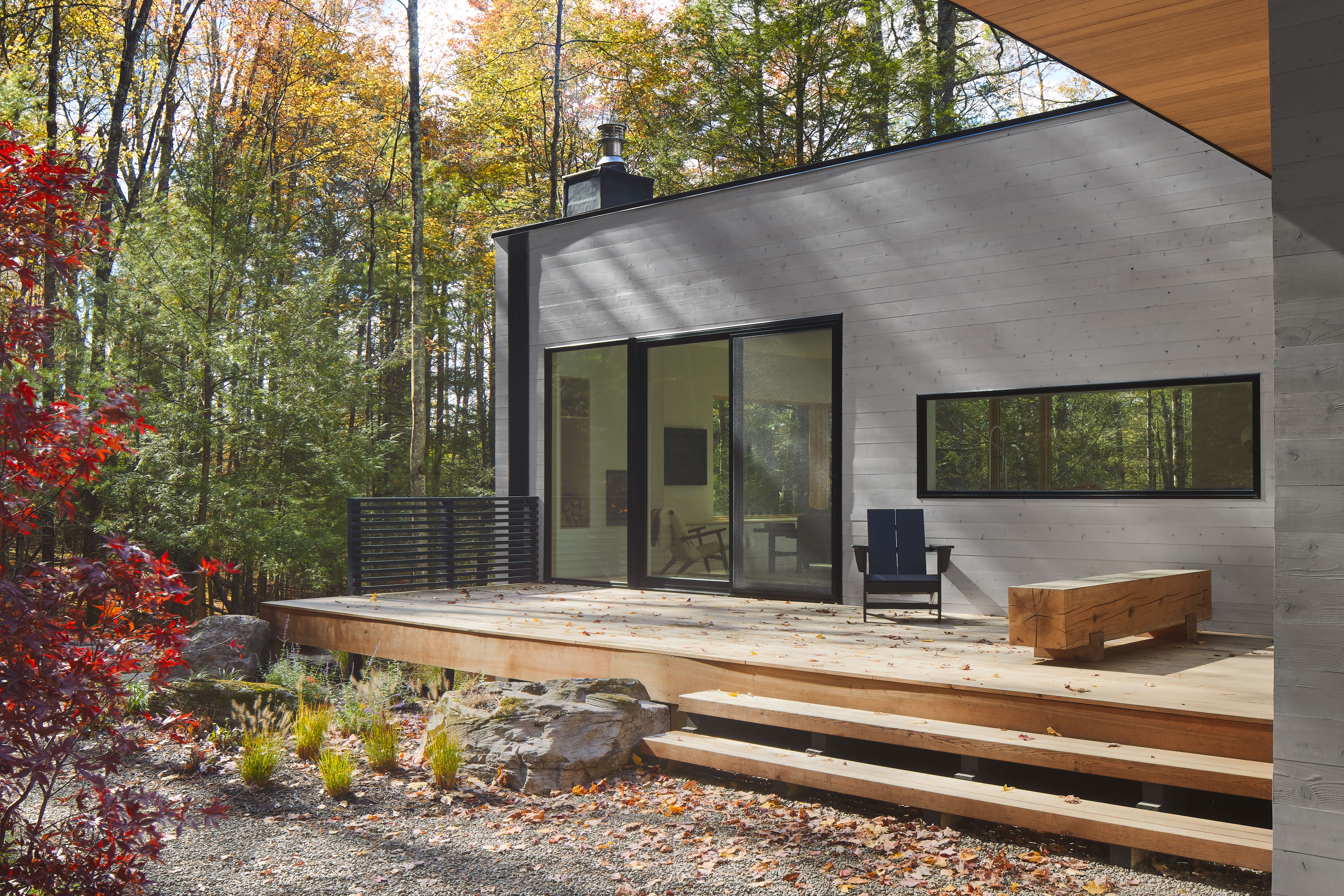
Defining space doesn’t require straight lines. A sweep of grasses along an entry path creates enclosure and sequence without a fence. A low rock border suggests an edge without hardening it. These are the moves that make a house feel like it grew there.
It’s All the Same Design
Architecture and landscape belong in the same frame from the beginning. Not: design the house, then figure out the yard. But rather: what is this land asking for? What sequence of experiences do we want to create, from the road to the door to the far edge of the property?
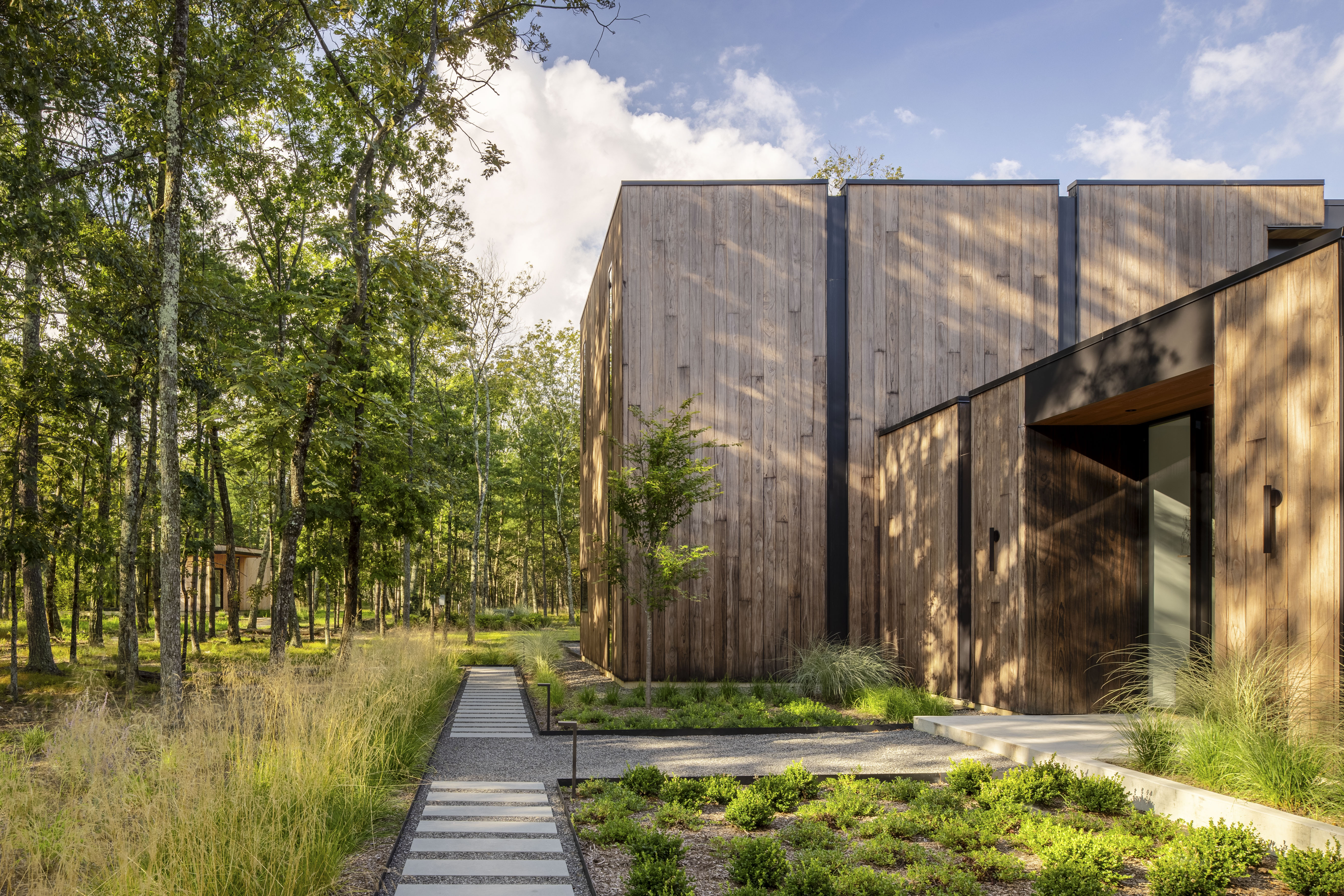
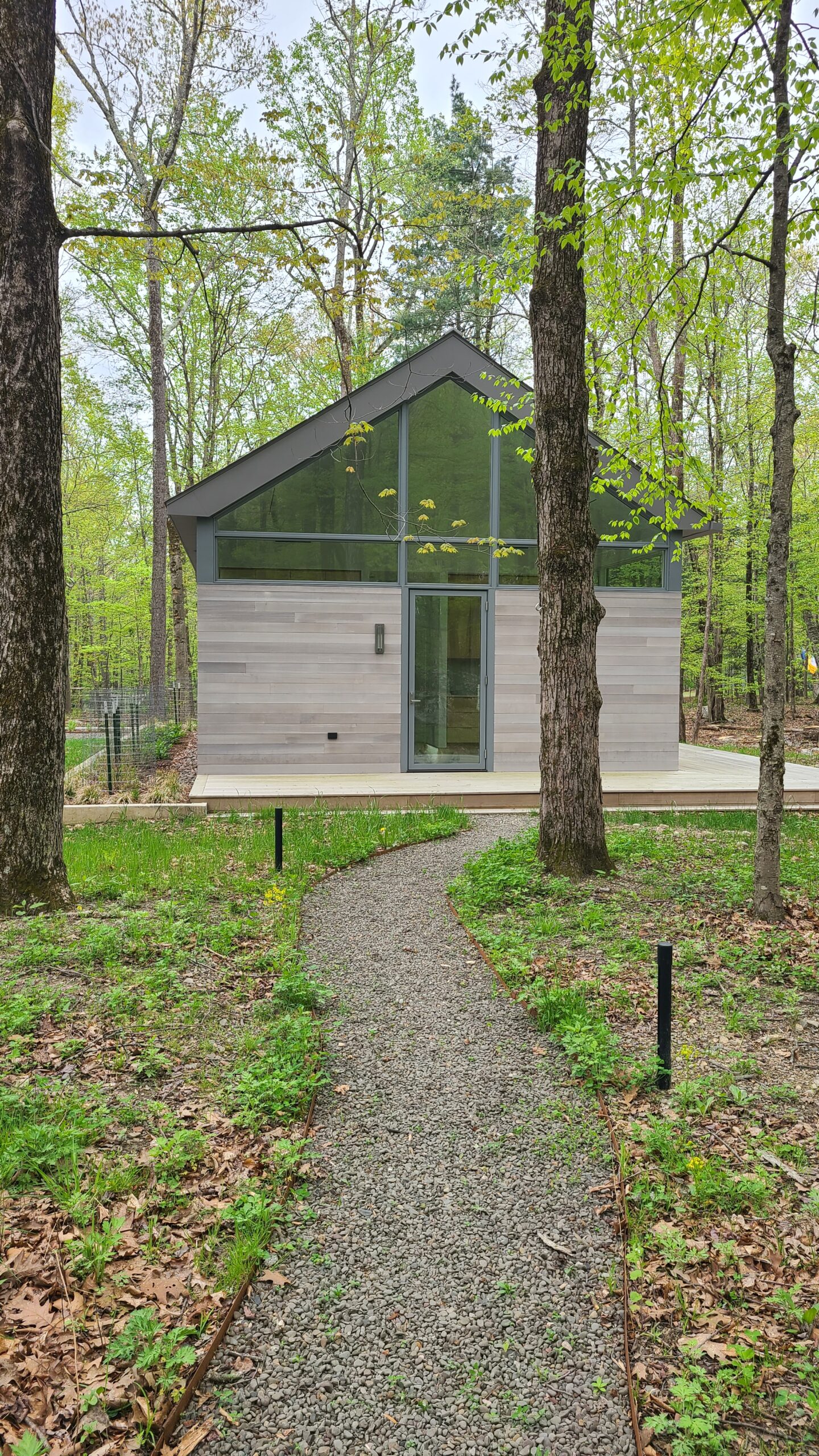
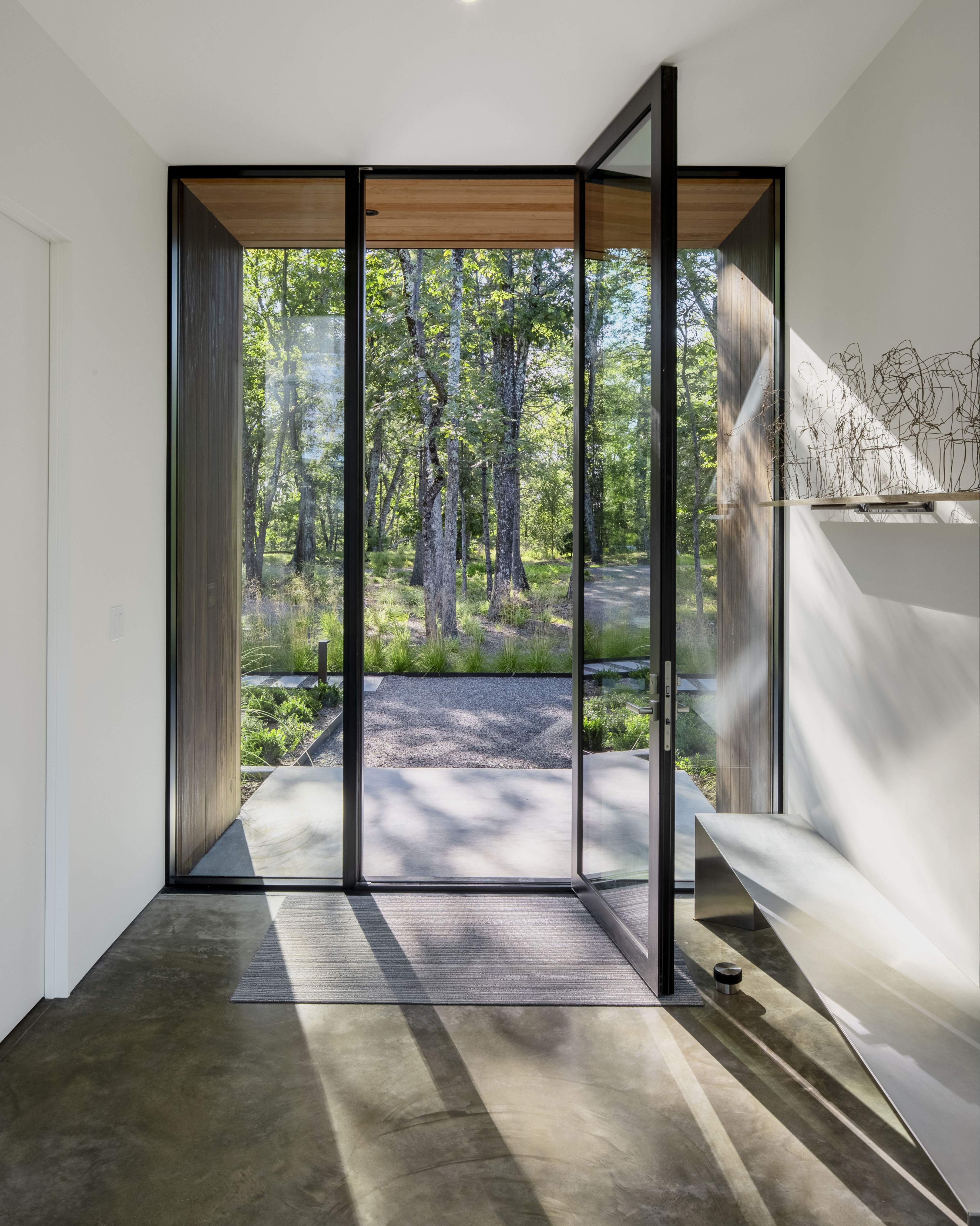
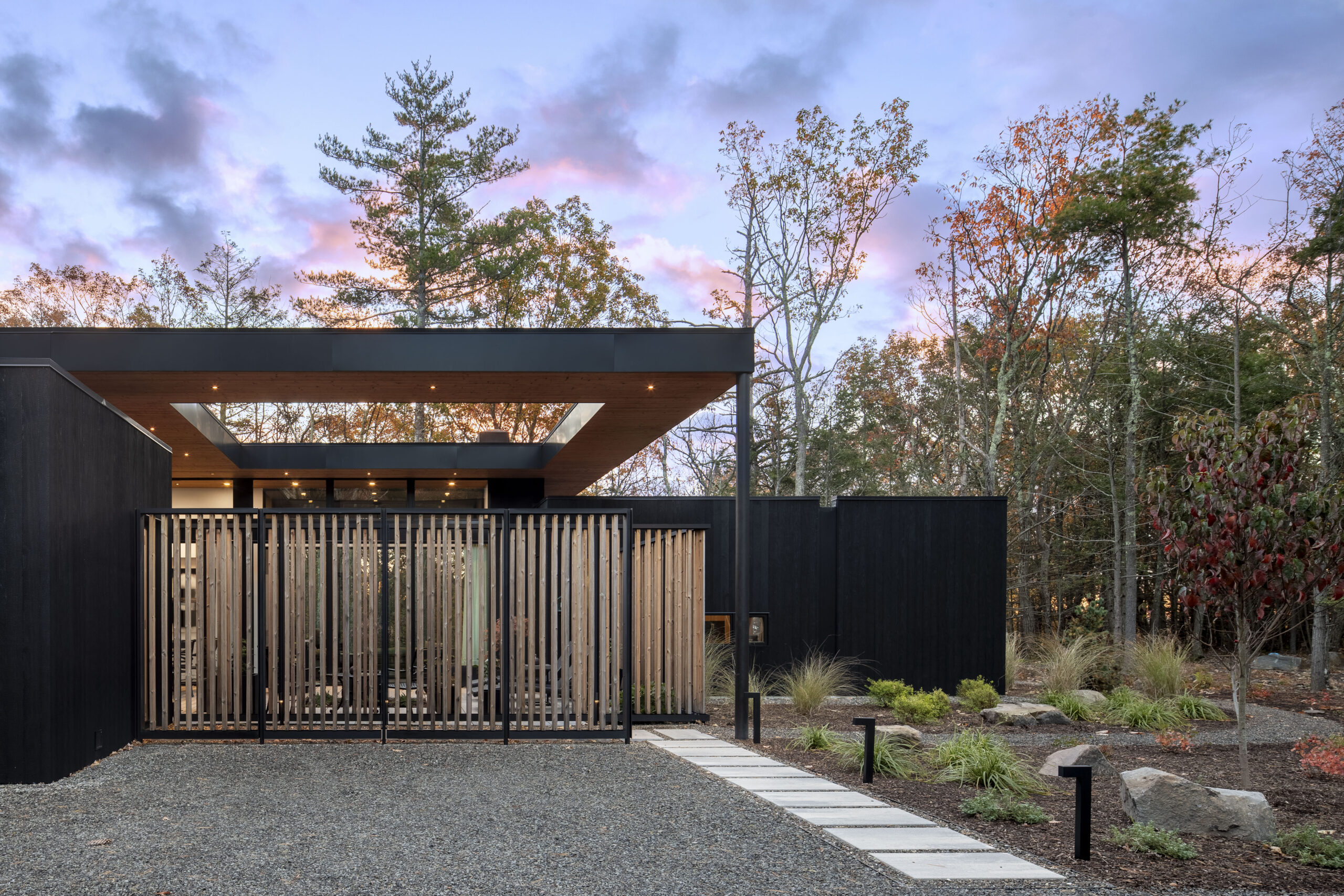
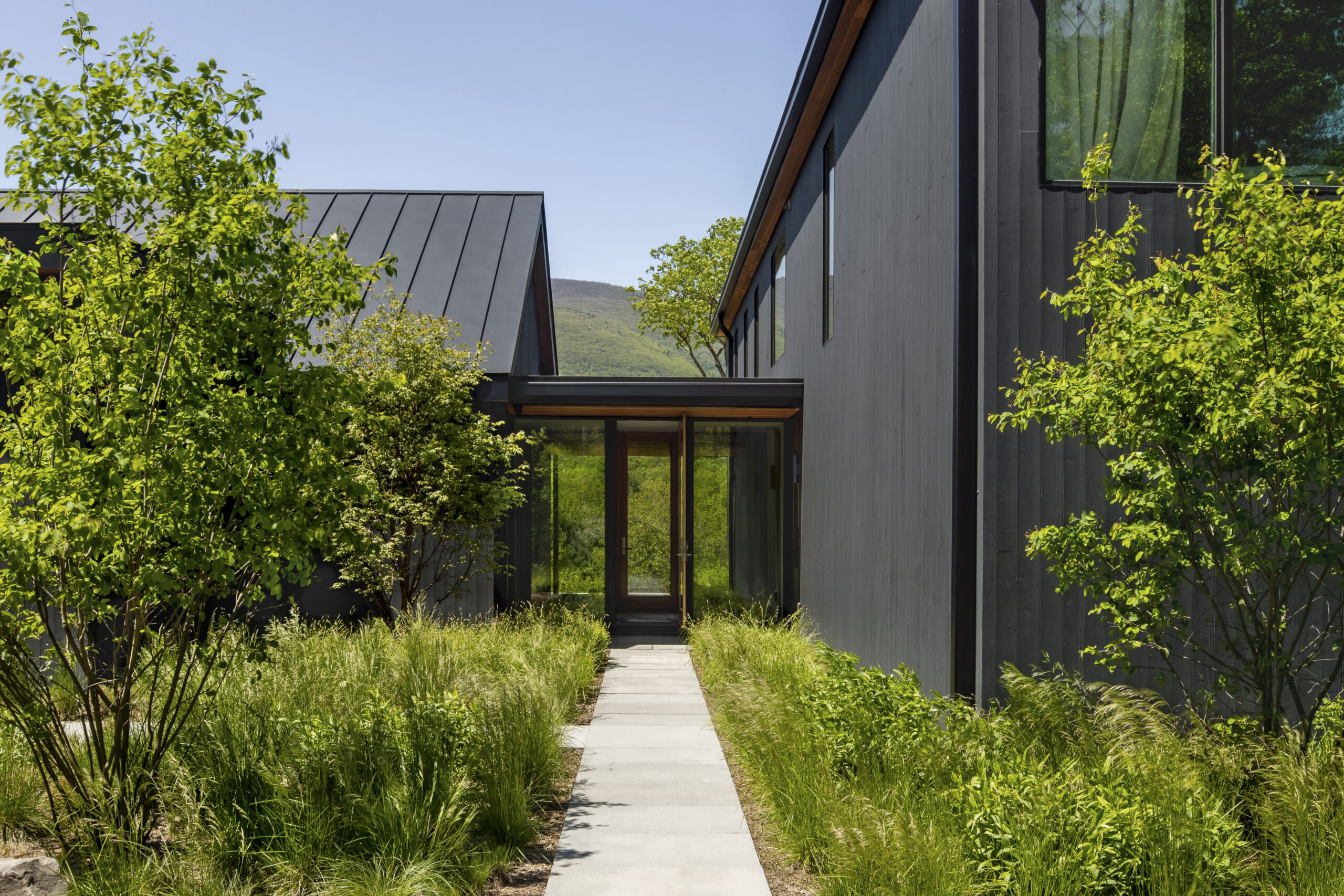
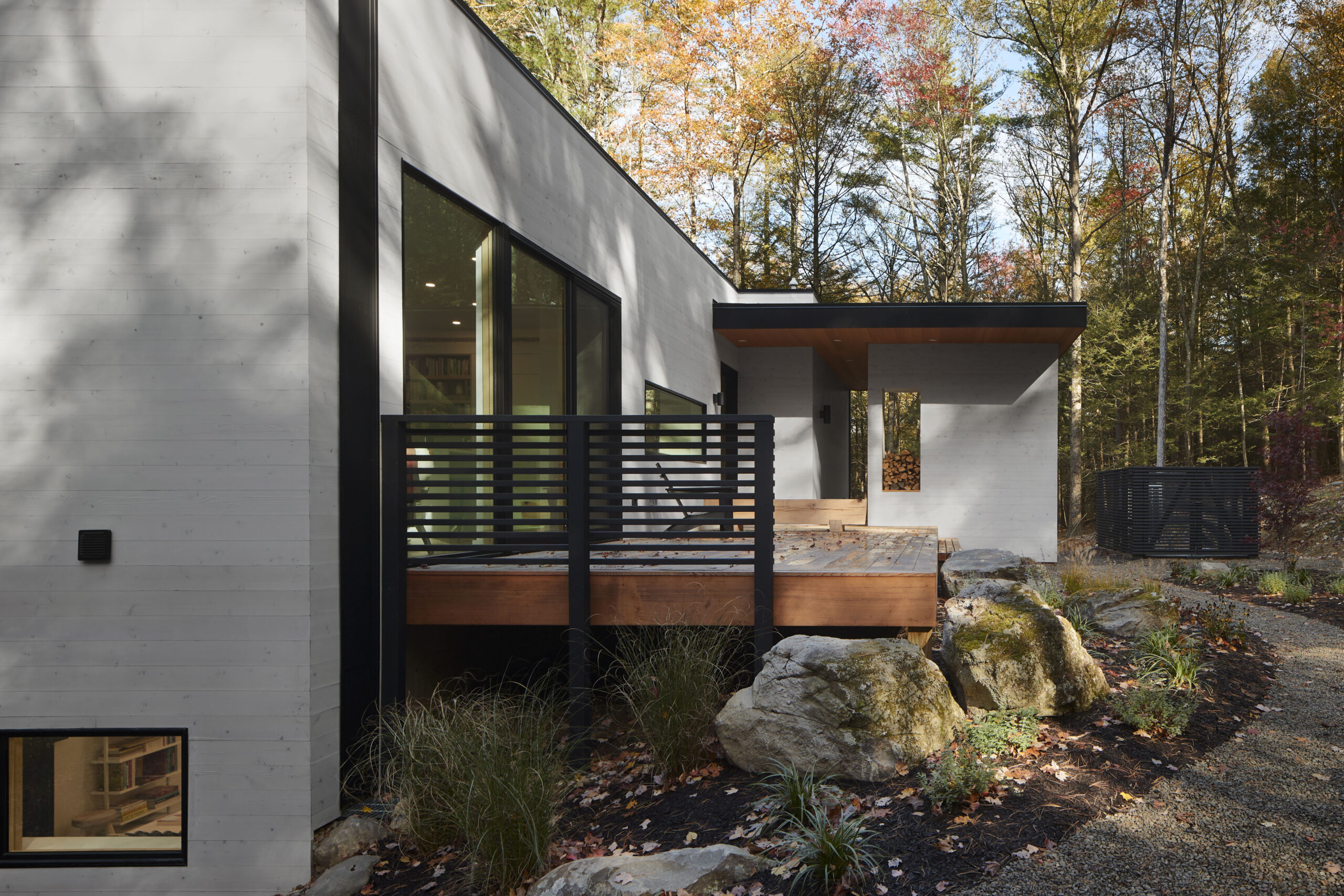
When clients come to us, we start these conversations early — often before the floor plan takes shape. We want to know how they spend time outside, what seasons they’re here for, whether they want wildness or cultivation or some layered combination of both. The answers shape where the house opens, where the decks face, where the walls go. Because in the end, it’s all the same design.
Have a question you’d like us to address in a future Ask an Architect post? Get in touch.