Fermata
ART-INSPIRED HOME WITH A CENTRAL COURTYARD
Saugerties, NY
Completed 2025
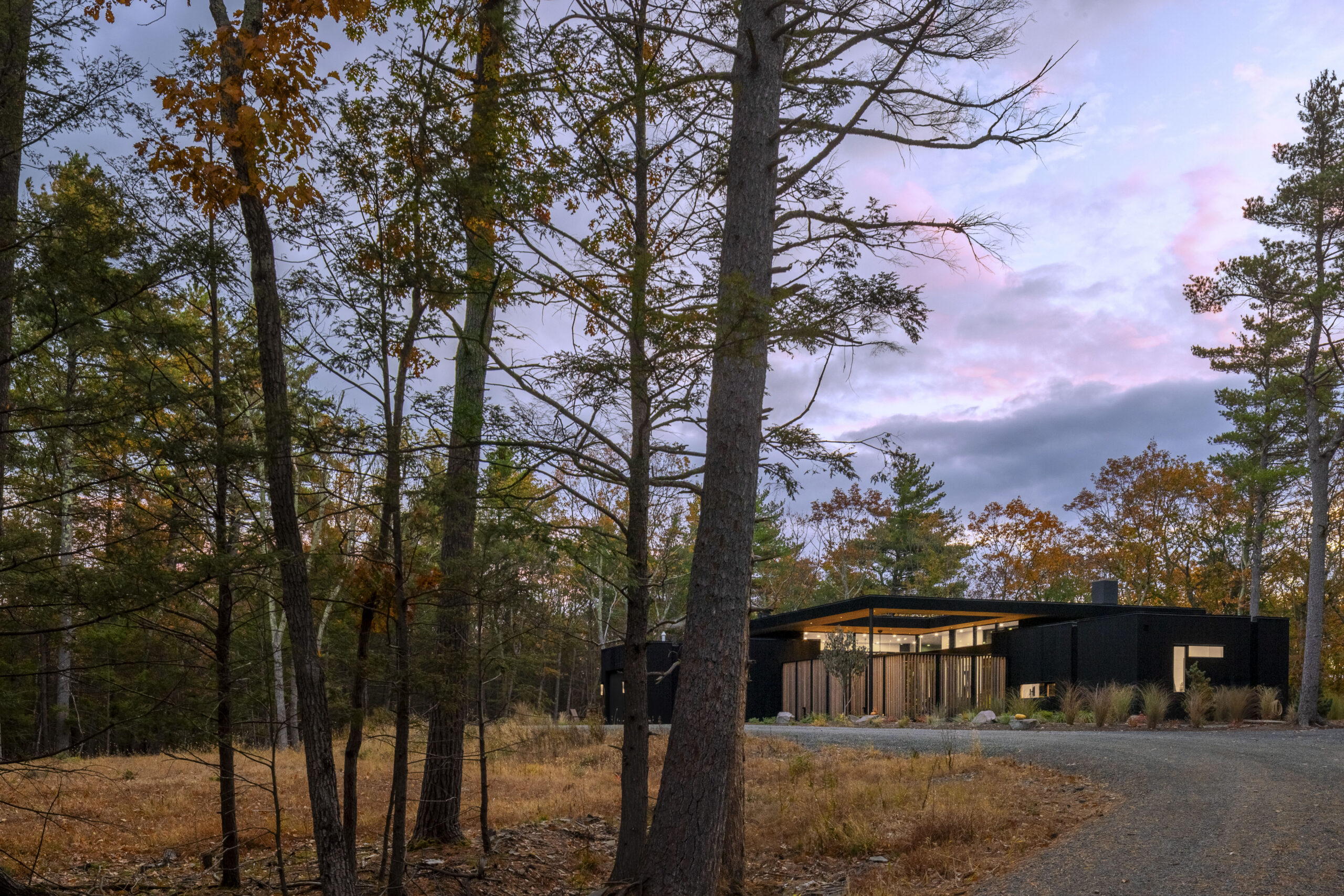
Inspired by a beloved painting named after the musical term meaning “a pause of unspecified length”, Fermata is a single-story home designed to cultivate stillness and encourage quiet reflection.
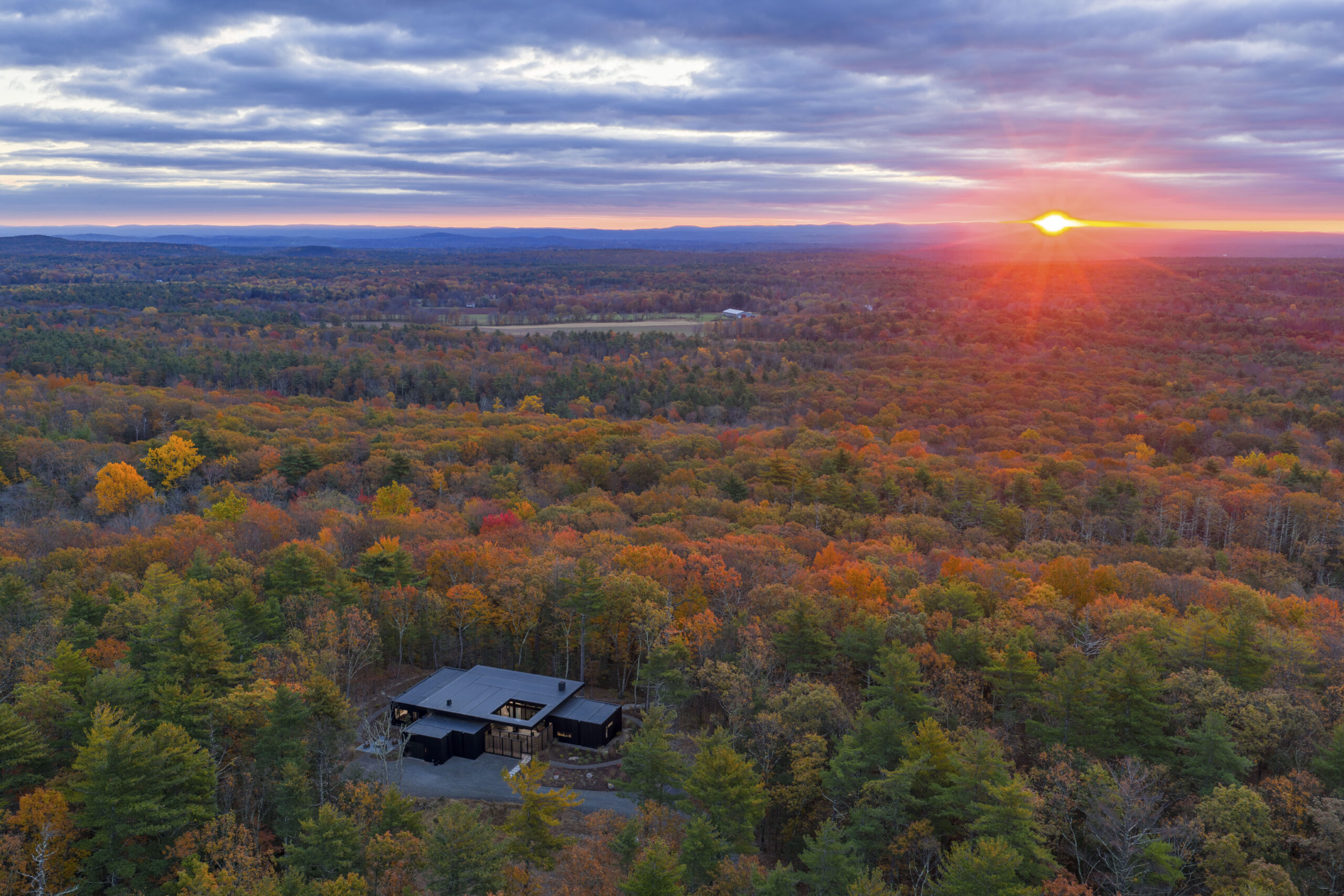
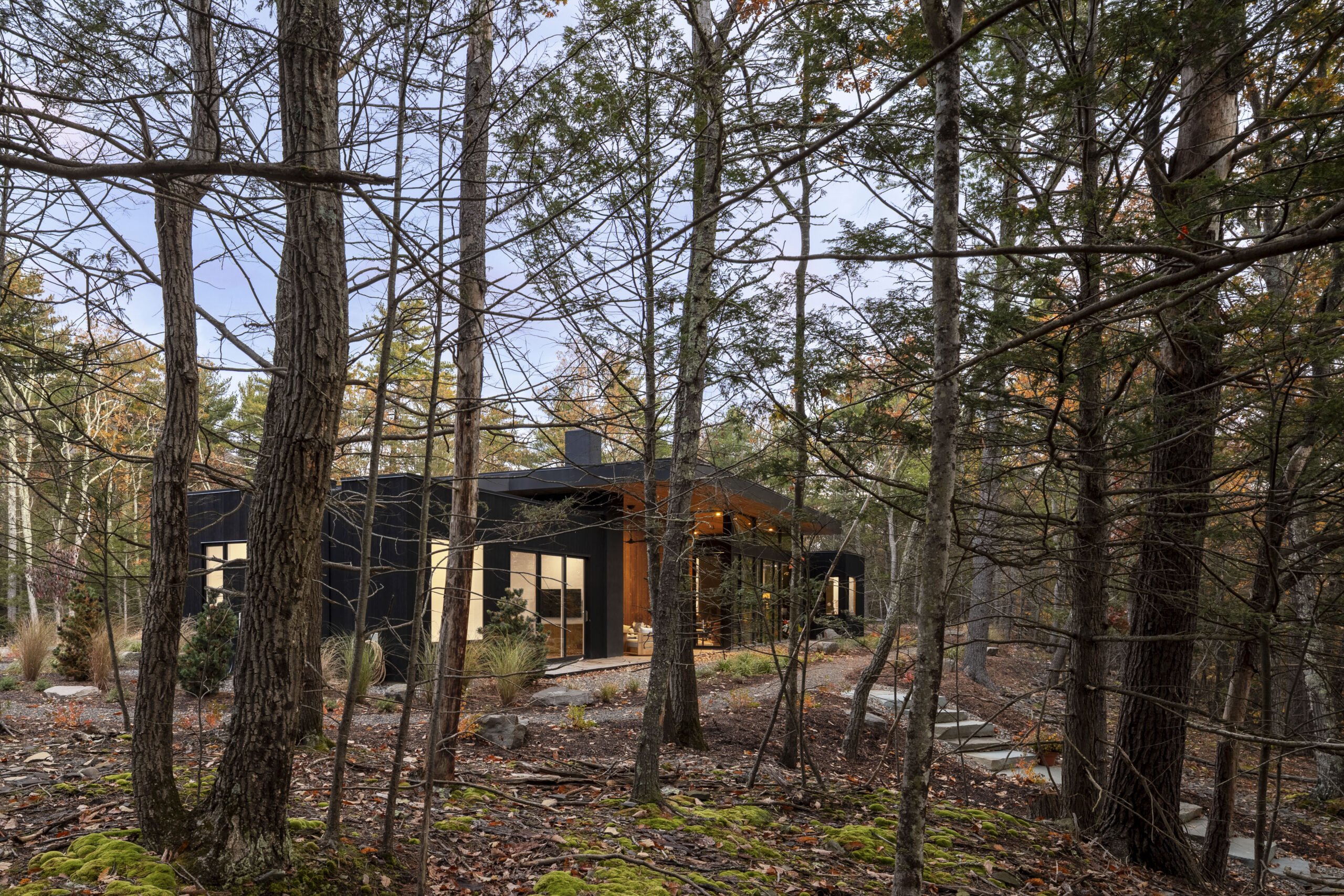
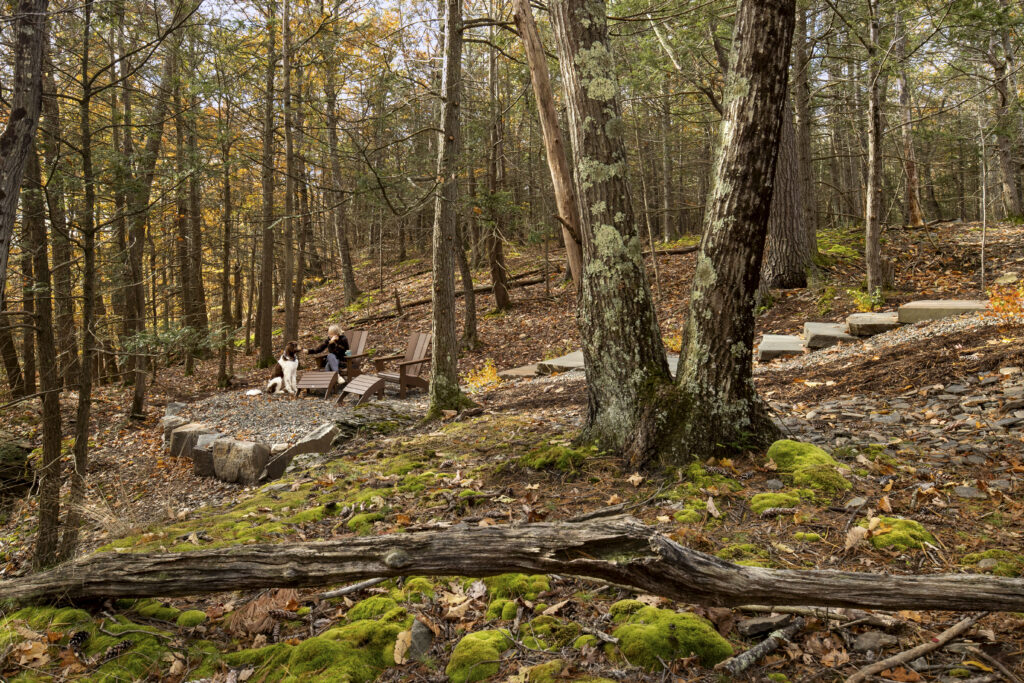
Drawn to the Hudson Valley to be closer to her two sons, our client envisioned a forever home where she could nurture her passions for art, gardening, and the quieter rhythms of daily life. Located on a rocky terrace, nestled among the trees and flanked by dramatic cliffs, the site offered both privacy and an intimate connection to the natural landscape and wildlife. Carefully oriented to capture morning light and frame immediate views of the rocky ground and surrounding forest, the home settles gently onto the land.
Architecture Inspired by Art
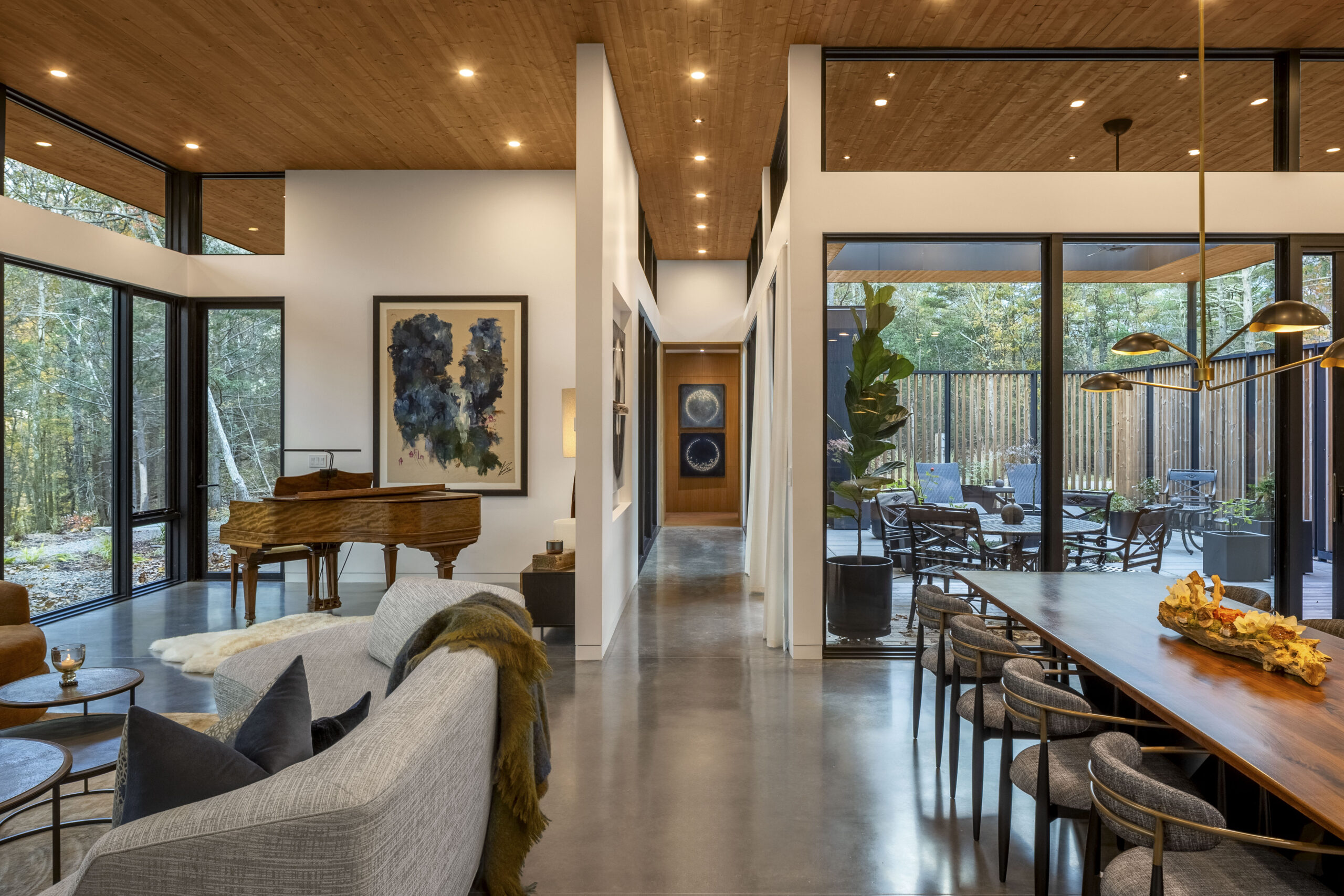
The design of Fermata began with three key pieces in our client’s art collection. Fermata represents the musical concept as a bright white line that through a dark textured background. This “line” was interpreted as a single corridor, cutting through the floor plan and connecting the key spaces in the home, while creating time for reflection in the interstitial spaces created by two glass corridors. Conceptually, a “pause of unspecified length” is captured most saliently by a central courtyard, which encourages rest and reflection, and which beckons to our client and her guests from nearly every room of Fermata.
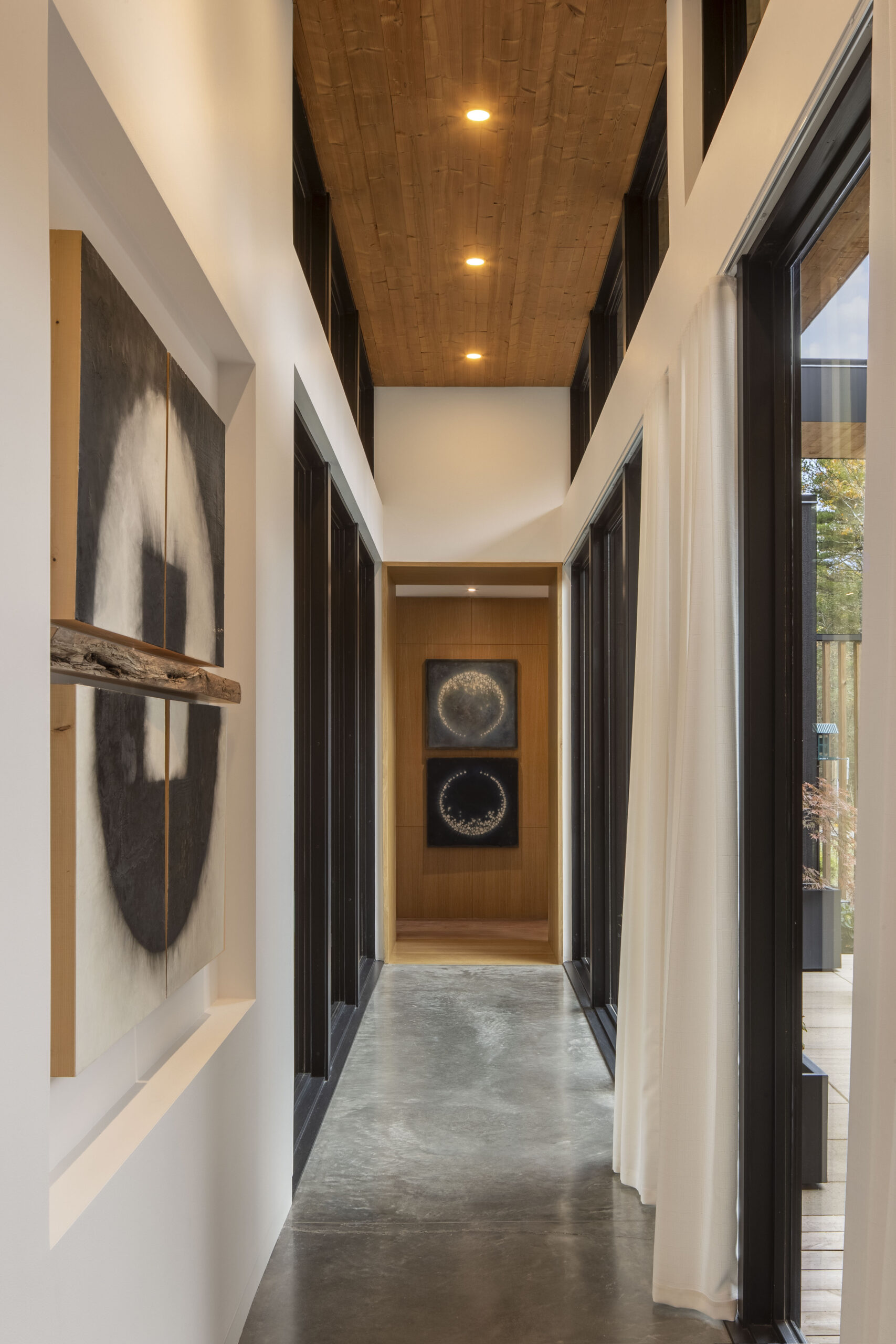
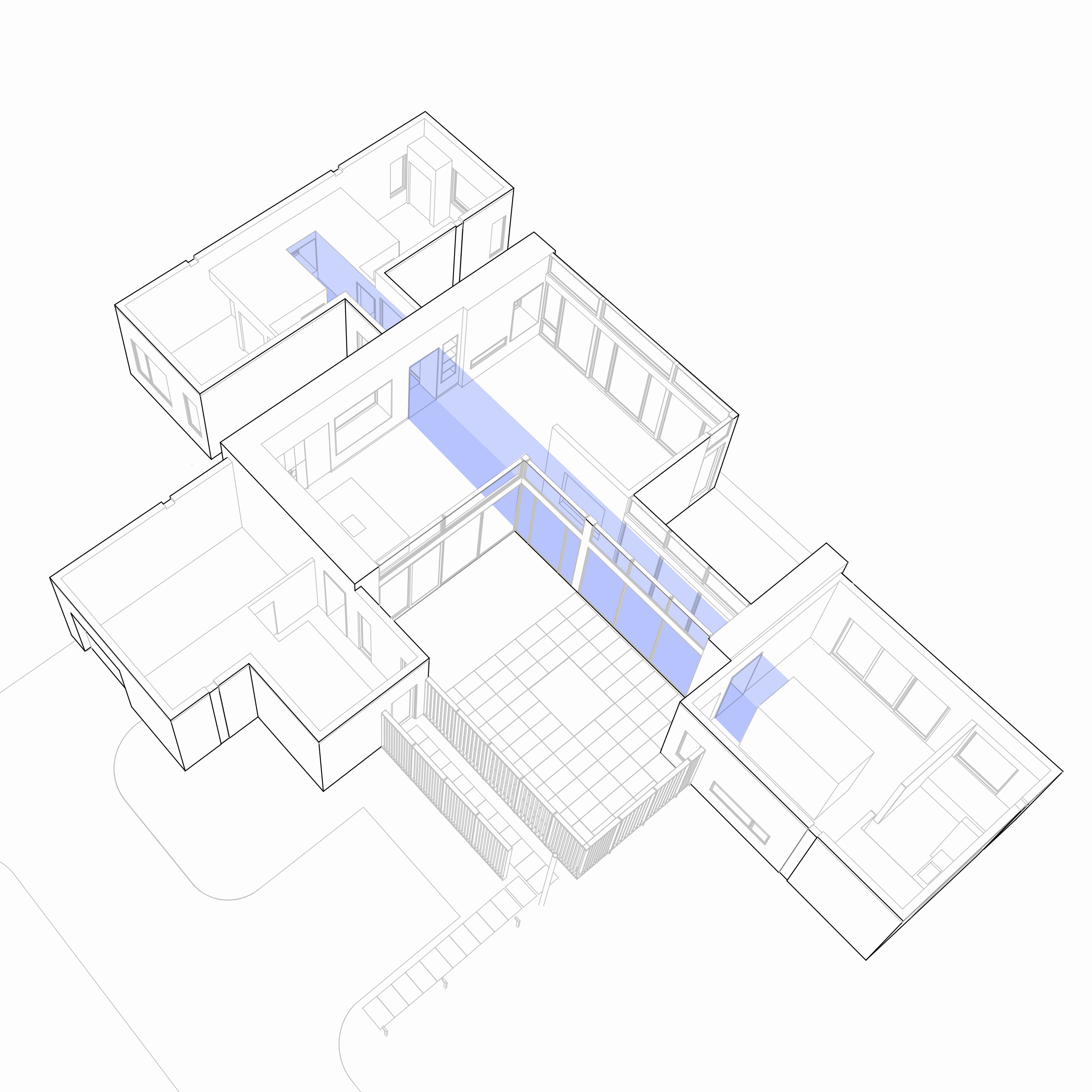
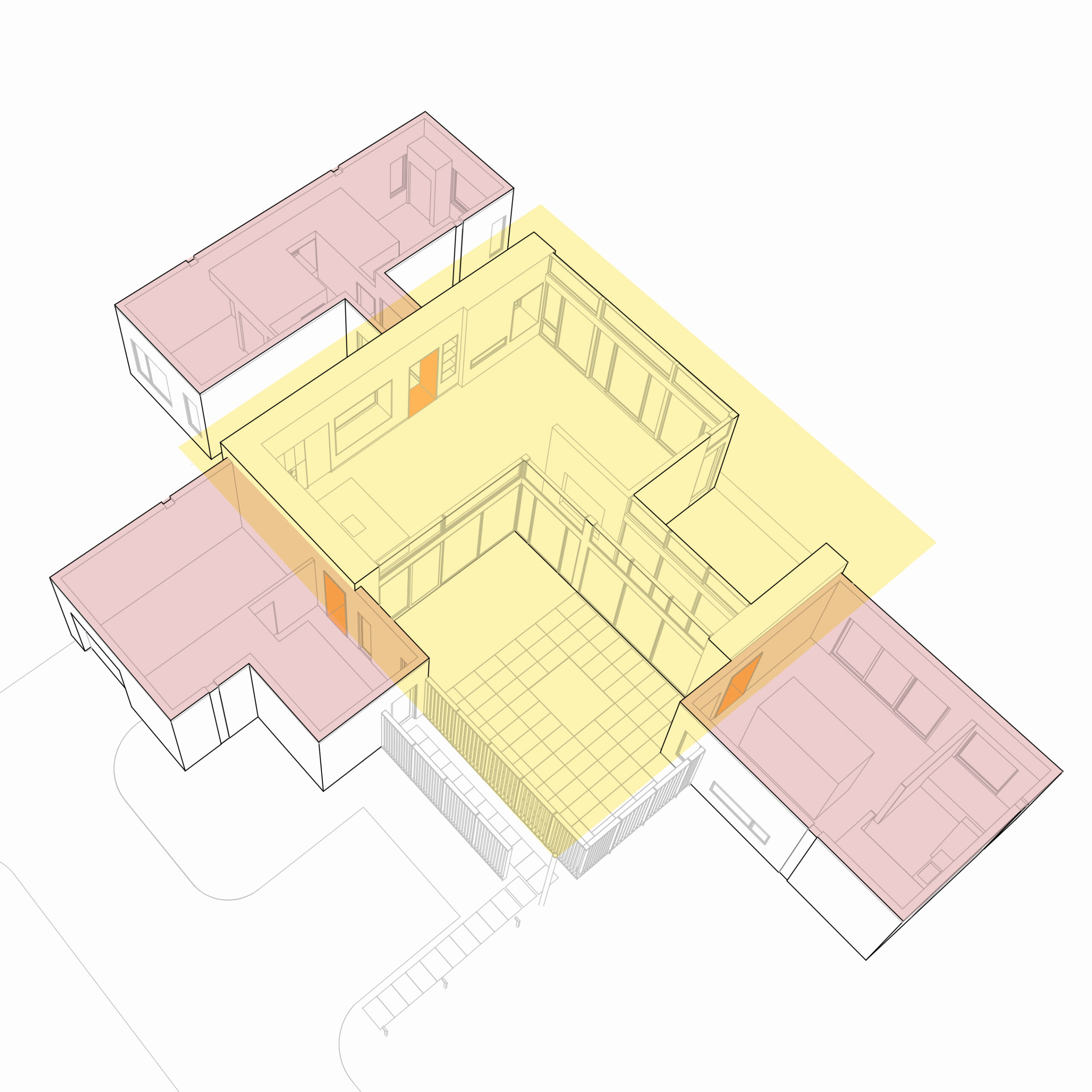
Severance, an encaustic piece that plays with symmetry, division and contrast, was the inspiration for a large, square roof, and for the primary color palette of the home: black, white and warm wood. The central piece of driftwood also echoes the axis originally inspired by Fermata. The square roof denotes the public areas of the home: the entry, main living areas, the courtyard, and an eastern facing deck with a built-in outdoor fireplace. Three private wings provide the home’s support spaces: a functional wing that contains the garage and laundry; a guest wing with two bedrooms, one of which doubles as a media room; and the main bedroom suite, which also includes a compact home office.
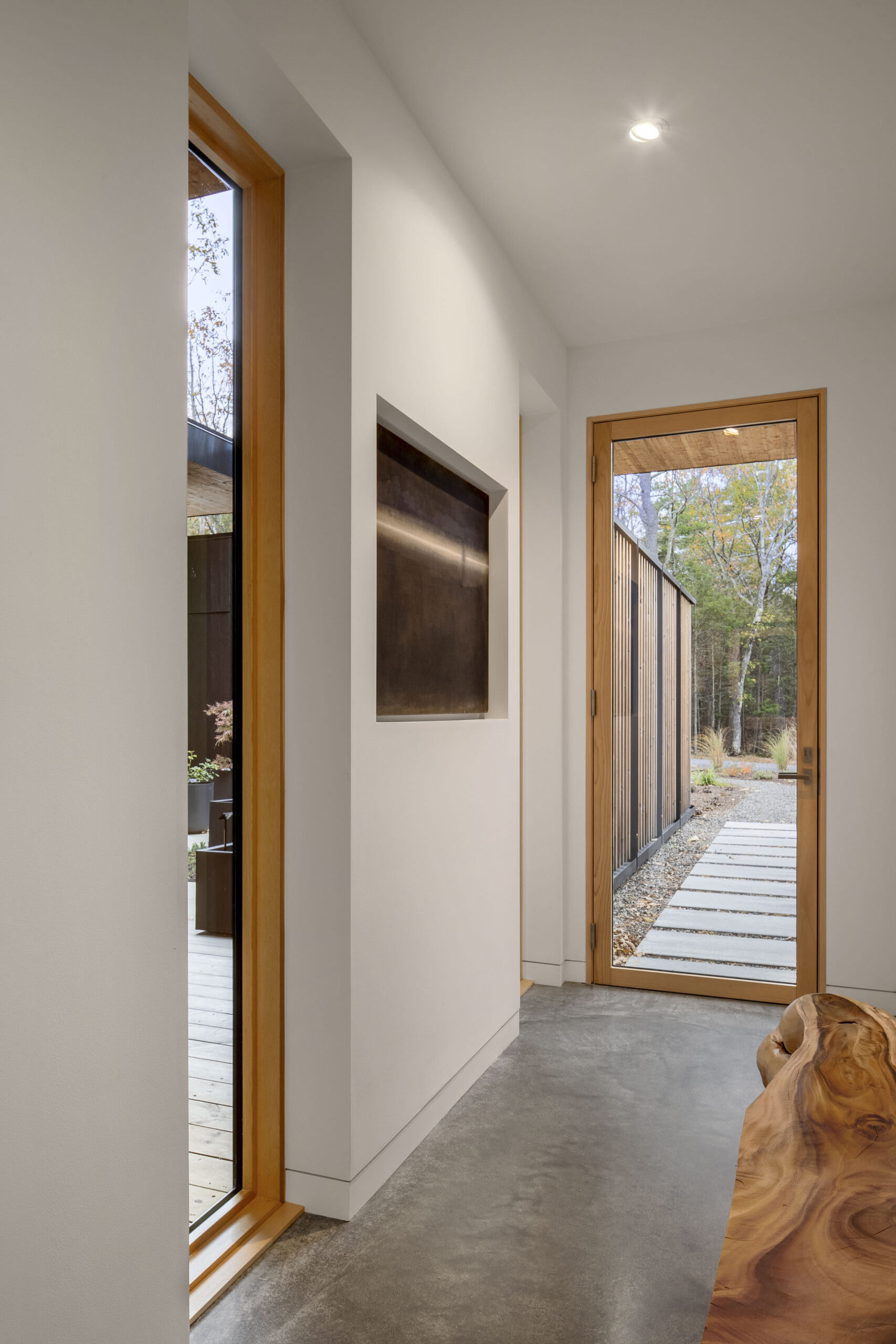
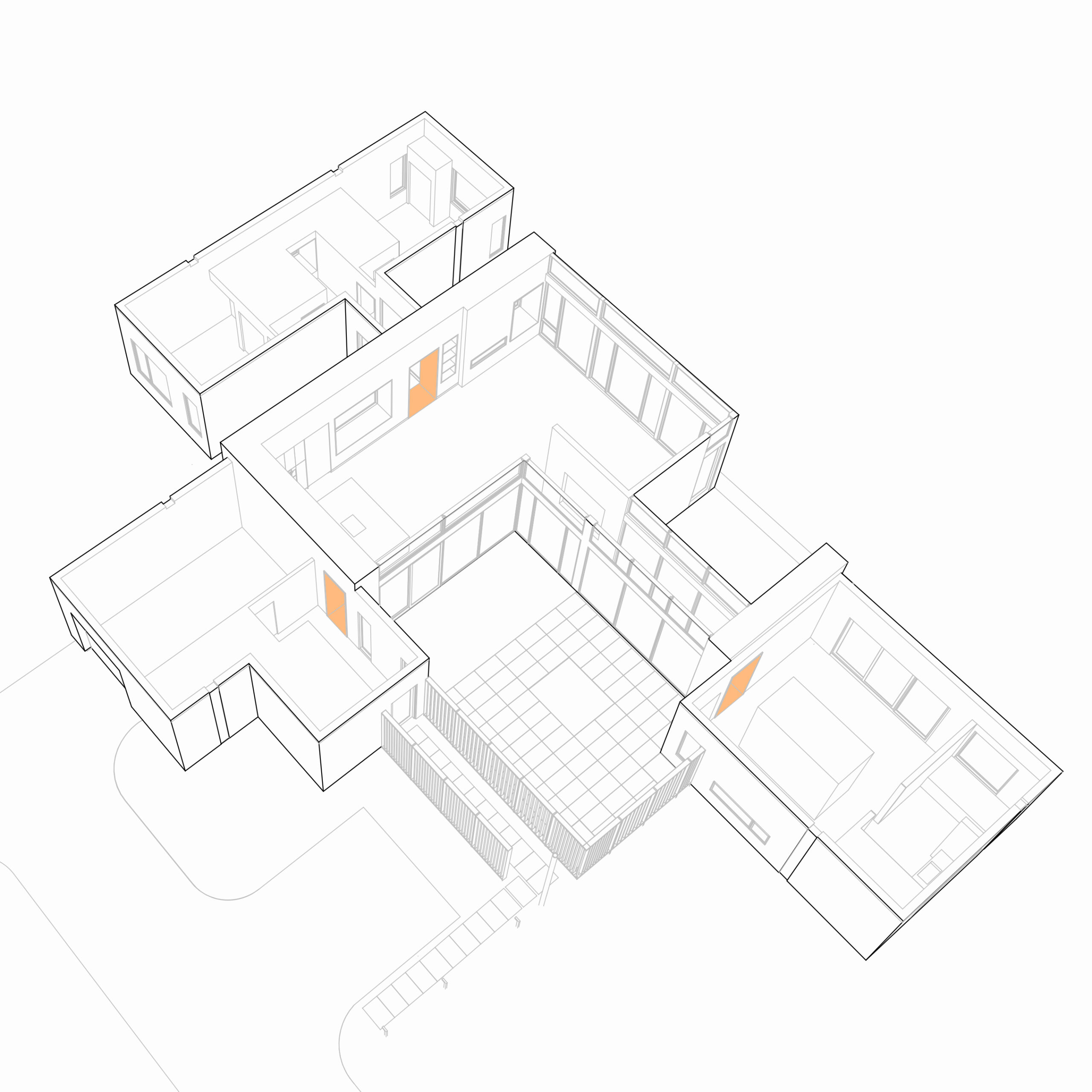
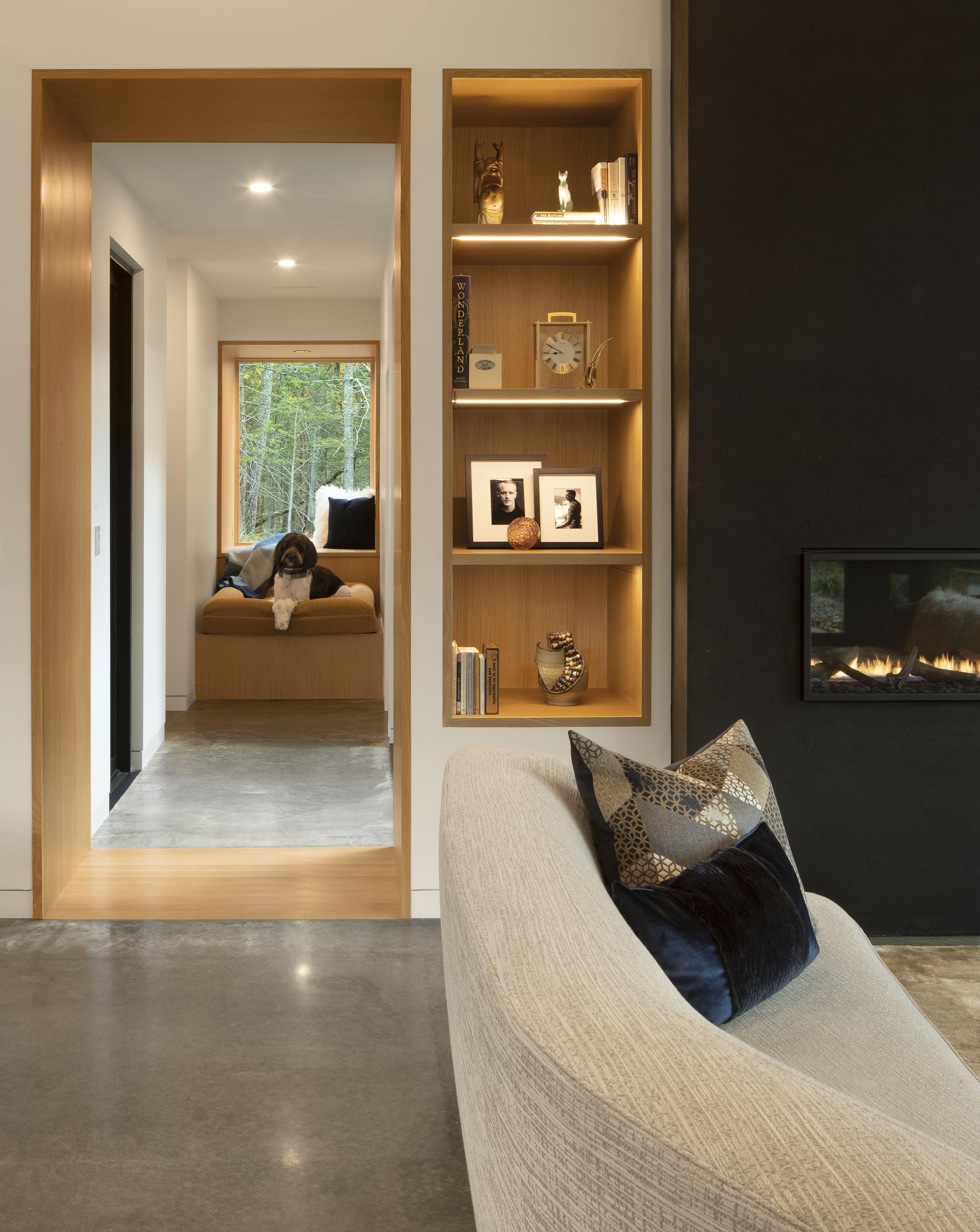
Finally, a photograph of a series of doorways directly influenced the three wood-lined thresholds that mark the transitions from the primary living area to each of the private areas of the home. At nearly three feet deep and clad entirely in warm white oak, these transitional spaces become rooms unto themselves – brief moments of compression and release that heighten awareness as one moves from space to space. The white oak wraps overhead and underfoot, creating wooden passages that encourage a conscious breath before crossing into the next room. With this series of moves, our client’s treasured artwork becomes embedded within the architecture of the home, not simply presented within it.
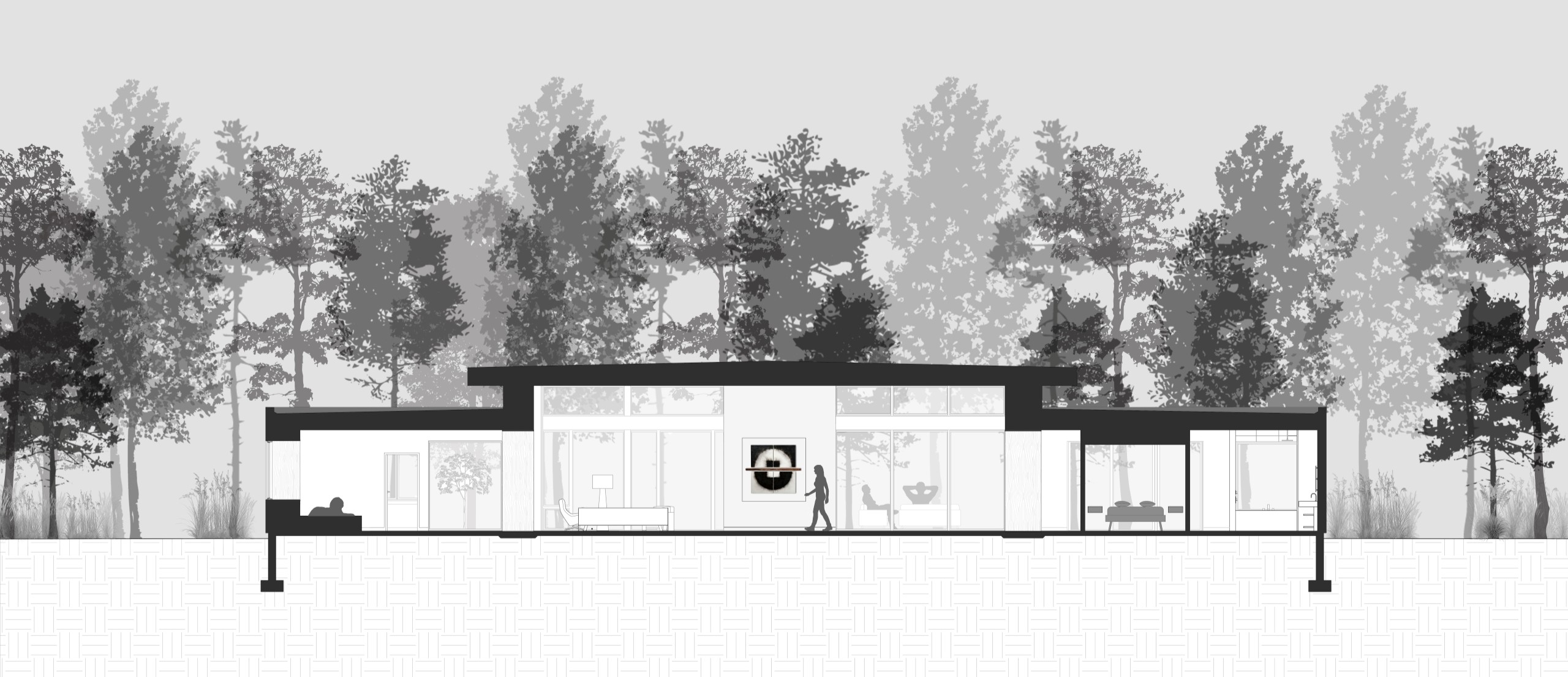
Above, a section drawing shows Fermata’s primary axis. At one end the axis is capped by a reading nook & dog lounge area. The axis continues through a short hallway that separates the guest wing from the living area, and then extends through a longer glass walkway that provides privacy for the main bedroom suite at the opposite end. Severance hangs near the middle of the axis.
Concealed and Revealed: Playful Discovery
Views throughout the home are composed with an equal amount of intention – through doorways, across the courtyard, down hallways – turning the act of walking through the home into a curated experience of discovery and pause. The residence constantly conceals and reveals itself, with moments of surprise scattered throughout.
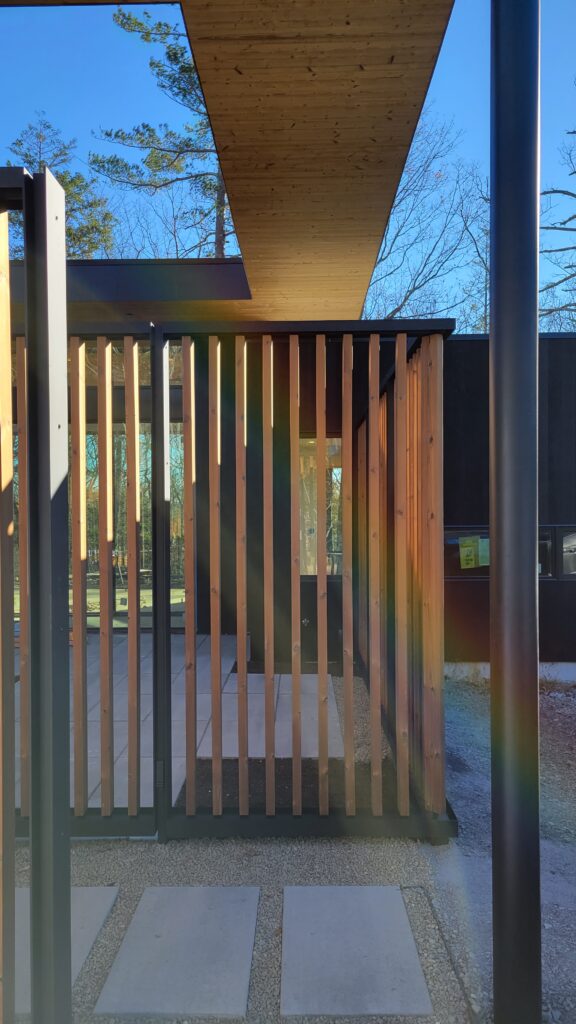
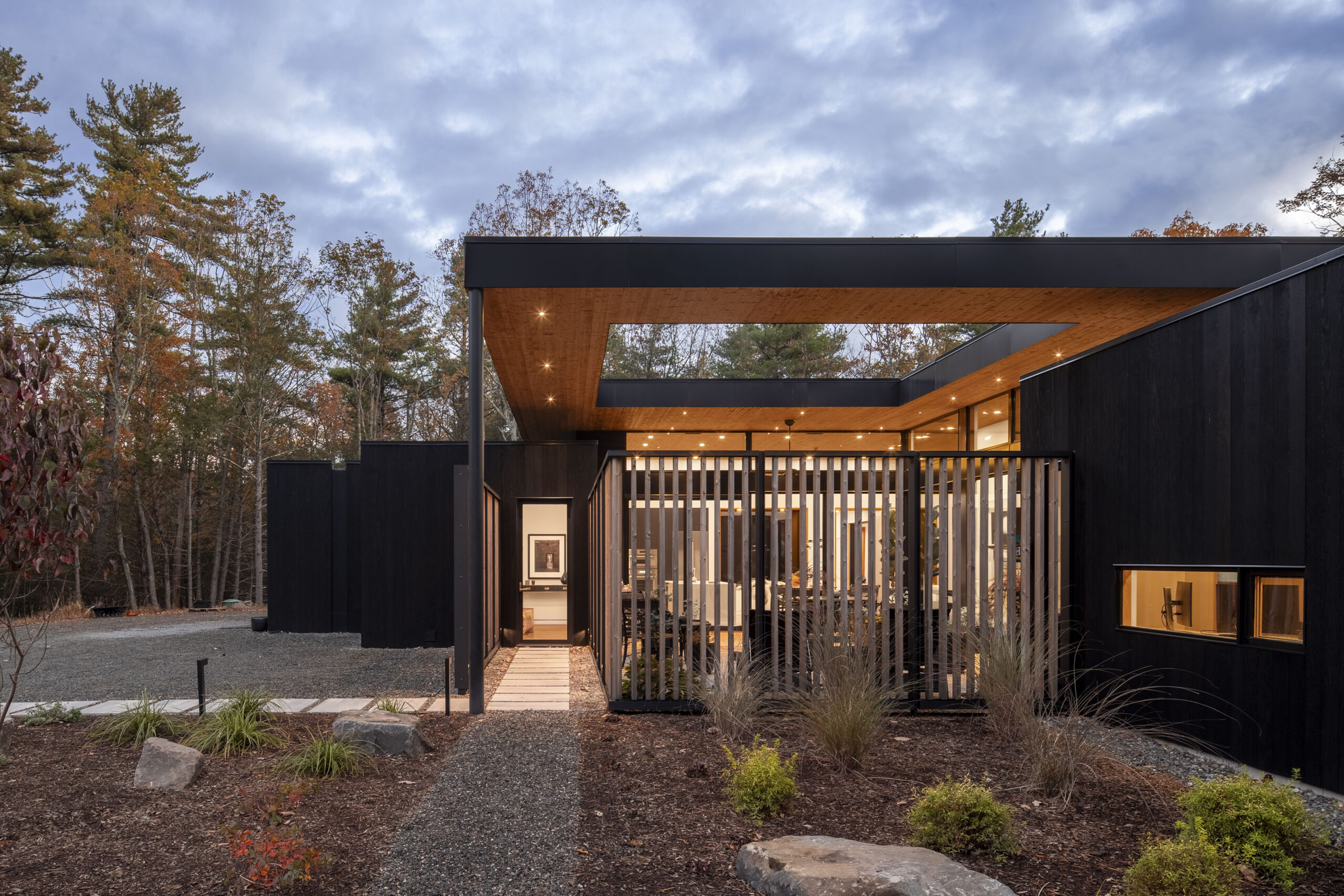
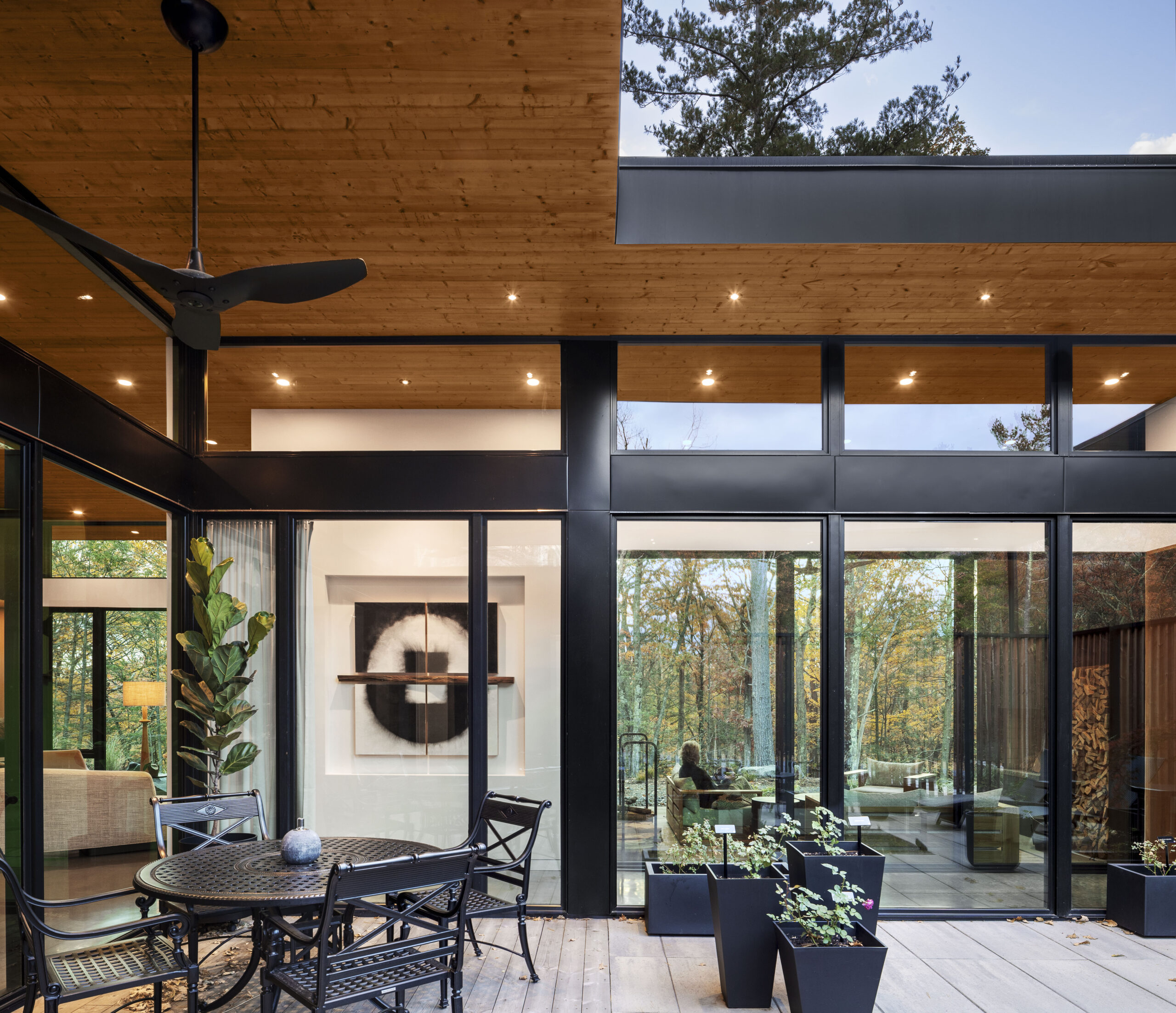
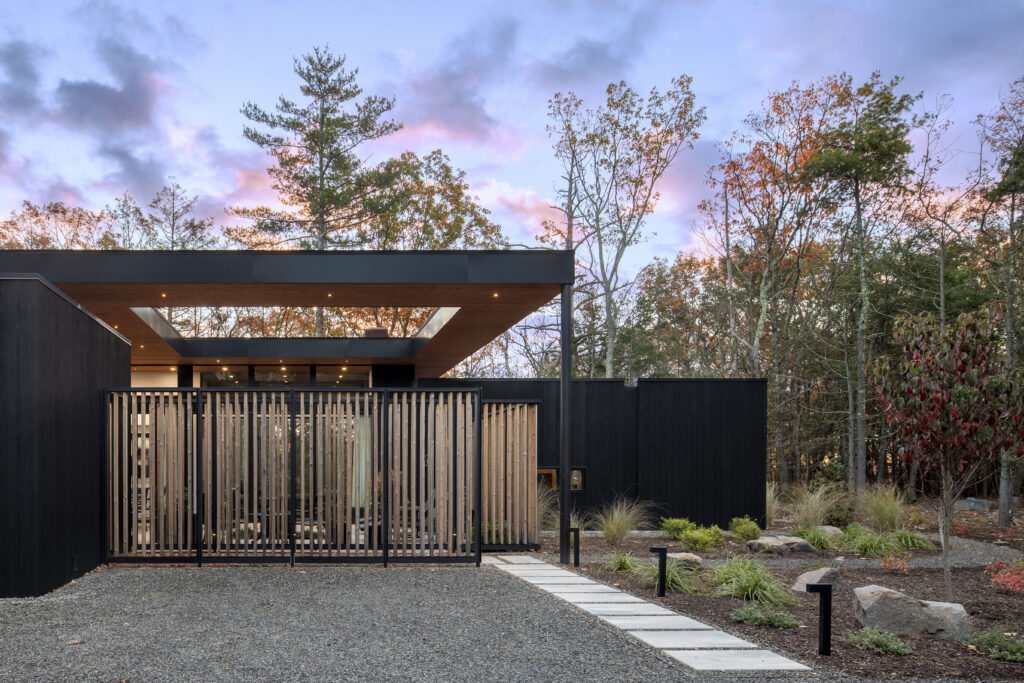
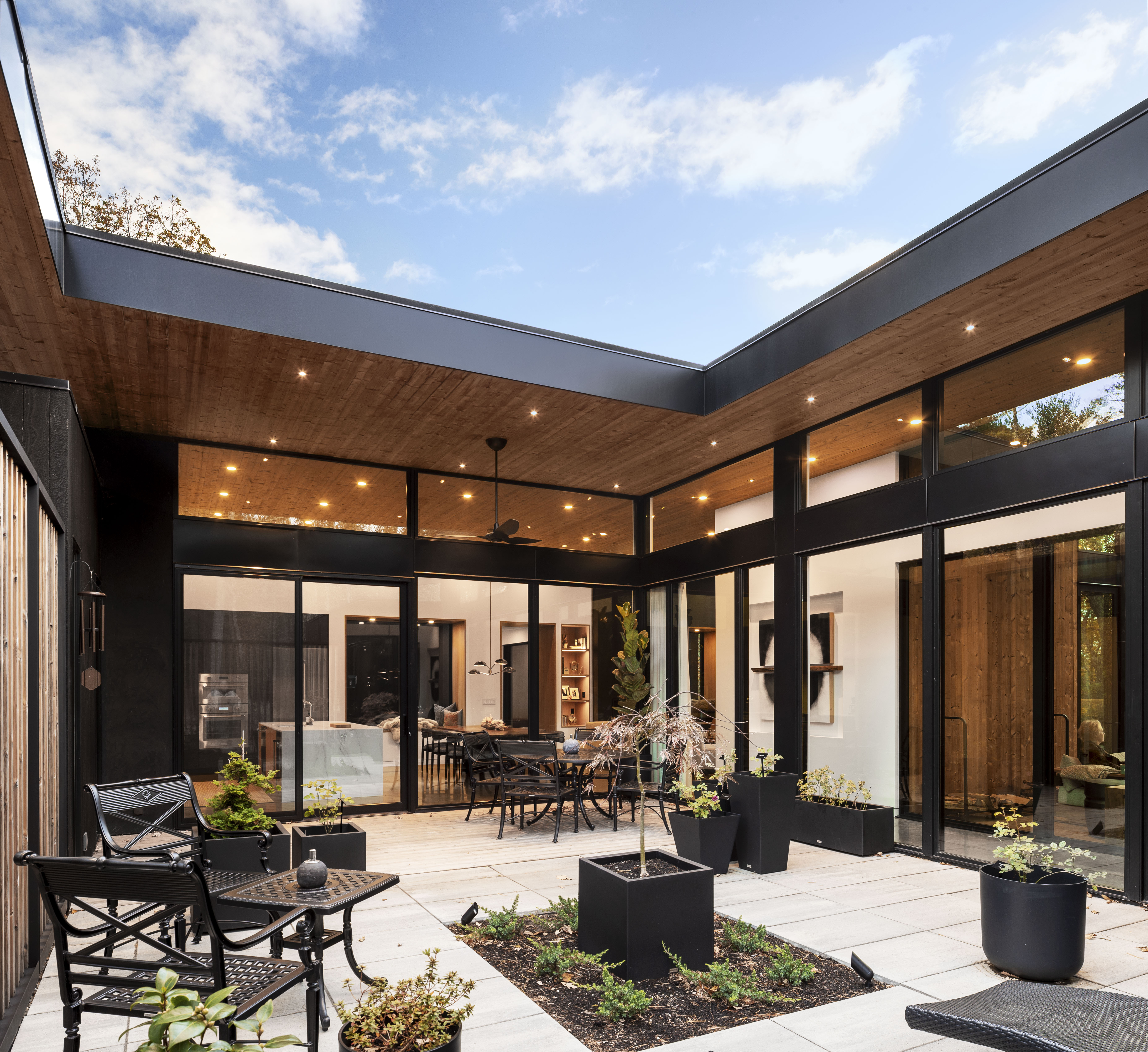
The approach to the home is defined by a double-walled screen. Made from steel and thermally modified radiata pine, the screen creates a semi-hidden entry while also enclosing the home’s centrally located courtyard. The view of the courtyard as you approach is rhythmically interrupted by the texture of the screen. Upon entering the home, glimpses of the courtyard are visible from the entry, but it is only fully revealed upon entering the main living area.
The courtyard lies at the heart of the design. It is a space for rest, peaceful reflection and connection. A large opening in the roof above allows southern light to enter the courtyard and living areas, and a feature sculpture will eventually be installed at the center of the courtyard.
Public access to the space is provided only via a sliding door adjacent to the kitchen. A hidden door was a special request by our client and provides private access from the main bedroom suite.
The Palette: Black, White and Cozy
The initial inspiration images that we received from our client had little to do with architecture. Instead, flowers, her plants, fuzzy blankets, and her sons were the focus. In our early conversations, she described how during the holidays the family would follow dinner with music, playing games and telling stories until late in the evening. Over the course of their visits, she and her sons would find cozy spaces to read, while she might spend time with her plants and watch the birds. She also sent us a list, ever growing, titled “Things I Love”.
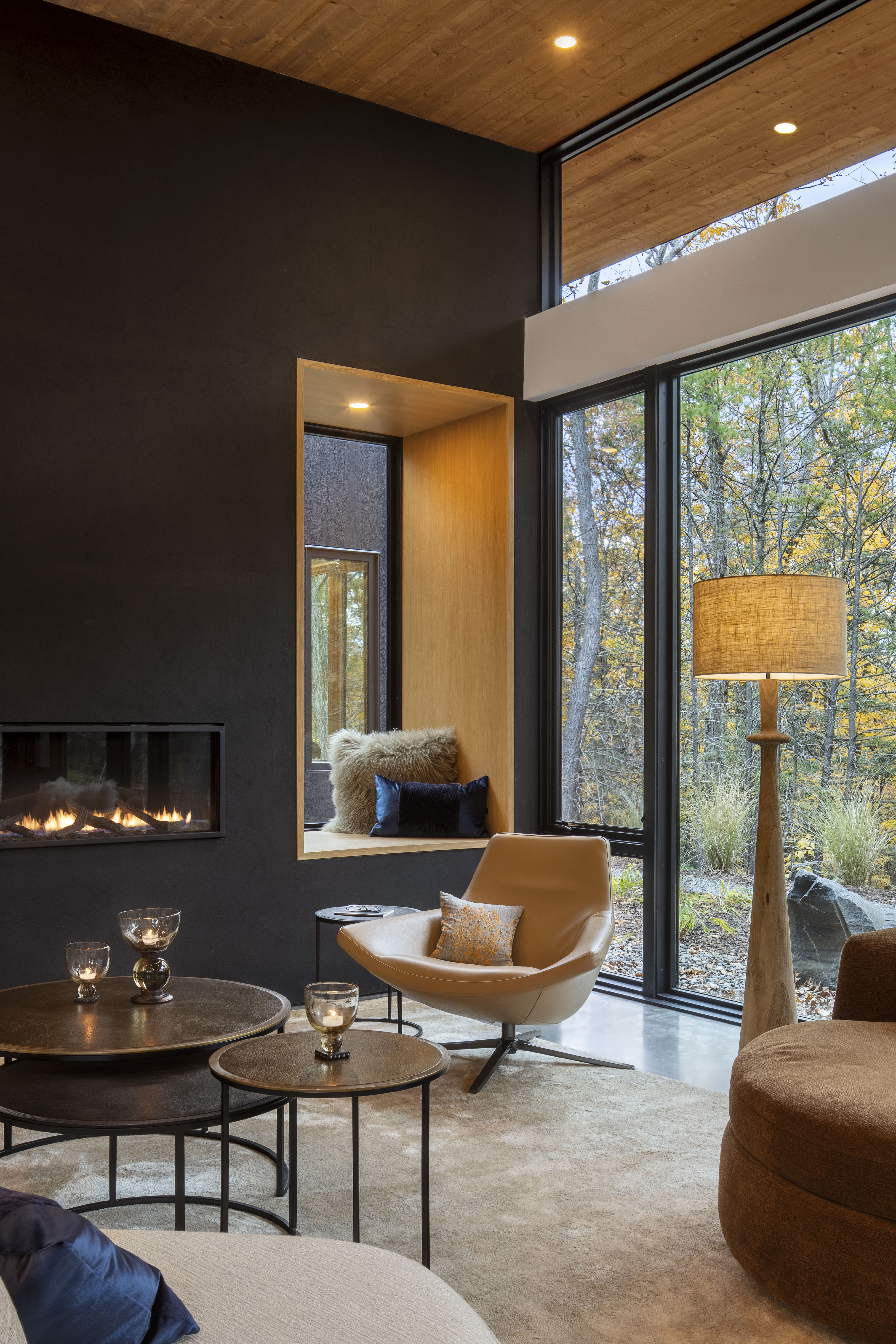
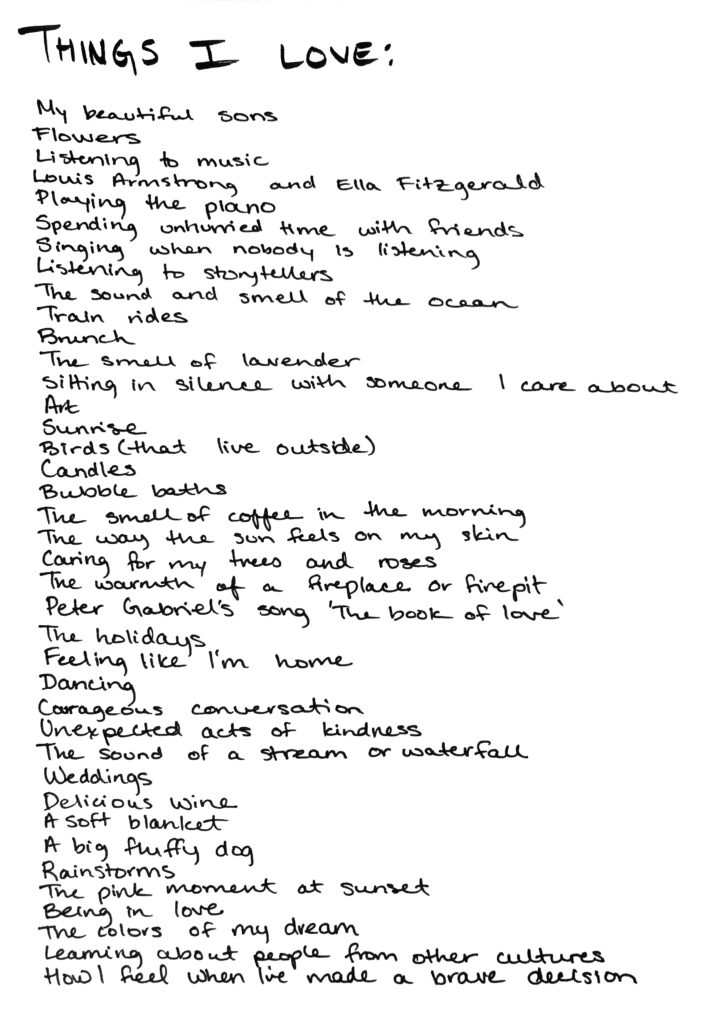
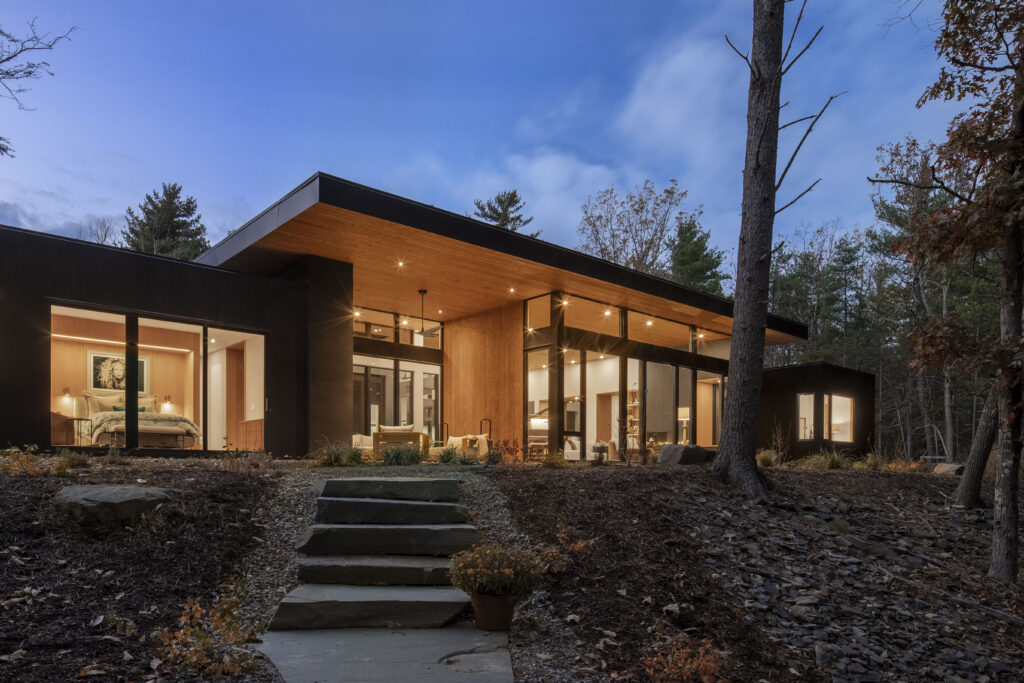
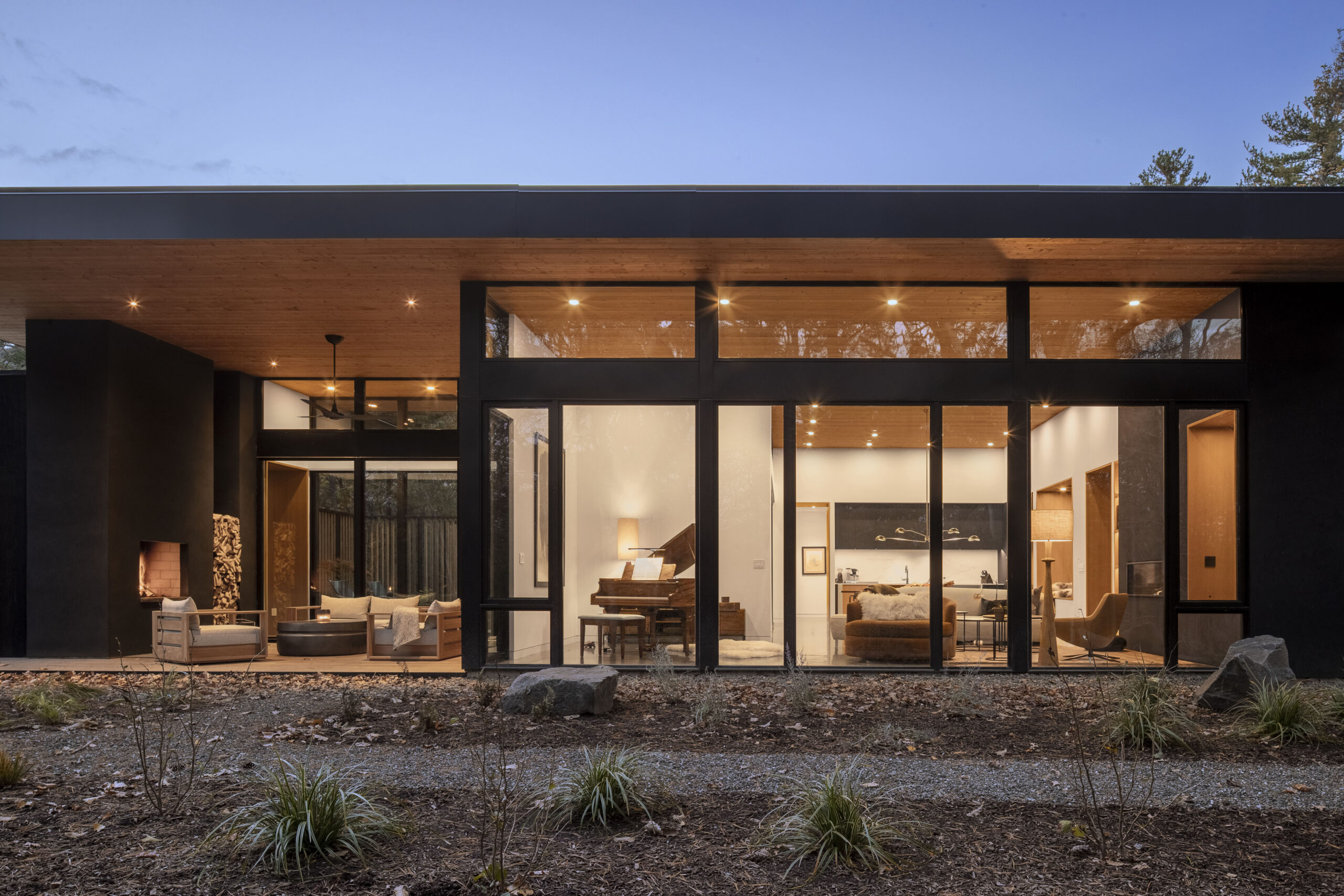
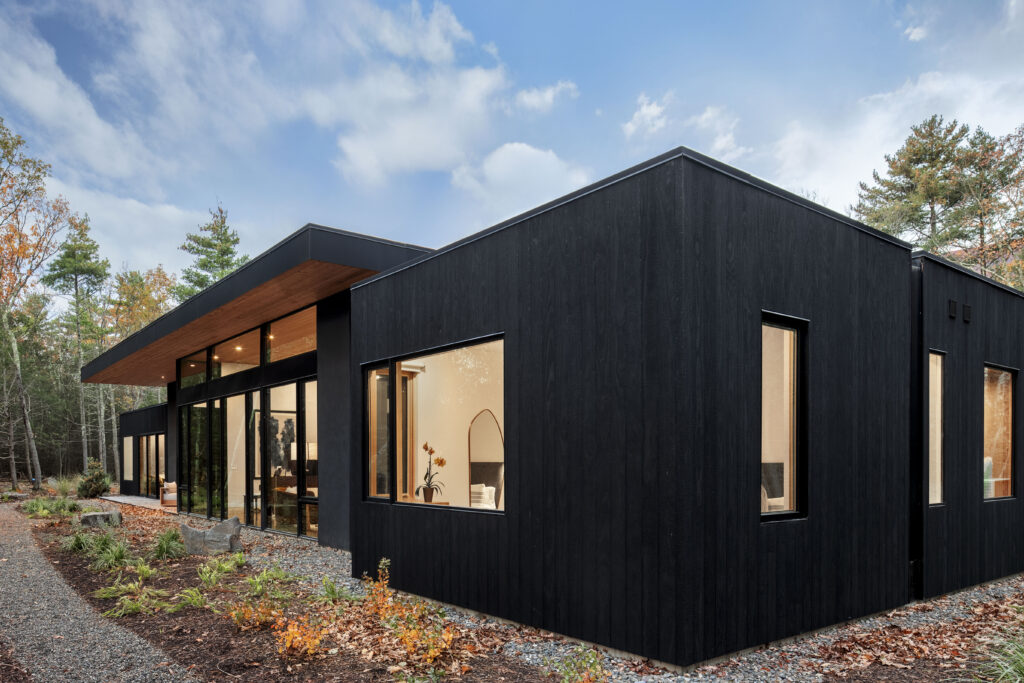
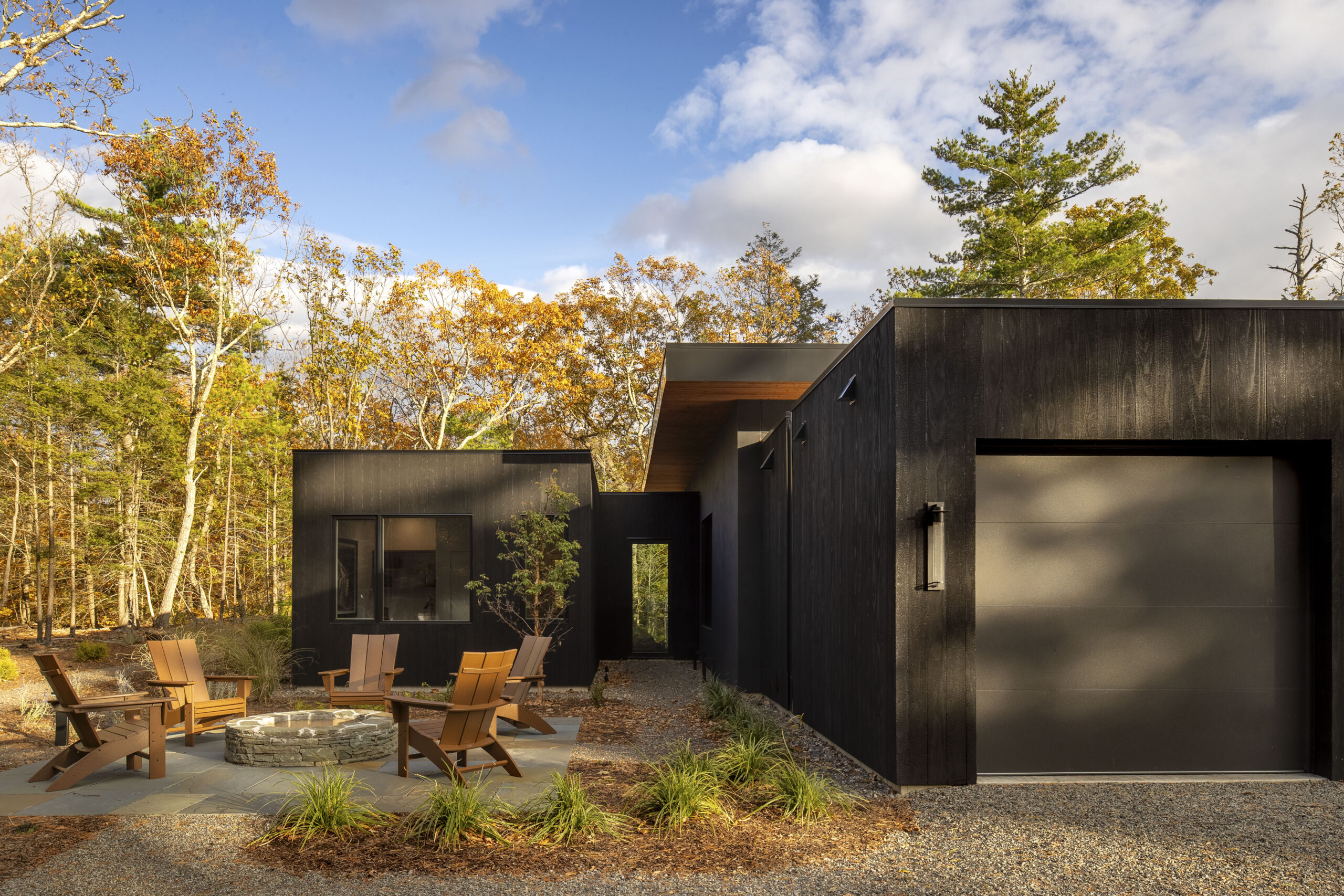
In reading through her wishlists, we knew that her home needed to feel cozy and warm. On the exterior, the primary siding material is a Shou Sugi Ban Kebony, chosen because it would retain its deep black tone for years to come. In the charred and textured wood, our client also saw rebirth – a beautiful new chapter beginning in her life. The exterior decks and soffits and interior wood ceilings are clad in the same radiata pine as the screening. Left in shadow, the soffits and ceiling will naturally silver much more slowly than the wood screening and decks.
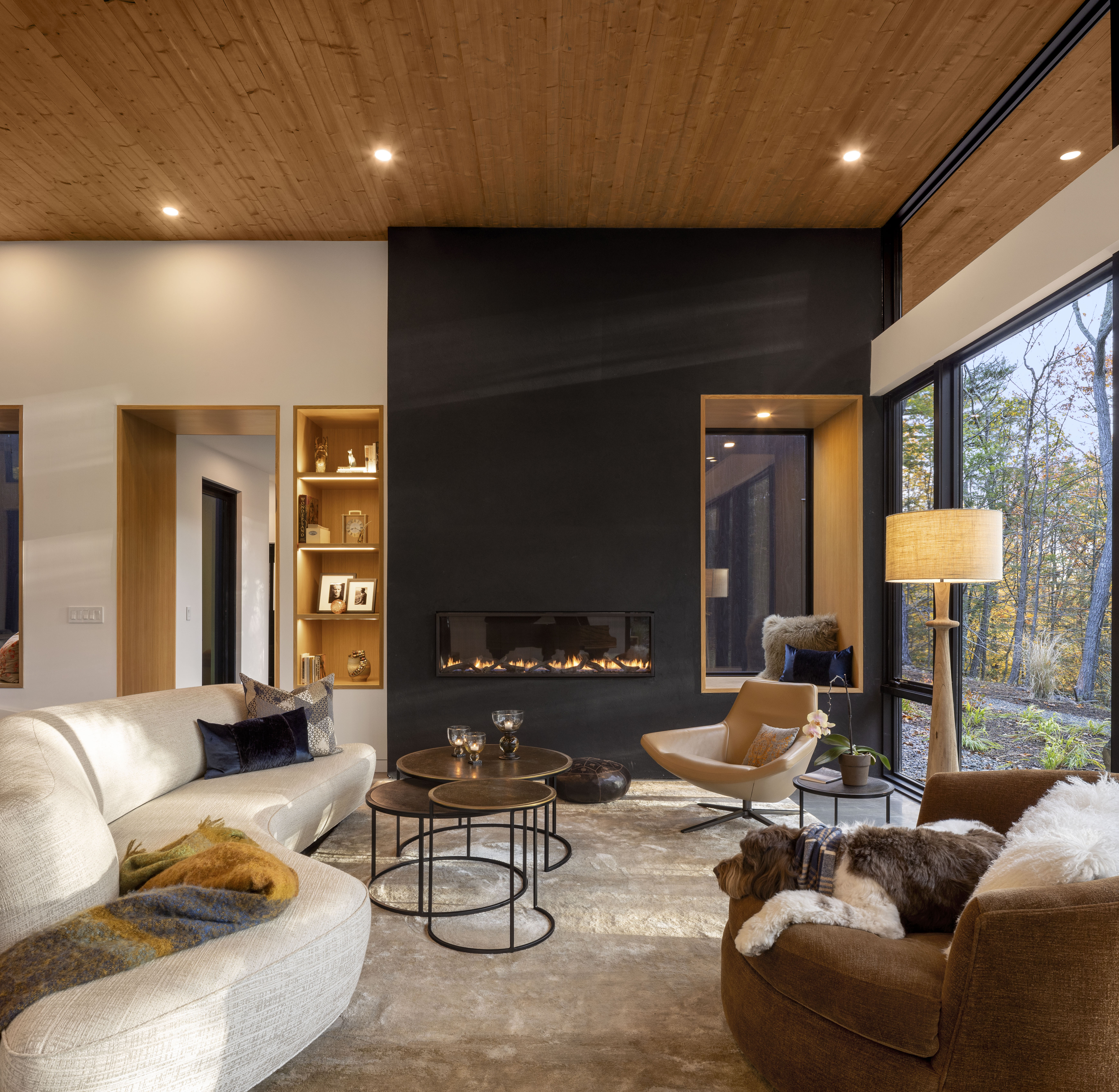
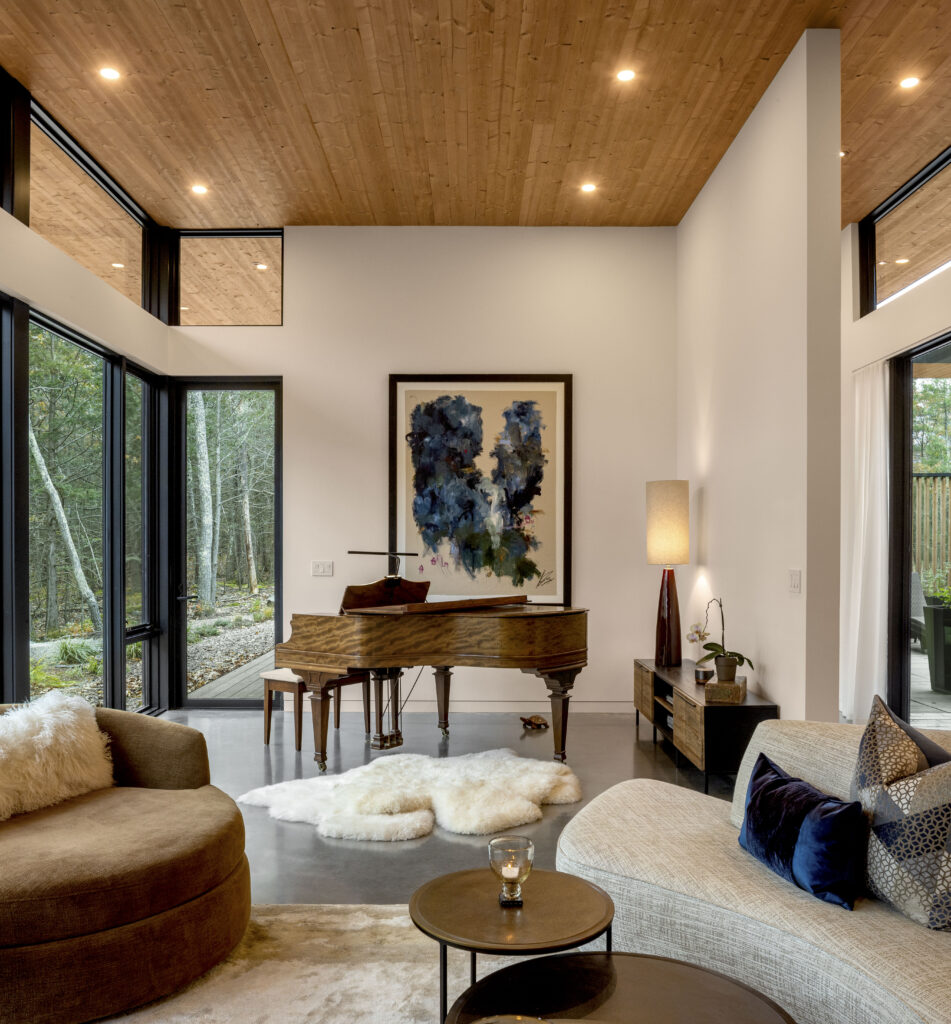
In the main living area, large expanses of glass dissolve the boundary between inside and out, flooding the home with eastern light and offering views into the immediate forest. Nooks in the dining area and living room provide spaces for reading, and a dedicated corner of the living area hosts a beloved baby grand piano.
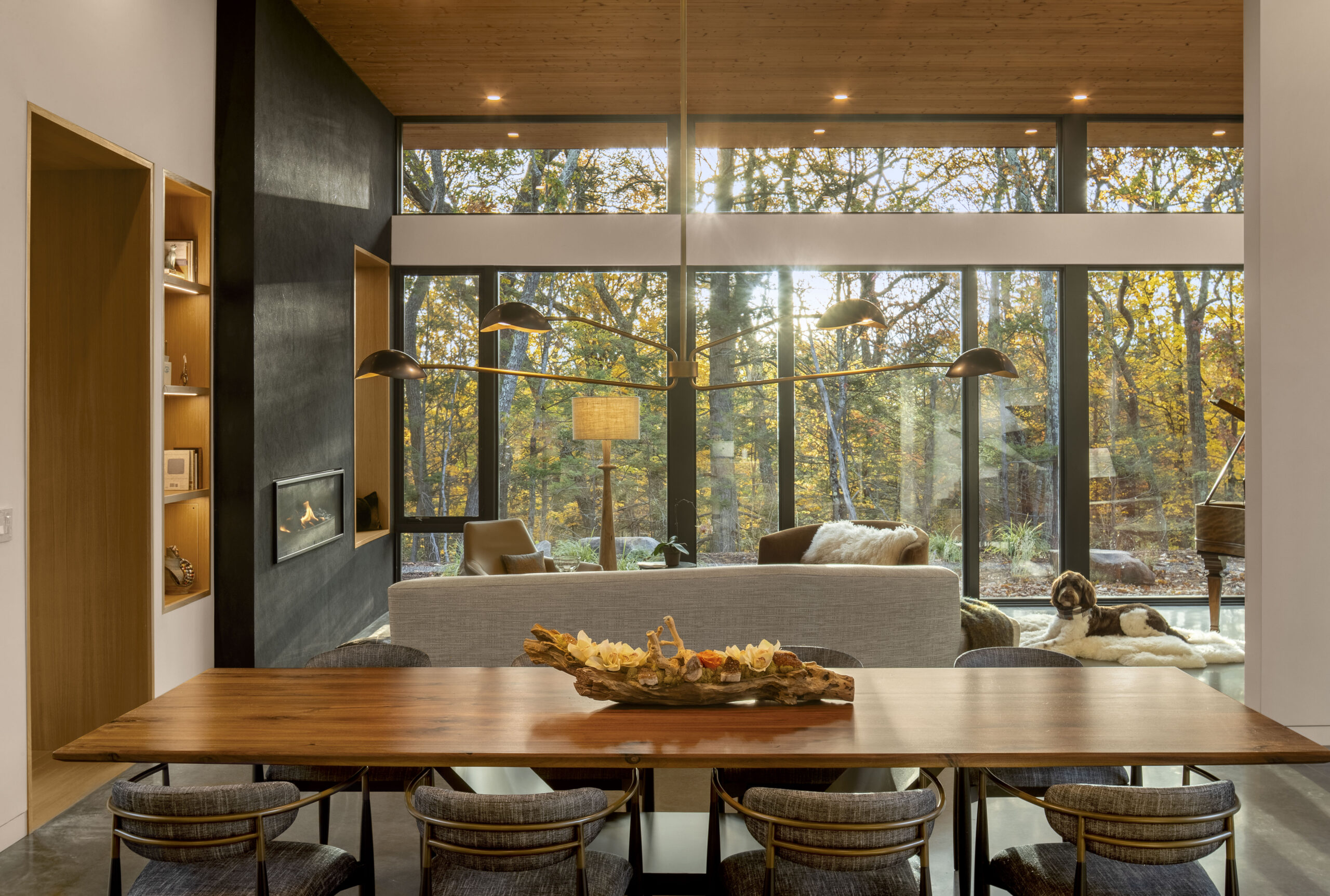
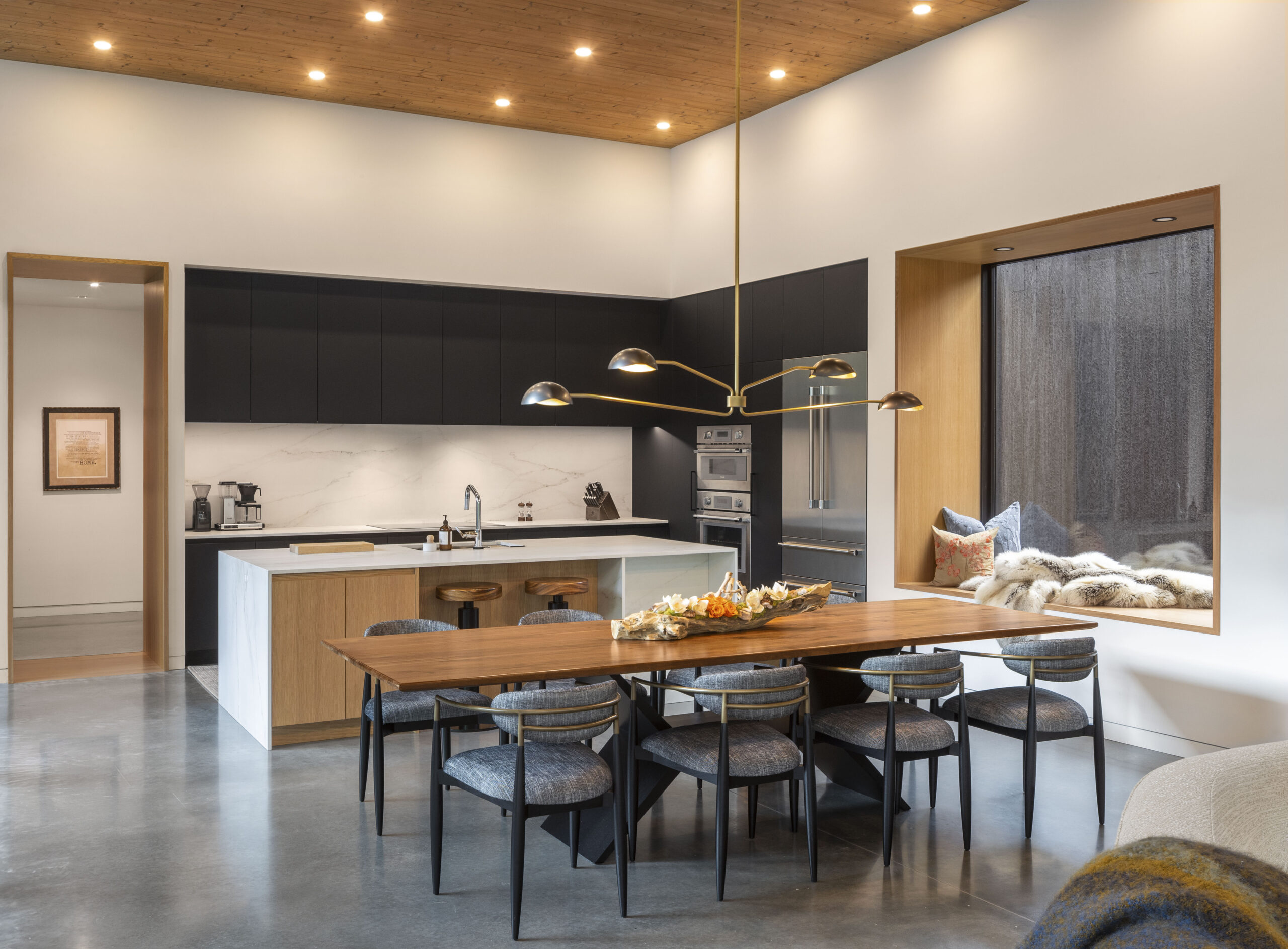
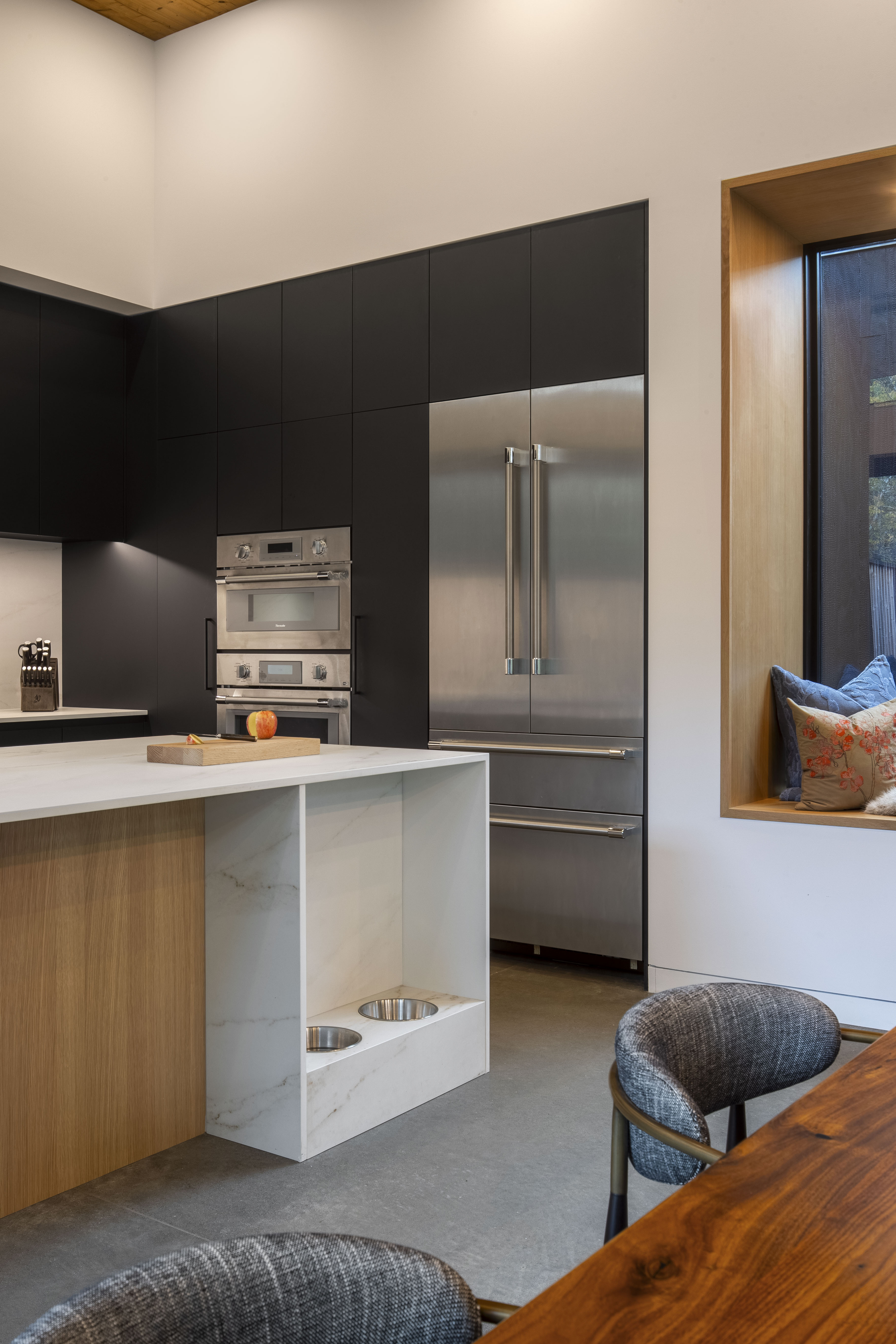
The kitchen grounds the rest of the space, with black cabinetry running around the perimeter. An island made from white oak and a feature countertop complete the space. During construction, our client gained a family member – Anzo, an energetic pup that needed his own dining area. Built into the island, the space keeps the floor area clear while giving Anzo a designated food zone.
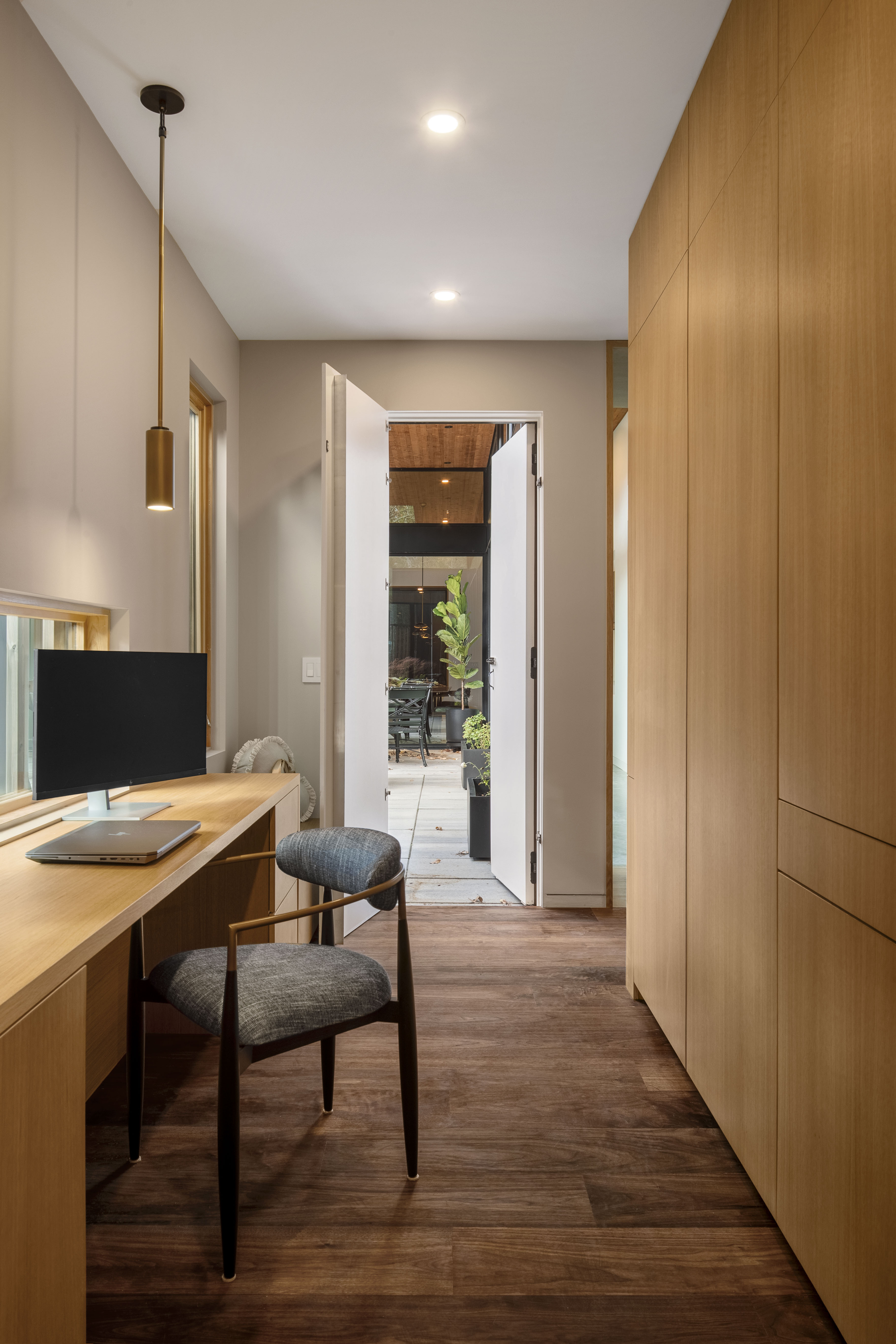
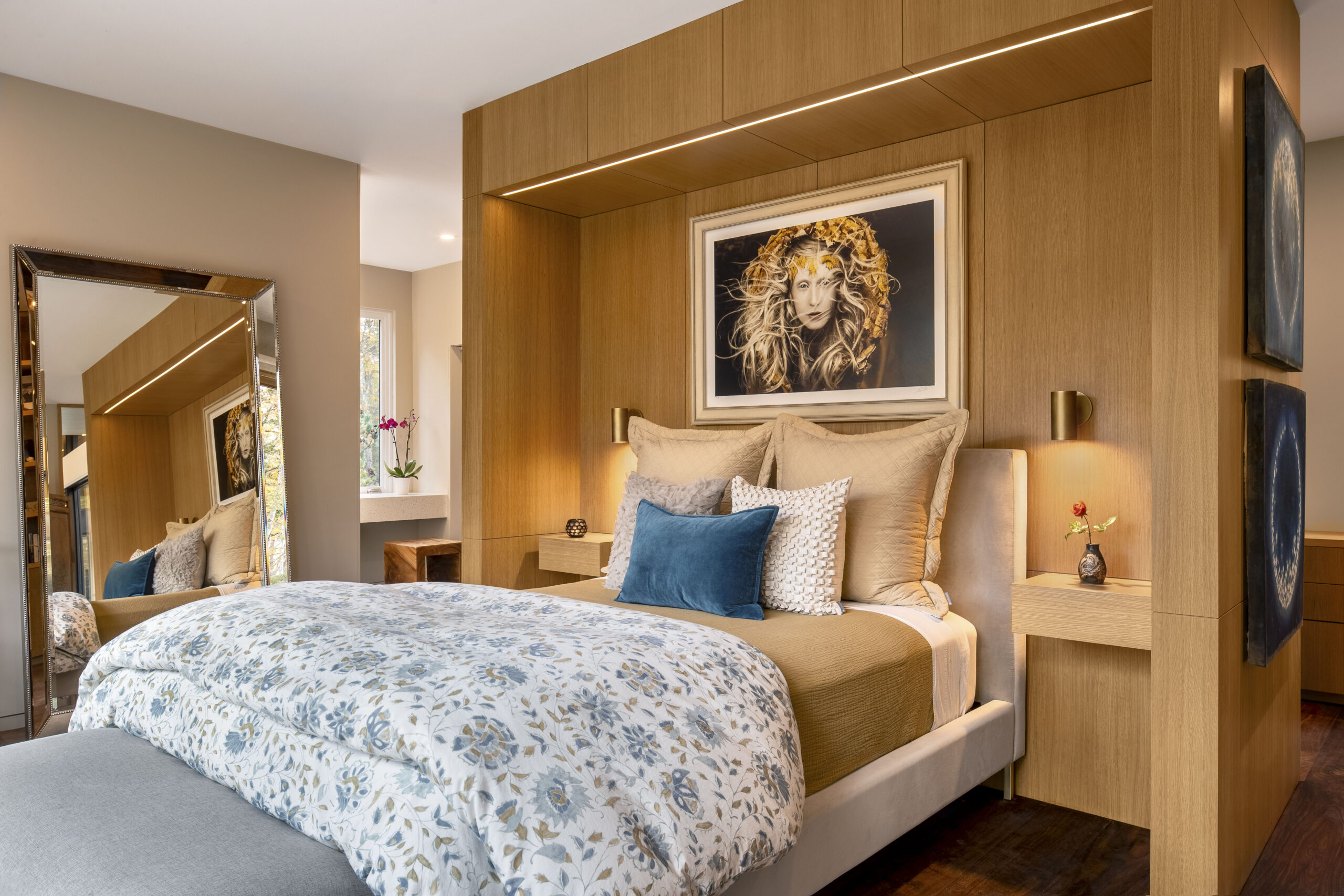
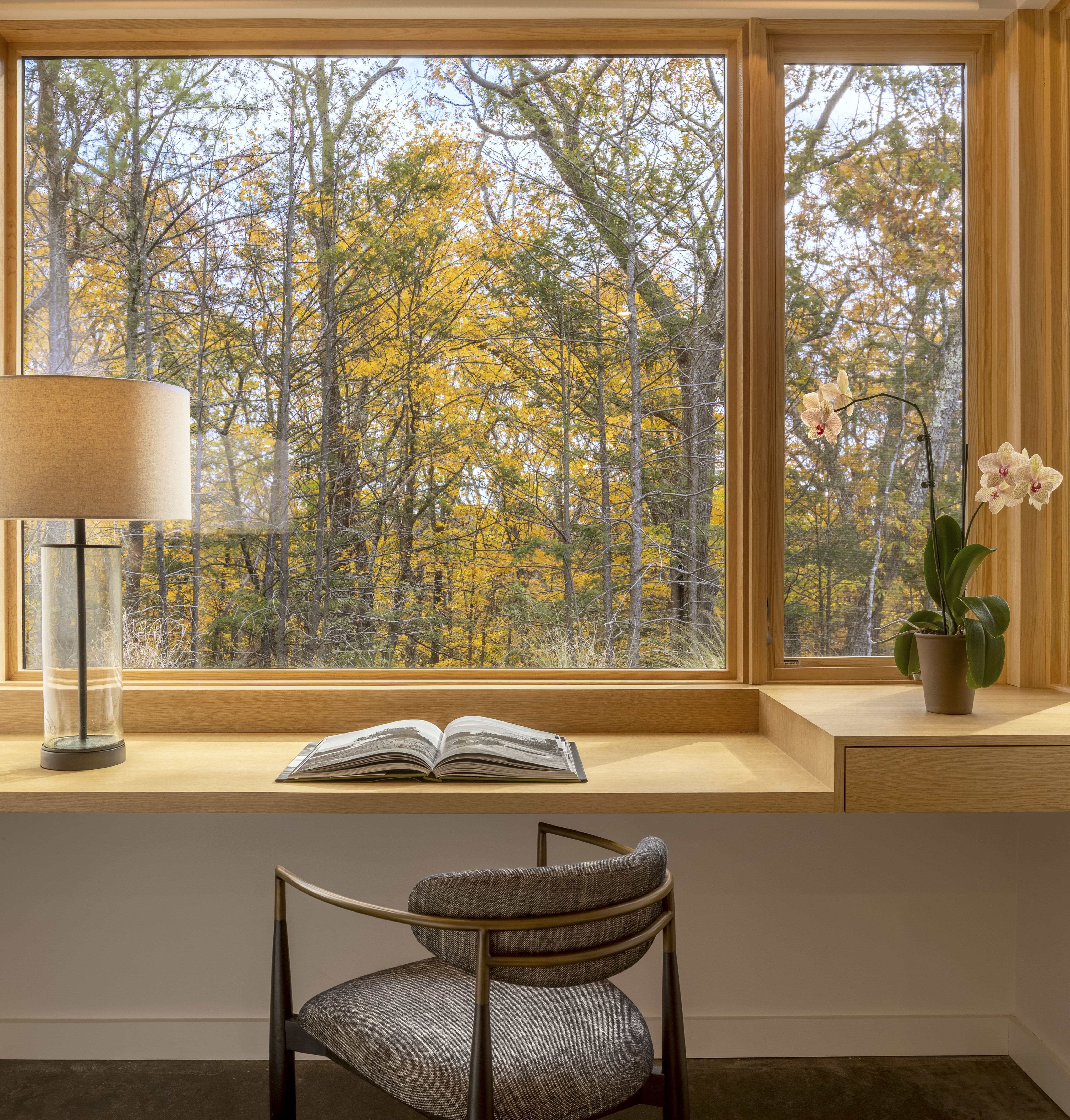
The main bedroom suite rests at the end of the glass hallway, past the courtyard and outdoor fireplace. Left open to the rest of the home, privacy is created with a large central white oak volume. The east-facing bedroom allows our client to wake up with the morning light, while a closet is built into the back of the central volume, keeping storage clean and elegant. The home office is tucked just behind the volume, with views into the courtyard.
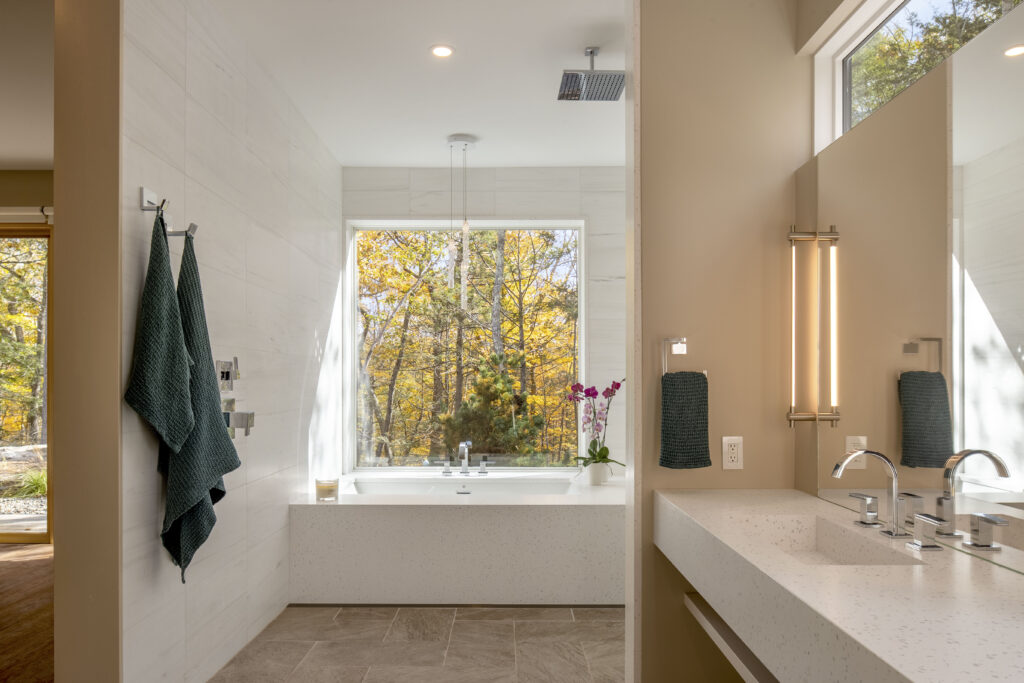
The main bathroom is designed to be our client’s sanctuary. A large built-in tub provides a peaceful place to soak while looking out at the forested landscape beyond. An integrated sink is surrounded by windows that provide natural light for the space.
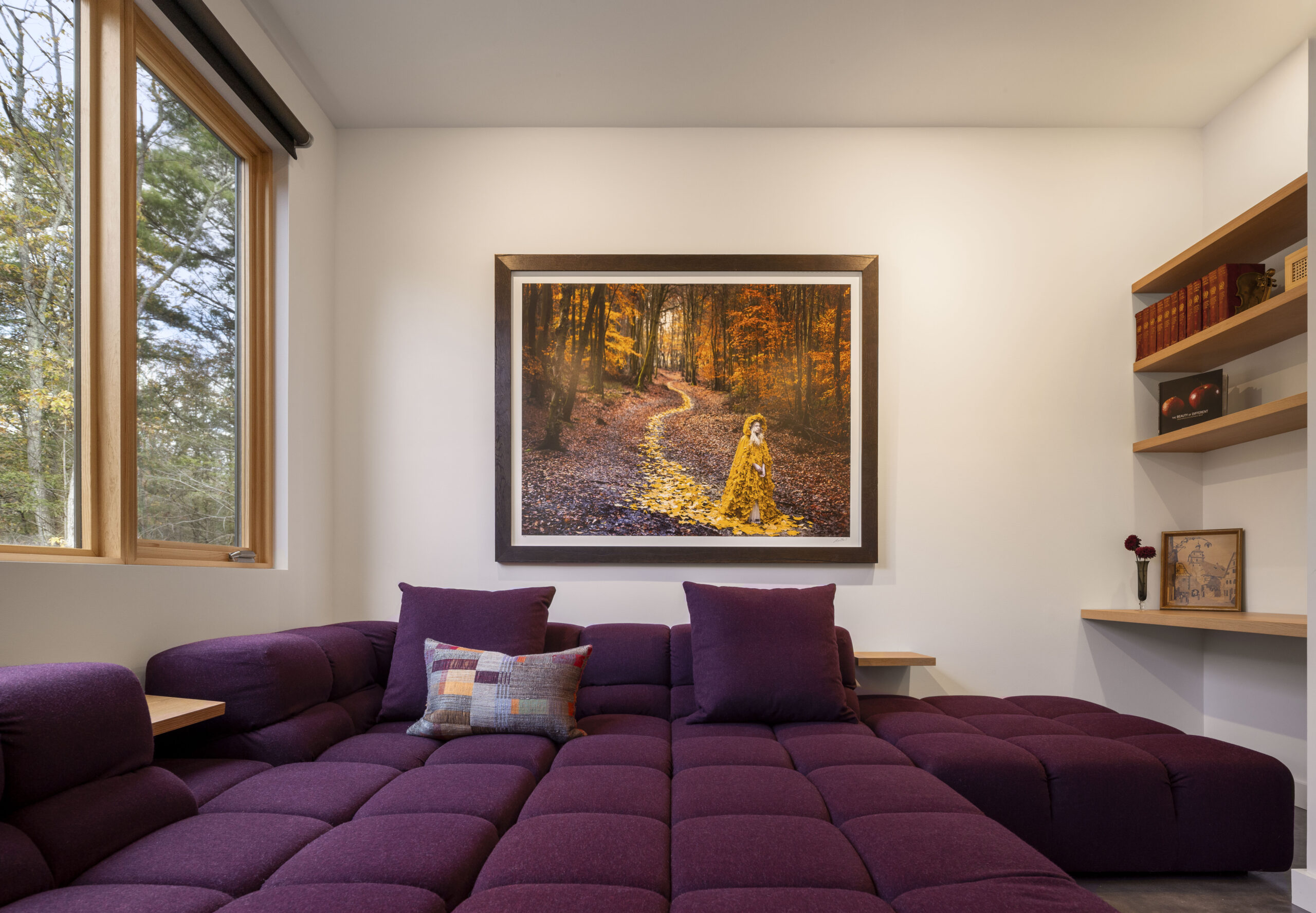
The guest wing is kept simple. Two guest bedrooms look towards the east and the west. The west facing bedroom doubles as a media room, complete with an expansive and colorful couch that begs for a movie marathon.
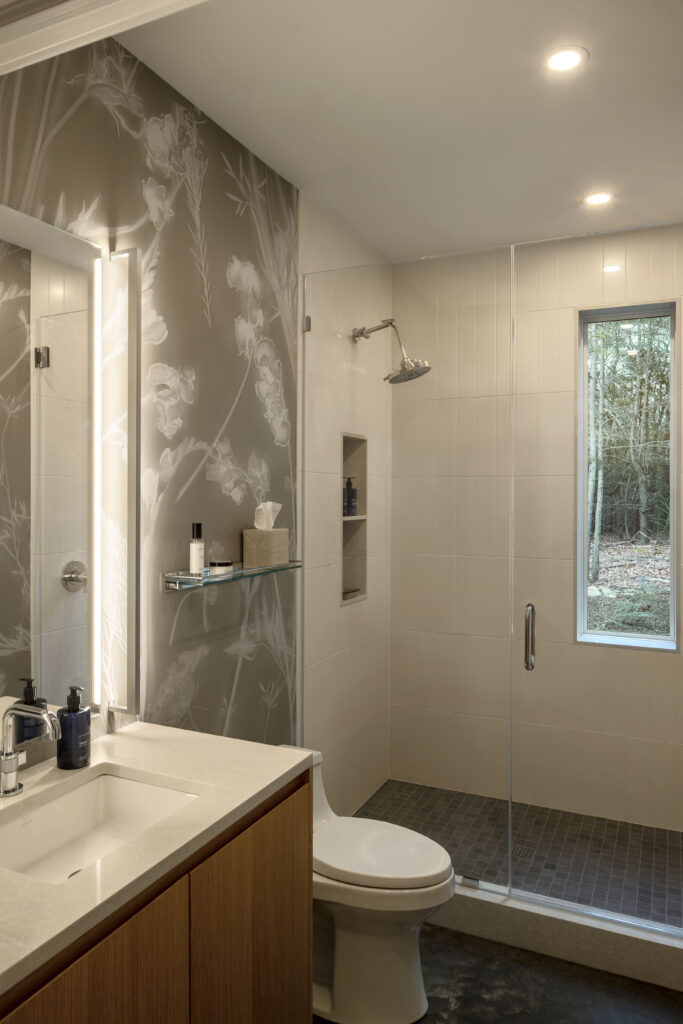
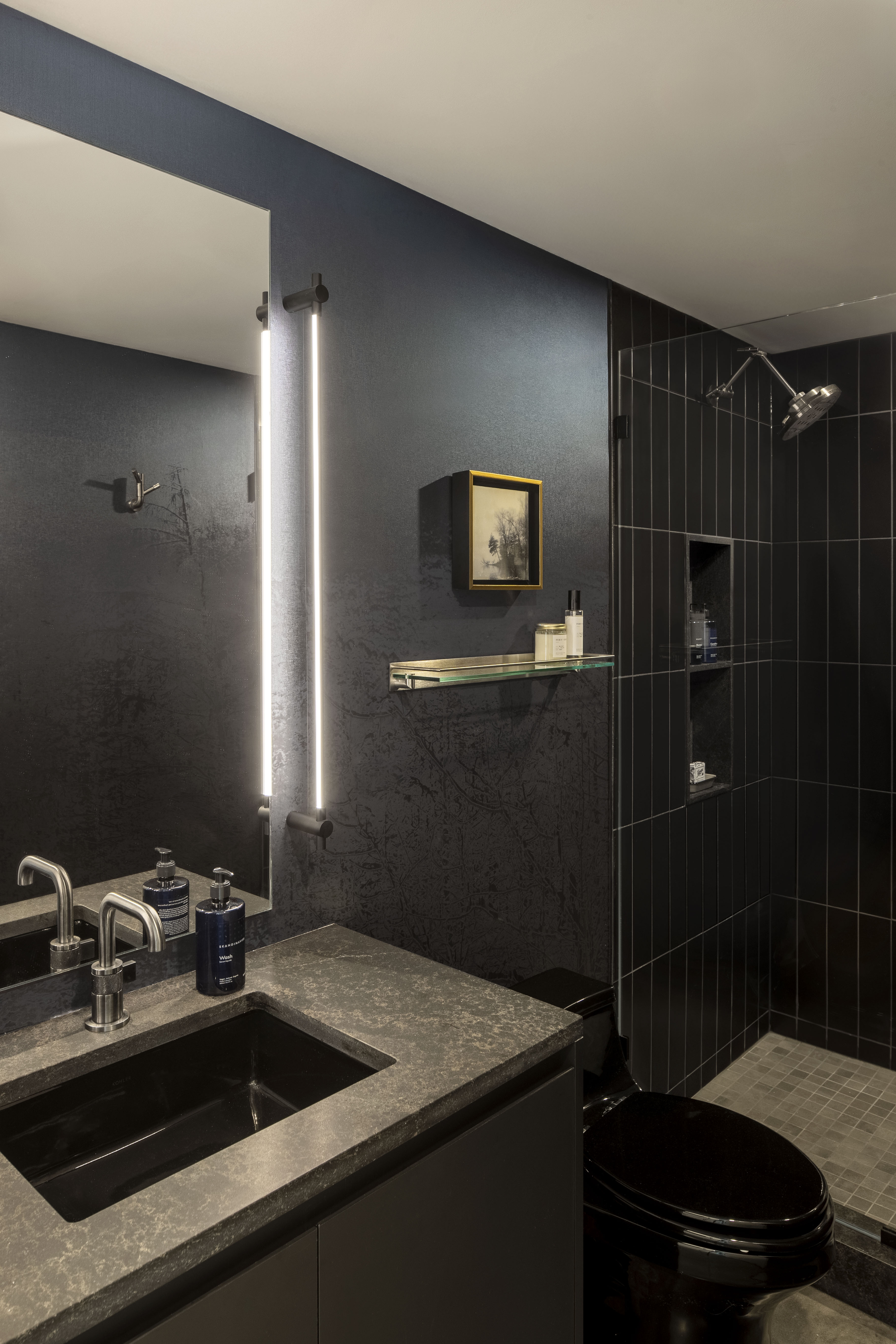
The two guest bathrooms feature dueling black and white themes, with fun wallpapers providing texture and elegance to each space.
Built for both gathering and solitude, Fermata balances openness with enclosure, movement with stillness. It is home that reflects our client’s wish: “I want it to be a place that begs all who enter to pause, breathe, reflect and be truly present.”
Studio MM Team
Marica McKeel
Marisa Kaugars
Alexa Kelleher
Tracy Levy
Consultants
Construction Management: Studio MM Architect
Structural Engineering: TYLin (Silman)
Photography: Brad Feinknopf
Kitchen and Countertops: Cabinet Designers
Millwork: Braxton Alexander
Screening: The Orchard Group
The Design Process
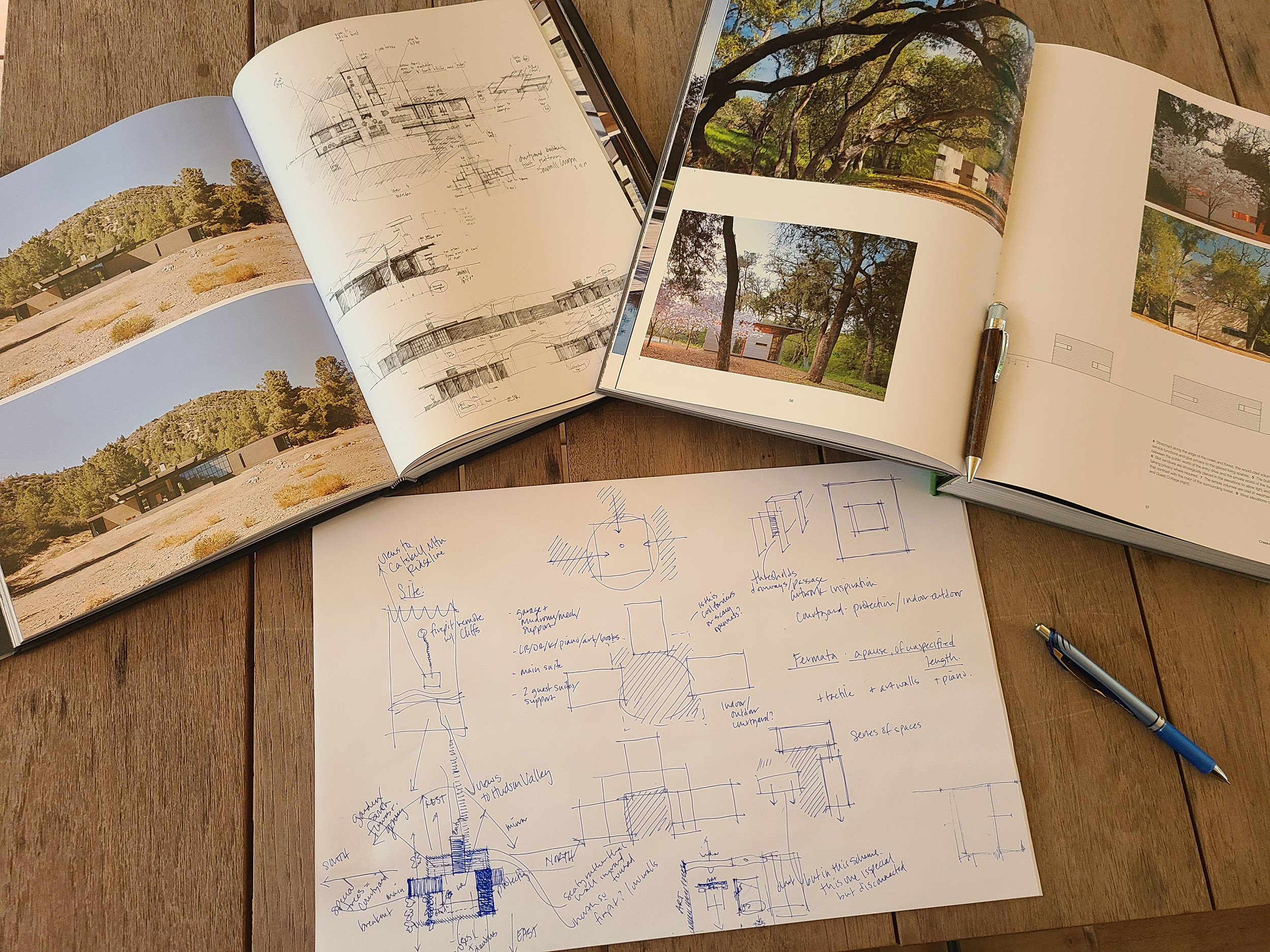
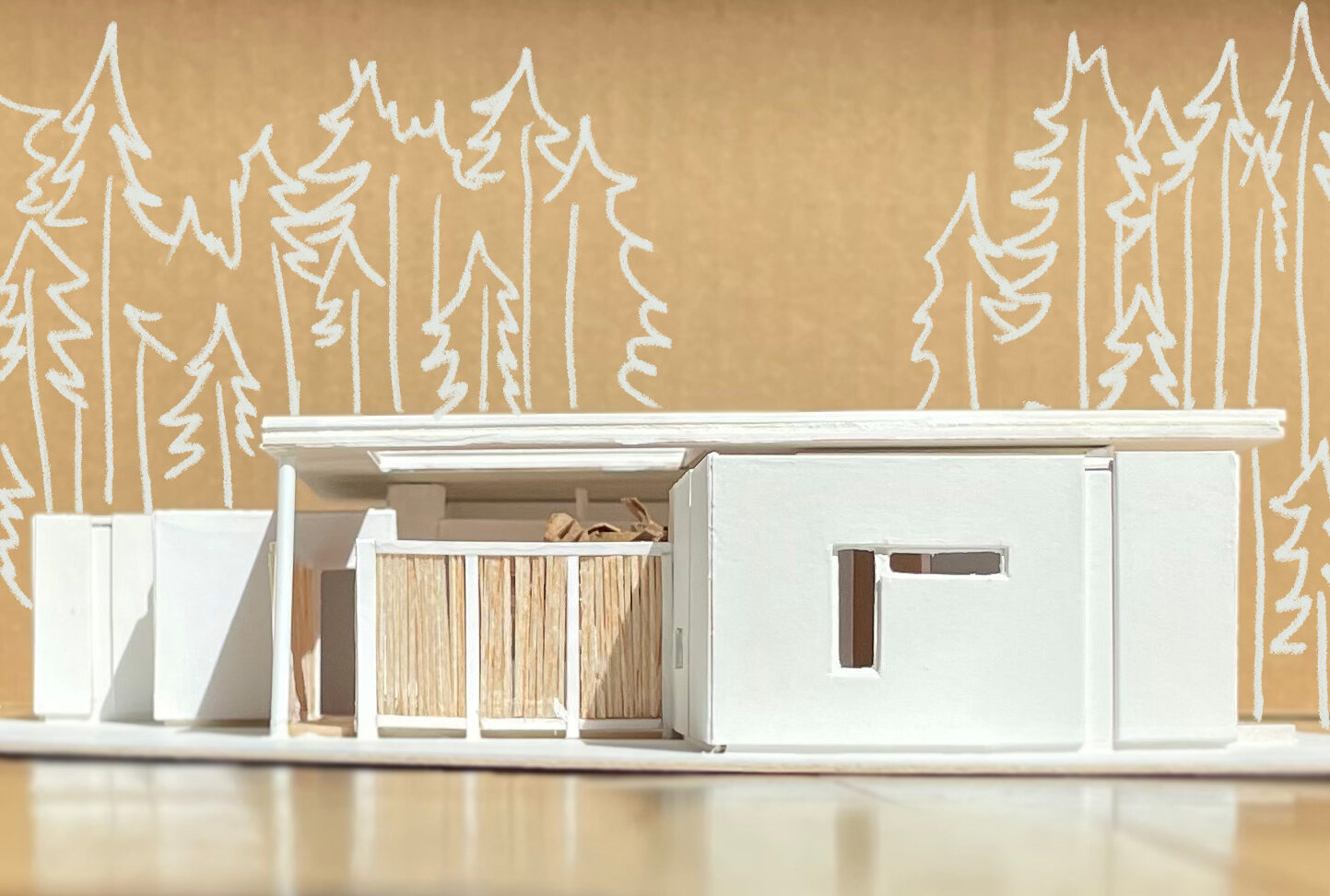
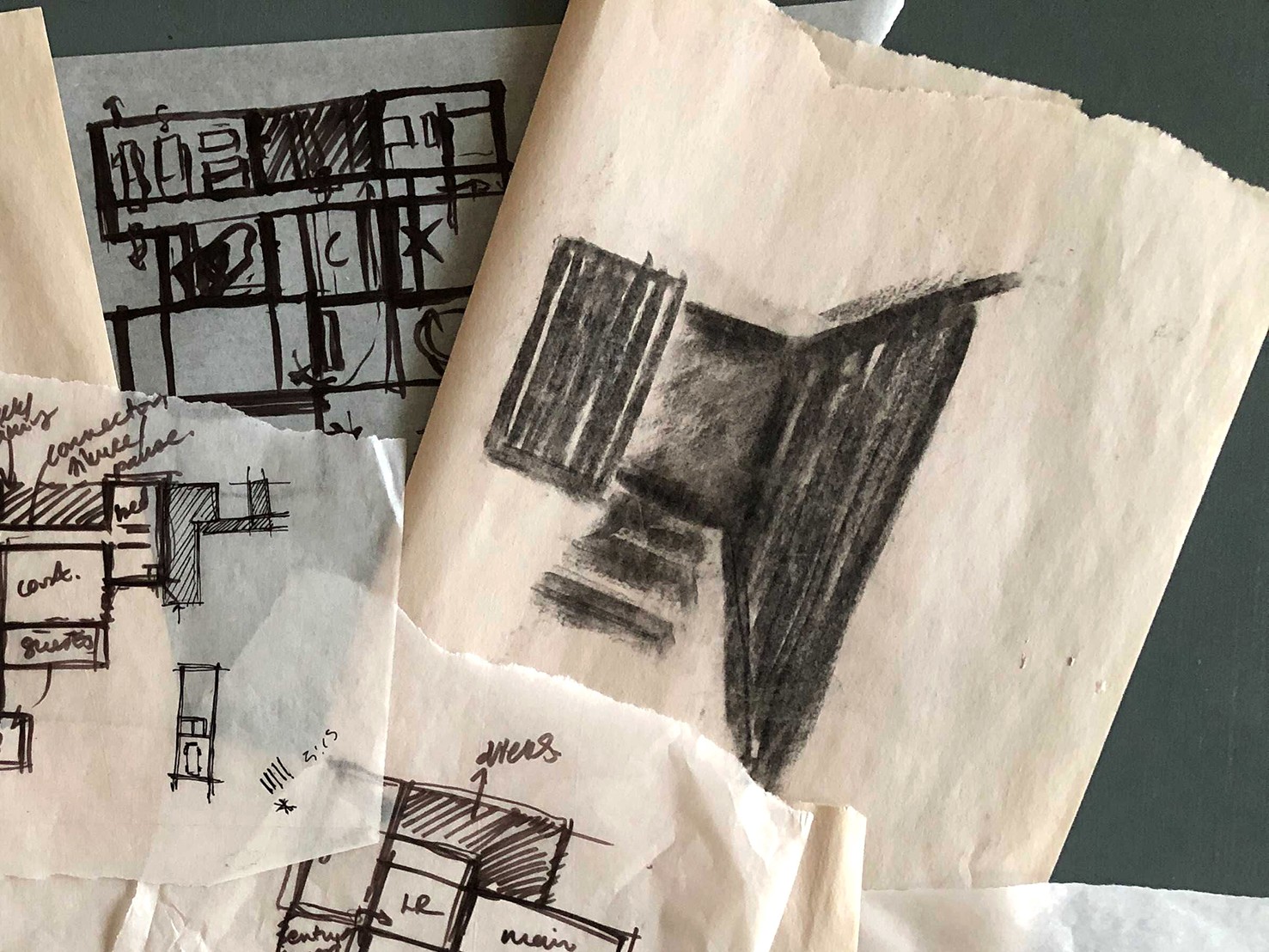
Our client for Fermata came to us with a parcel of land that we were already very familiar with and with lots of inspiration – from art and life. Our challenge was combining the two into a home that was elegant, cozy and comfortable. Using sketches, plans, inspiration images and lots of model screenshots, we worked closely with our client to develop a home that felt right for her.
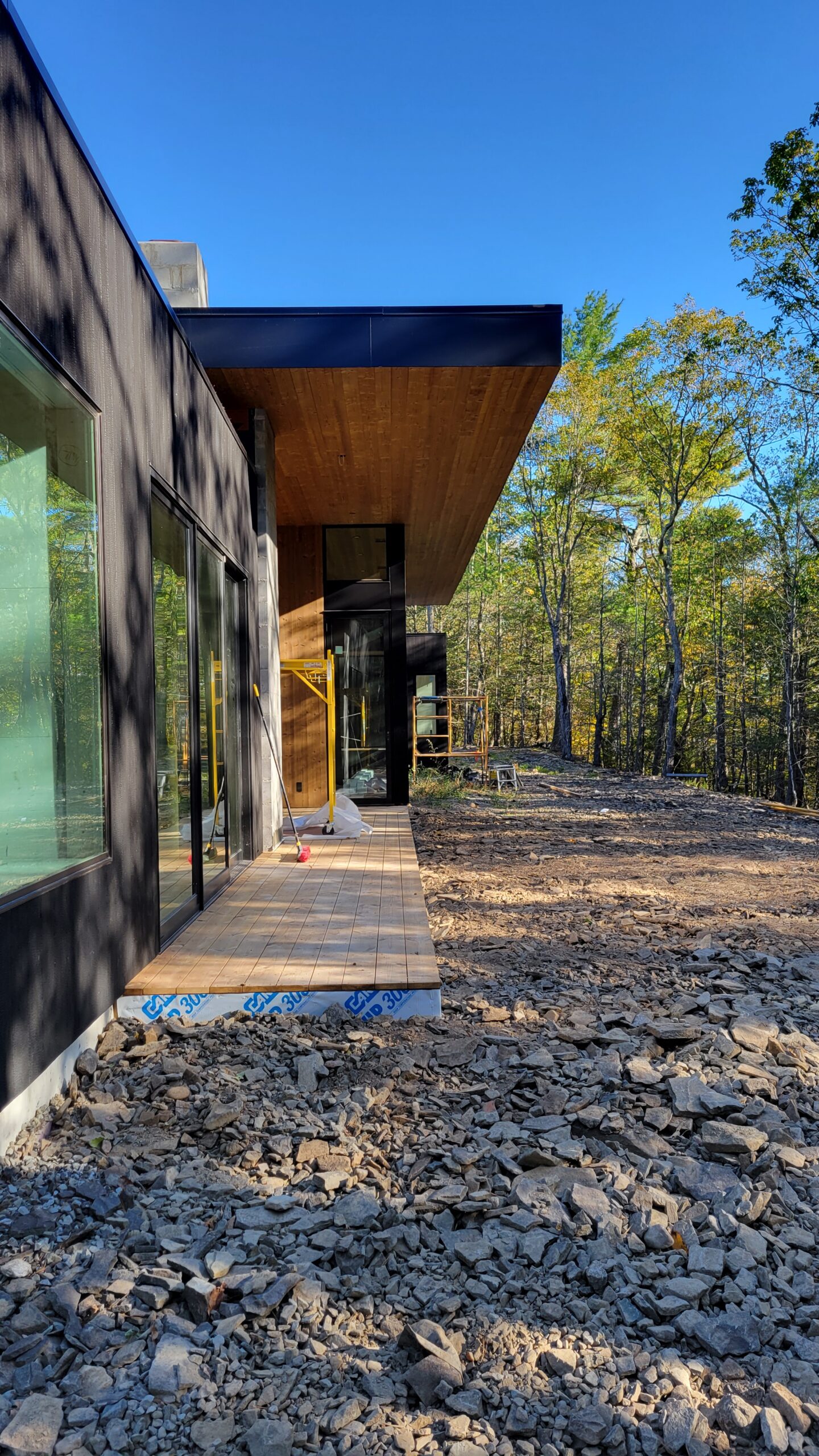
Under Construction
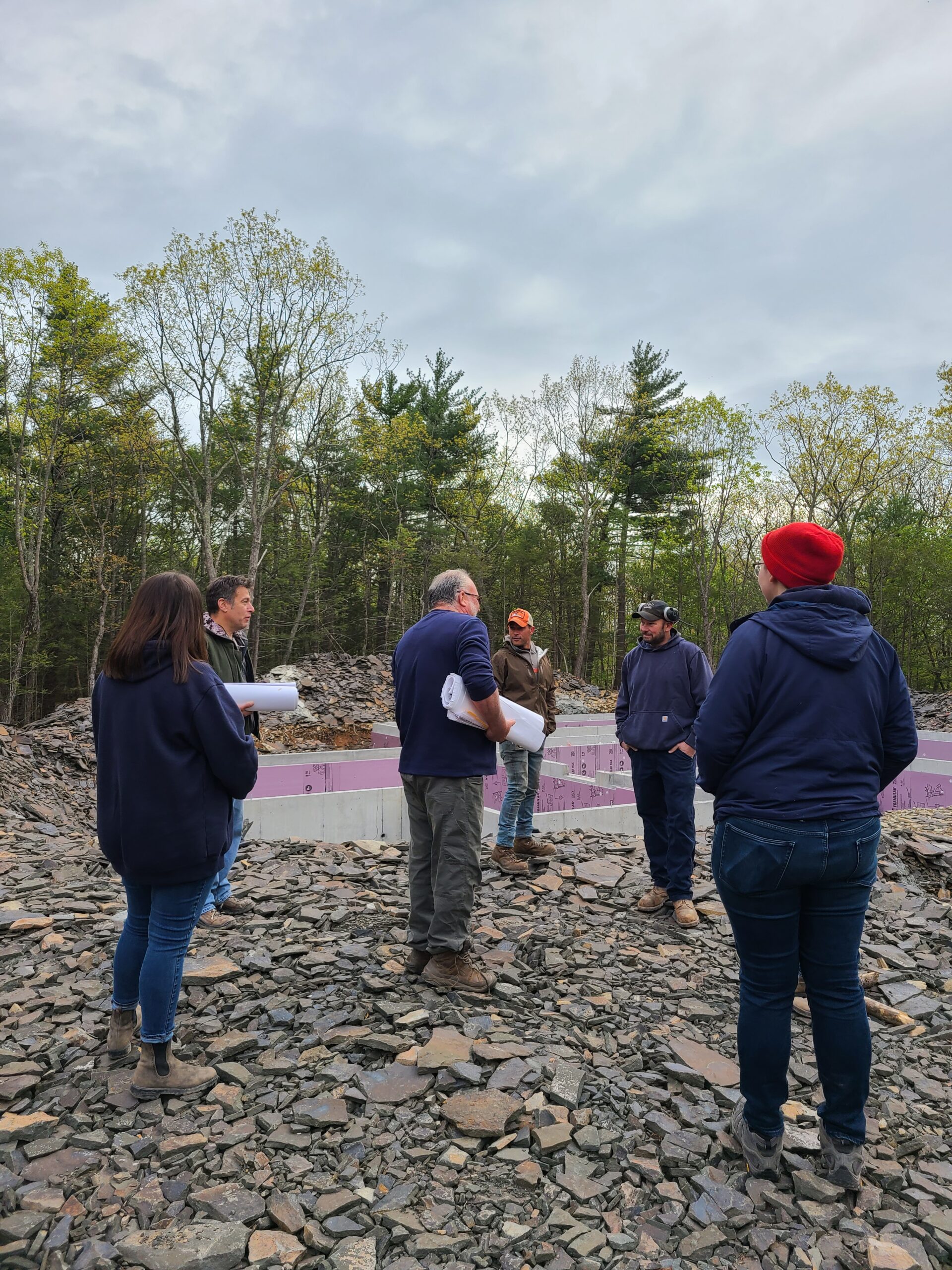
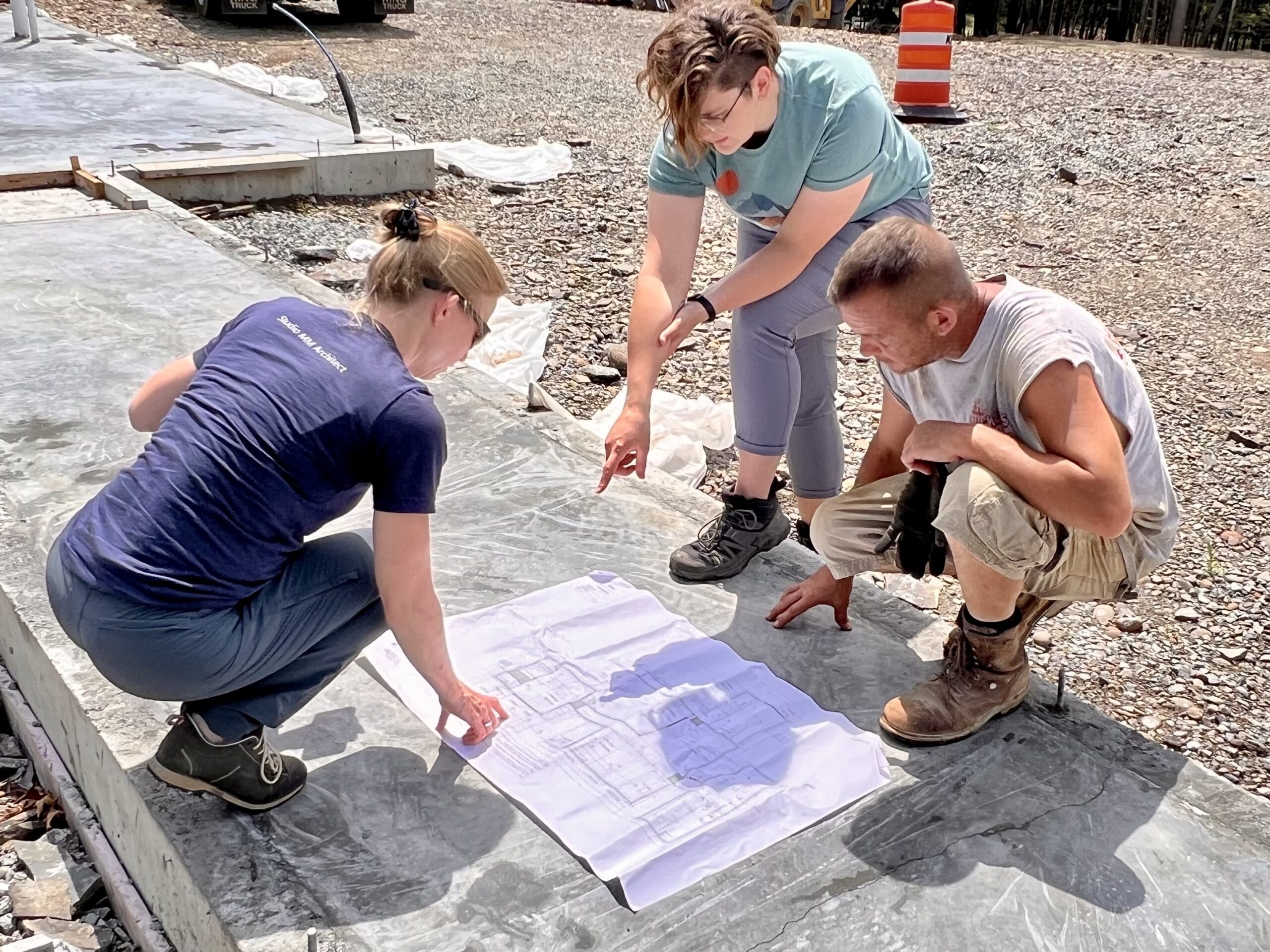
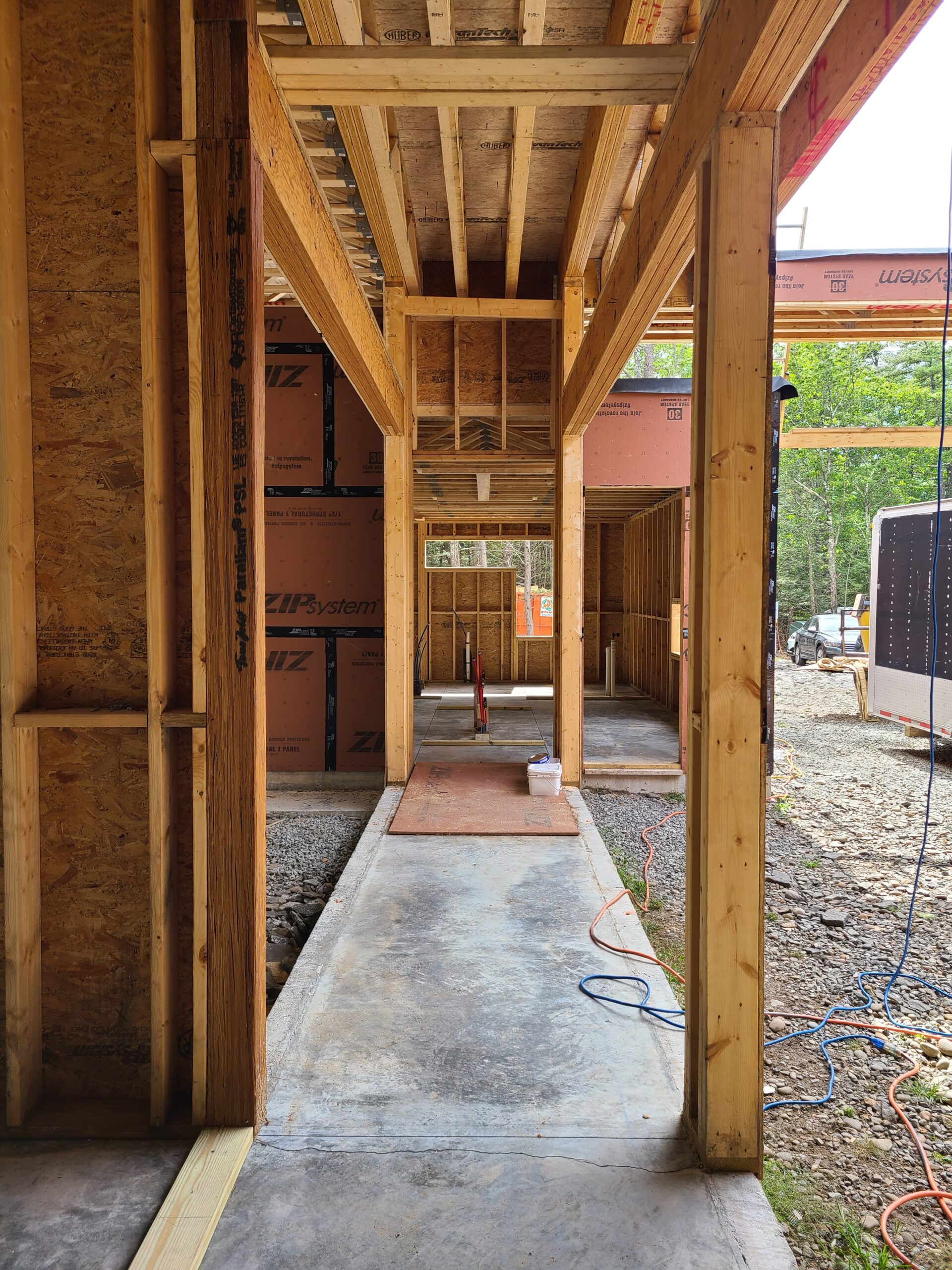
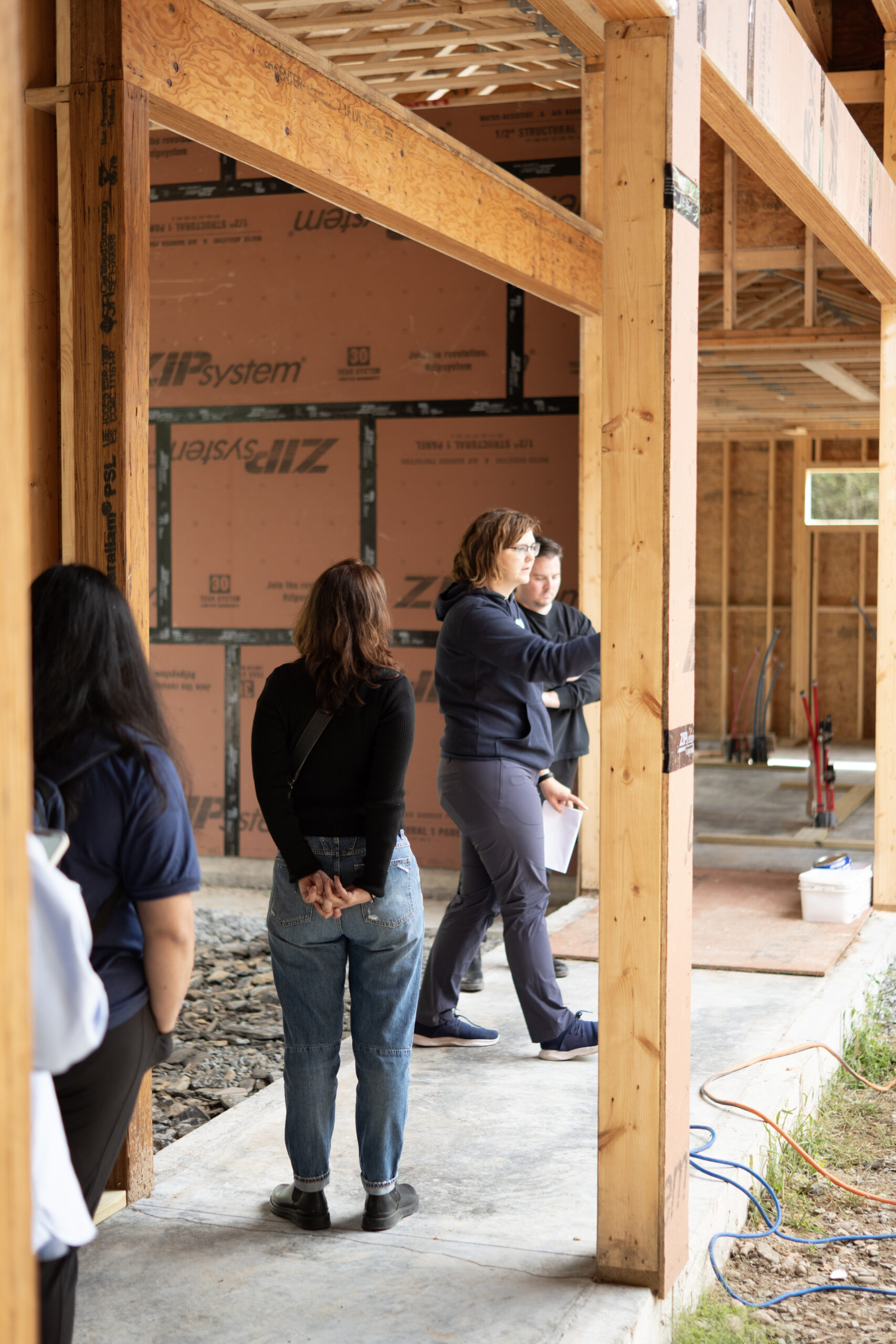
Fermata was built with the help of our Construction Management team, but that didn’t mean our architecture team was any less involved in the project! One of our favorite moments was meeting our excavation, electrical and mechanical subcontractors out onsite early on in the project, allowing us to coordinate trades ahead of time. We loved leading the whole team through multiple walkthroughs of the project during team days and offsites, and we thrived on figuring our complicated intersections between millwork and drywall and on nailing down the right approach for the shockingly complex main bathroom tub installation.